Choosing the best China OEM eyewear manufacturing companies requires more than comparing catalog photos or factory promises. A reliable partner should demonstrate practical experience with frames, sunglasses, children’s eyewear, and prescription-ready designs. Their capabilities should match your product, budget, and expected production volume.
Strong OEM eyewear manufacturing begins with clear technical communication. Ask for material specifications, prototype procedures, mold ownership terms, and inspection standards. Experienced manufacturers can explain acetate cutting, stainless-steel forming, hinge installation, lens fitting, and surface finishing in simple language. They should also provide samples that reveal alignment, comfort, polish quality, and logo accuracy. Small details matter.
Compliance must remain central. Request documented testing for materials, coatings, packaging, and relevant market requirements. Independent inspections can verify dimensions, color consistency, durability, and carton counts before shipment. A professional supplier should welcome these checks, not treat them as distrust. Still, no factory is perfect. Delays happen. Samples may hide production weaknesses. Even a promising quotation can omit tooling fees, revision costs, or minimum order limits.
This guide examines practical factors behind credible Chinese eyewear manufacturers. It considers communication, engineering support, quality control, customization, lead times, and responsible sourcing. Company reputation matters, but verifiable evidence matters more. Look for recent samples, traceable business information, consistent answers, and references from comparable projects. The right choice is rarely the cheapest option. It is the partner that can repeatedly deliver safe, precise, and market-ready eyewear.
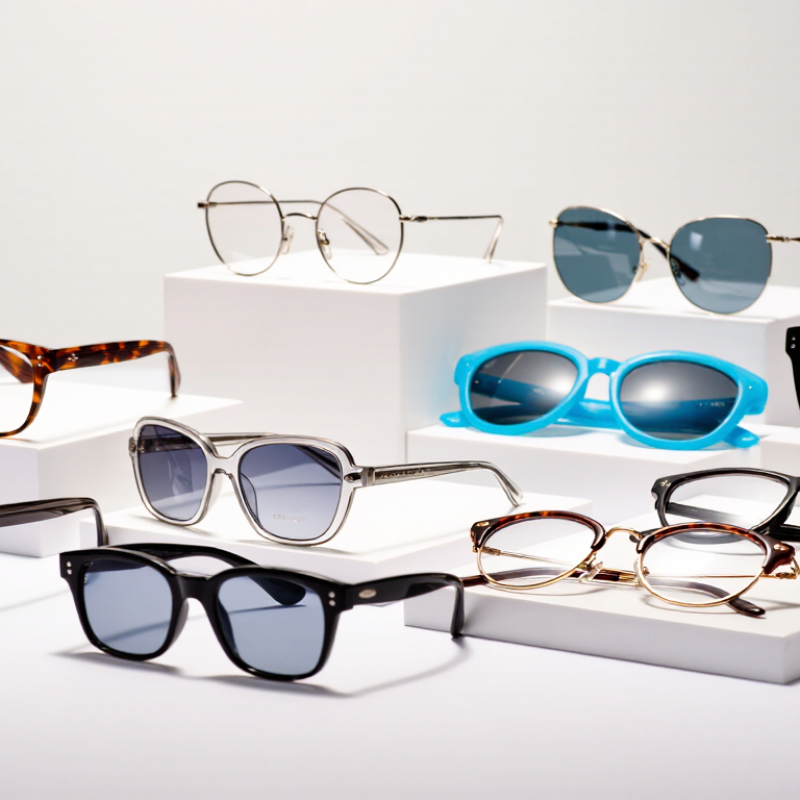
China OEM eyewear manufacturers increasingly act as development partners, not only assembly lines. Grand View Research valued the global eyewear market at USD 115.90 billion in 2023. It also projects an 8.1% CAGR from 2024 to 2030. This growth pressures suppliers to shorten sampling cycles without weakening fit, finish, or traceability. Experienced manufacturers provide design adaptation, 3D modeling, mold development, material sourcing, and pilot production. Buyers can check hinge movement, nose-pad pressure, frame balance, and color consistency before mass production. Small details matter.
A capable OEM manages quality checkpoints across cutting, injection, polishing, assembly, and packing. Inspection records may cover dimensions, torque, coating adhesion, surface defects, lens compatibility, and carton counts. ISO 9001 supports consistent quality-management processes, but certification alone cannot guarantee dependable eyewear. Buyers still need factory audits, material declarations, sample approval, and independent testing where required. That is the less glamorous work.
The World Health Organization reports that at least 2.2 billion people have near or distance vision impairment. This increases demand for accessible prescription and protective eyewear solutions. China OEM suppliers may provide lens fitting support, adjustable components, recyclable packaging, and lower-volume customization. However, sustainability claims require evidence. Recycled content should be documented, not simply printed on a carton. A polished sample can still hide weak hinges or inconsistent measurements. Careful buyers should test production batches, not trust promises alone.
| OEM Capability | What Manufacturers Commonly Provide | Typical Industry Range or Standard | Key Buyer Considerations |
|---|---|---|---|
| Product Categories | Sunglasses, optical frames, reading glasses, children's eyewear, sports eyewear, safety eyewear, and fashion accessories. | Multiple frame categories supported | Confirm whether the factory specializes in acetate, metal, injection-molded, or performance eyewear. |
| Frame Materials | Acetate, stainless steel, aluminum, titanium, TR90, injected nylon, polycarbonate, and recycled or bio-based materials. | Material selection depends on design and target price | Request material specifications, composition details, and compliance documents before production. |
| Lens Options | CR-39, polycarbonate, nylon, mineral glass, polarized lenses, gradient lenses, photochromic lenses, blue-light filtering lenses, and prescription-ready lenses. | UV400 protection is widely requested for sunglasses | Verify UV transmission, optical performance, impact resistance, tint consistency, and polarization quality through testing. |
| Customization Services | Custom frame geometry, colors, patterns, lens tints, logos, temple printing, engraving, plating, coatings, packaging, and accessory development. | Private-label and full OEM development available | A technical drawing, 3D file, physical sample, or detailed specification sheet can reduce development errors. |
| Prototype Development | CAD drawings, 3D modeling, sample tooling, hand-made prototypes, color samples, and pre-production samples. | Several sample revisions may be required | Approve dimensions, hinges, nose fit, lens shape, surface finish, and color standards before mass production. |
| Minimum Order Quantity | Order quantities vary according to the product type, material, tooling requirements, customization level, and packaging specifications. | Often lower for stock-based customization and higher for new tooling | Ask for separate MOQs for stock frames, custom colors, custom molds, custom lenses, and branded packaging. |
| Tooling and Molds | Custom molds, injection tooling, acetate templates, metal stamping tools, lens molds, and production fixtures. | Tooling fees are normally quoted separately | Clarify mold ownership, storage period, maintenance responsibility, and reuse rights in the contract. |
| Production Lead Time | Manufacturing schedules covering material preparation, frame production, lens processing, assembly, quality inspection, and packaging. | Commonly several weeks after sample approval | Lead time can increase during peak seasons, for custom tooling, or when special materials are unavailable. |
| Quality Control | Incoming material checks, in-process inspections, hinge and temple testing, coating inspection, lens checks, final assembly inspection, and carton verification. | Multi-stage inspection is recommended | Define acceptable quality limits, inspection methods, defect classifications, and sampling levels before production. |
| Product Testing | Tests may include UV transmission, lens impact resistance, frame durability, nickel release, dimensional accuracy, color fastness, and coating adhesion. | Testing depends on product category and destination market | Use accredited third-party laboratories when regulatory documentation or independent verification is required. |
| Compliance Support | Technical files, material declarations, test reports, labeling support, packaging information, and documentation for applicable market regulations. | Requirements vary by destination country | EU, United States, United Kingdom, and other markets may have different rules for labeling, materials, chemicals, and claims. |
| Branding and Packaging | Logo printing, laser engraving, woven labels, custom cases, microfiber pouches, cleaning cloths, paper cards, hangtags, and retail boxes. | Packaging can be developed alongside the eyewear | Confirm print colors, artwork tolerances, recycled content, barcode requirements, and packaging dimensions. |
| Logistics Support | Export cartons, palletization, commercial invoices, packing lists, shipment coordination, and support for sea, air, rail, or express delivery. | Incoterms and shipping arrangements should be agreed in advance | Compare total landed cost, not only the factory price, including freight, duties, inspection, and packaging costs. |
| Sustainability Options | Recycled acetate, bio-based materials, recycled metals, recycled packaging, reduced-plastic packaging, and production waste management. | Availability depends on verified material supply | Request supplier declarations, chain-of-custody evidence, or relevant certifications for environmental claims. |
| After-Sales Support | Replacement components, corrective action, quality claims handling, spare parts, production records, and repeat-order support. | Support terms should be documented contractually | Agree on warranty coverage, response time, replacement policy, and responsibility for confirmed manufacturing defects. |
Review production experience, material capabilities, monthly capacity, and quality-control records. Ask about defect rates and corrective actions. Vague answers deserve caution.
Independent reports provide stronger evidence than self-declared documents. Check testing for frame safety, sunglasses performance, coatings, and ultraviolet protection. Documents can still become outdated.
It should include incoming-material checks, dimensional measurements, coating adhesion tests, hinge-cycle testing, and final packaging inspections. Small records matter.
Each batch should connect with a purchase order, material lot, operator record, and inspection result. This creates a paper trail. It may feel slow.
A pilot order reveals real production conditions before a large contract. Compare samples from three production lots. Showroom samples may look better.
Acetate specialists focus on layered colors, polished edges, and handmade finishing. Metal factories manage hinges, nose pads, and precise measurements. Sports suppliers emphasize flexibility, secure fit, and impact resistance.
Measure frame dimensions with calipers and inspect lens alignment. Test hinge movement repeatedly. Look for uneven polishing, weak plating, or surface defects.
Confirm tooling ownership and payment terms in writing. Ask how rejected units are recorded, replaced, and corrected. Written details prevent later confusion.
No. A prototype can hide weak plating, uneven polishing, or inconsistent hinges. Request production-line samples and review realistic lead times. My assessment may still miss problems. Recheck critical claims.
China offers a broad and flexible base for OEM eyewear manufacturing, supporting businesses that need customized frames, sunglasses, optical products, and protective eyewear. Manufacturers typically provide design assistance, prototype development, material selection, tooling, mass production, packaging, and private-label services. When evaluating potential suppliers, buyers should consider product specialization, production capacity, customization flexibility, communication efficiency, minimum order quantities, lead times, and experience serving international markets.
A reliable OEM partner should demonstrate consistent quality control throughout material inspection, processing, assembly, surface treatment, and final testing. Relevant certifications, documented production procedures, traceability systems, and compliance with applicable market requirements are also important factors. The best choice depends on the buyer’s product category, target customers, budget, and expected order volume. Comparing samples, factory capabilities, quality records, development support, and after-sales communication can help businesses select a dependable manufacturing partner and build a stable, long-term supply relationship.