

Raw Sheet Ingestion
Testing incoming cellulose acetate sheets for polymer integrity, visual inclusions, consistent sheet thickness, and baseline hydration levels before releasing material to the cutting queue.
Industrial Rigour & Craft
Every premium frame engineered at our Ahmedabad production facility passes through a strict, synchronized eight-stage sequence. In high-grade eyewear manufacturing, skipping or accelerating any step simply moves structural deficiencies downstream.
“What defines an export-grade eyewear factory is never just the machinery—it is how much patience each stage is granted.”
Our engineering team verifies each batch of organic cotton-derived cellulose acetate sheets for density, color depth, optical transparency, and surface flatness before cutting. Cured sheets are acclimated under controlled atmospheric temperatures to relieve internal polymer stress, eliminating warping or memory deformation during milling.
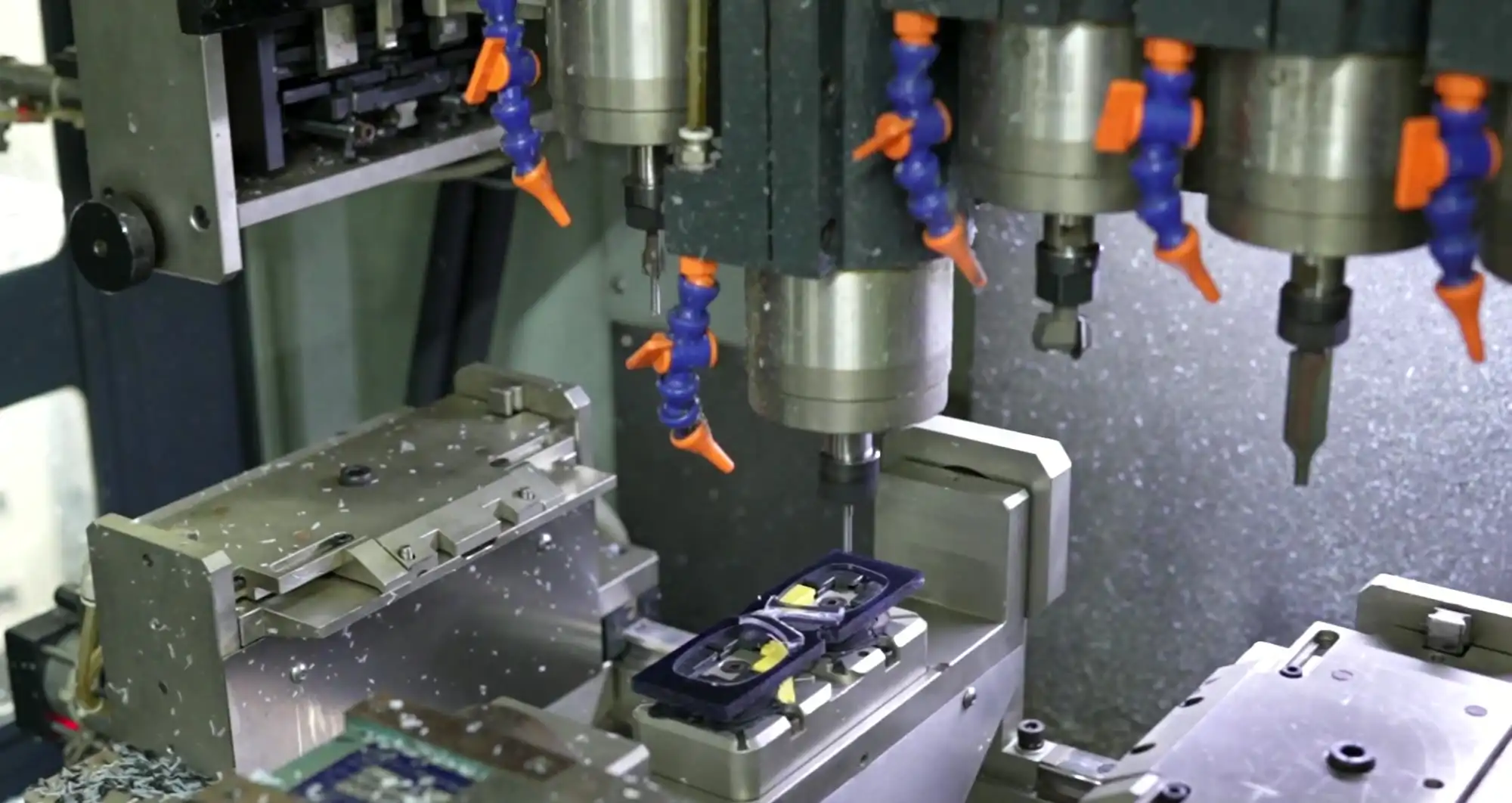
Digitally drafted CAD/CAM toolpaths drive customized high-speed multi-axis CNC machines to mill frame fronts and temple profiles. Cutting tools execute the eyewire rim profiles, front curve curvature (base curve 2 to base curve 6), calibrated lens retention grooves, and precision mortises for hinge integration within ±0.05 mm tolerances.
A machine guarantees geometric consistency; master artisans deliver anatomic comfort. After milling, frame components are hand-scraped and filed. Craftsmen refine the bridge nasal bed, bevel internal edge transitions, and blend temple bevels to ensure hours of pressure-free wear across international face contours.
Temples are pre-heated in localized ceramic ovens to make the acetate pliable, allowing custom-patterned stainless steel or nickel-silver reinforcing core wires to be driven precisely along the temple axis. Robust 3-barrel, 5-barrel, or spring hinges are securely embedded using ultrasonic or heat-staking techniques, securing enduring hinge tension.
The frames enter an exhaustive 72+ hour tumbling process inside octagonal beechwood barrels containing pumice chips, natural oils, and polishing granules across three sequential coarseness grades. Final gloss is unlocked on manual buffing wheels by experienced polishers using micro-abrasive diamond paste, creating deep, glass-smooth luster without melting crisp lines.
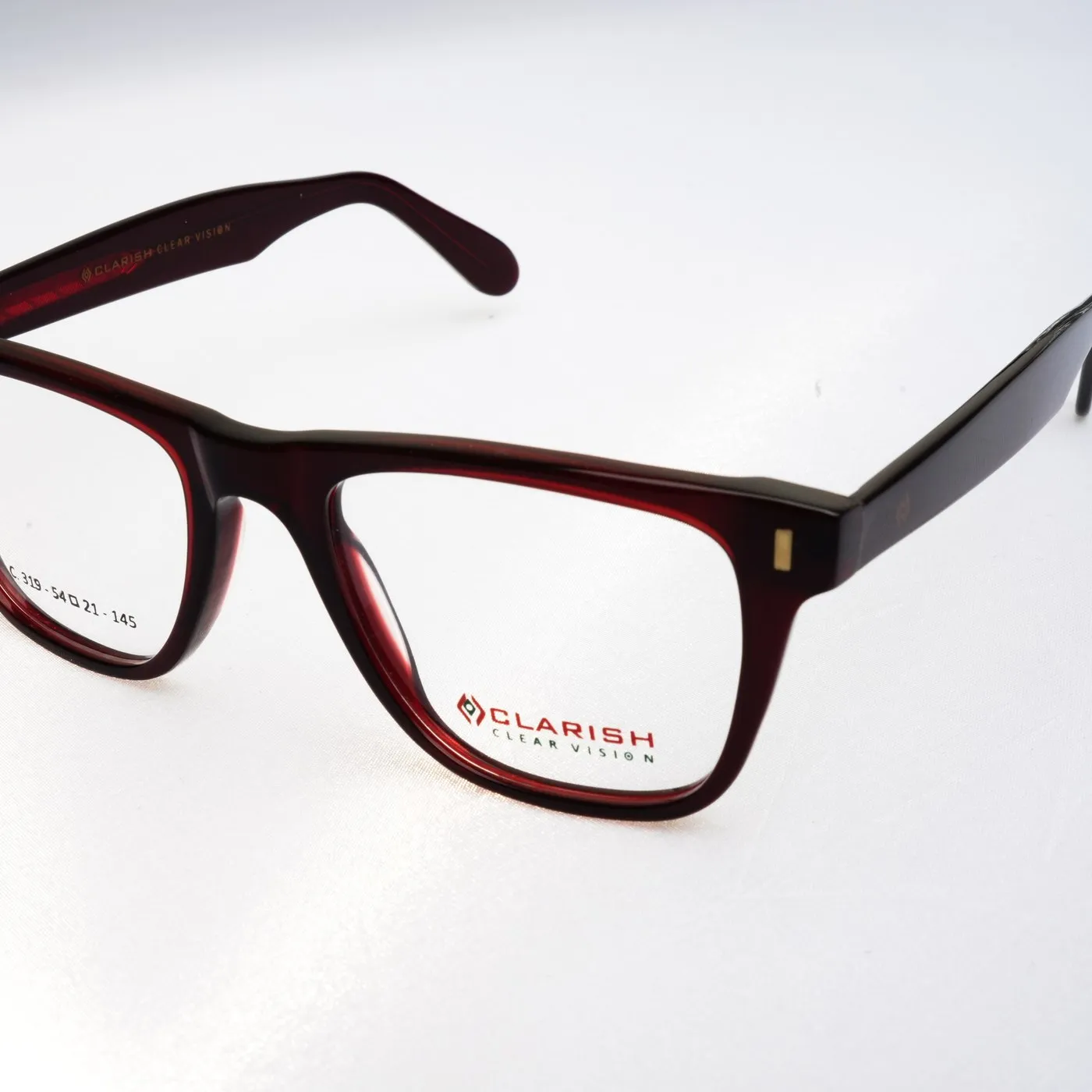
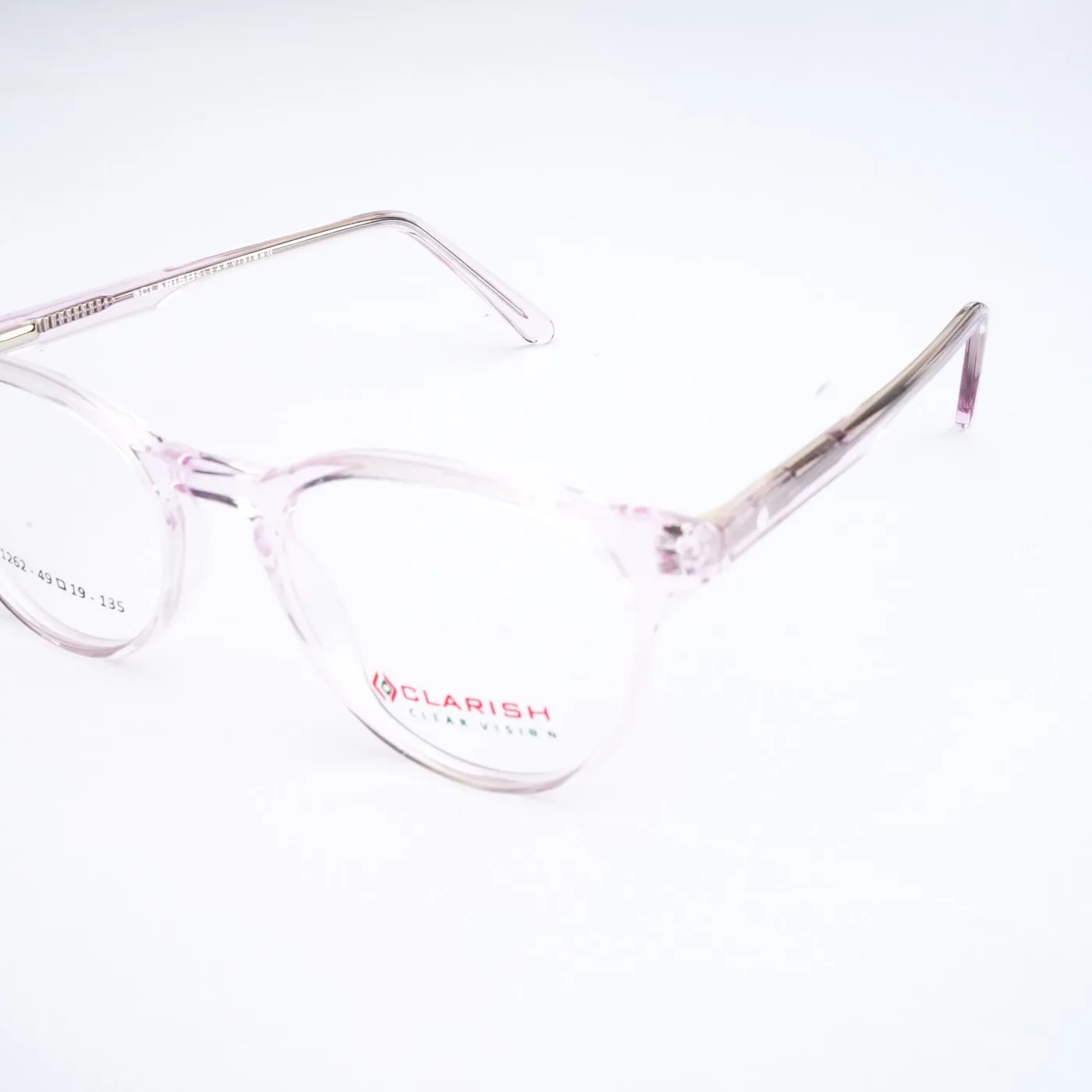
Client marks and legal identification are applied to your authorized specifications. Options include multi-color precision pad printing, deep metallic foil hot-stamping, and non-fading fiber laser engraving. Internal temple markings detail collection names, standardized sizing (e.g., 54□19–145), colorway IDs, and CE/UKCA regulatory compliance marks.
Prior to acceptance, every completed frame must pass a five-stage quality checkpoint conducted under calibrated daylight luminaires. Front symmetry, pantoscopic tilt angle, temple opening resistance, lens grove integrity, and surface finishing are benchmarked against golden master samples before release.
Frames receive ultrasonic cleaning, a static-neutralizing wipe down, and protective temple sleeve sleeving. Packaged in customized retail gift boxes, hard cases, and branded micro-fiber pouches, final consignments are crated in drop-tested, moisture-barrier master cartons with full commercial and customs clearance documentation prepared for global air or ocean transit.
Critical Stages in Every Production Cycle
Independent In-Line Quality Checkpoints
Hand-Inspected & Artfully Finished
Manufacturing in Ahmedabad, India Since
Factory Transparency
Unfiltered footage recorded directly at our workshop in Ahmedabad, Gujarat. High-speed CNC tooling, water-cooled cutters, tumbling drums, and craftsmen shaping raw acetate fronts.
Zero-Defect Philosophy
Inspecting only at final packaging merely reveals what needs to be scrapped. Our in-line quality management protocol identifies microscopic deviations early, ensuring tight assembly tolerances and consistent delivery dates for international distributors.
Testing incoming cellulose acetate sheets for polymer integrity, visual inclusions, consistent sheet thickness, and baseline hydration levels before releasing material to the cutting queue.
Coordinate measuring machine (CMM) auditing of bridge widths, eye sizes, rim groove angles, and hinge mortise depths immediately after milling cycles to eliminate cutter drift.
Bench check of 4-point facial co-planarity, temple rake angle, symmetrical splay opening, and smooth hinge joint torque after core wire insertion and assembly.
Individual inspection under 5000K daylight-balanced illumination. Checking for crisp rim definition, absence of orange peel or wave defects, and deep, distortion-free mechanical polish.
Final demo lens seating verification, temple brand marking legibility check, ultrasonic cleaning, and barcode verification against the client's approved master packaging bill.
Every production run complies with international optical standards (ISO 12870 for ophthalmic frames and ISO 12312-1 for sunglasses), supporting seamless CE and UKCA import declaration.
Discerning Craftsmanship
Seasoned eyewear procurement managers examine details that cannot be concealed by surface gloss. Our Ahmedabad workshop takes pride in the engineering benchmarks that define truly luxurious acetate frames.
Ready for Sampling & Production?
Manufacturing in Ahmedabad since 1985. Batch sizes, custom color formulation, tooling creation, and production schedules are customized directly around your optical brand launch.