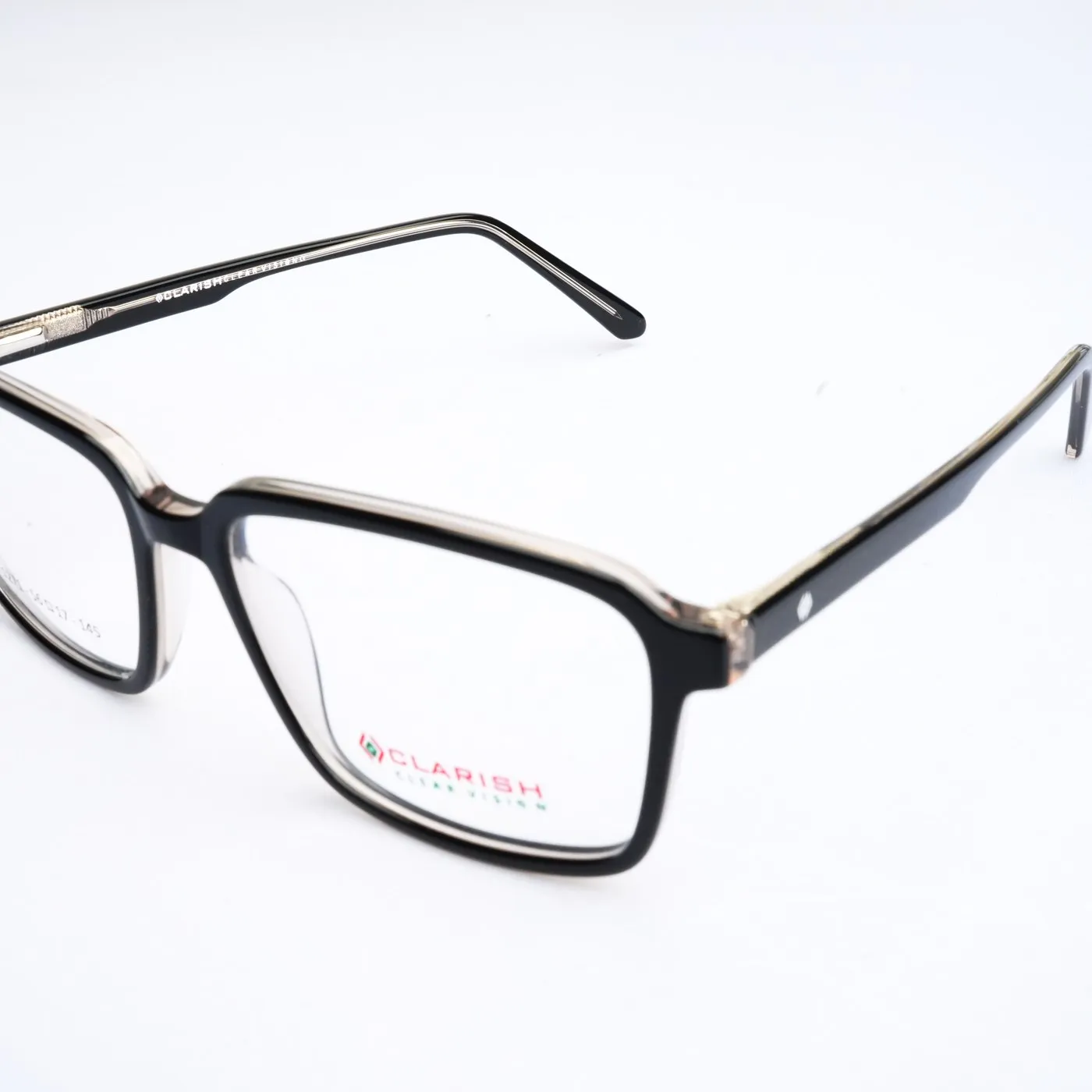
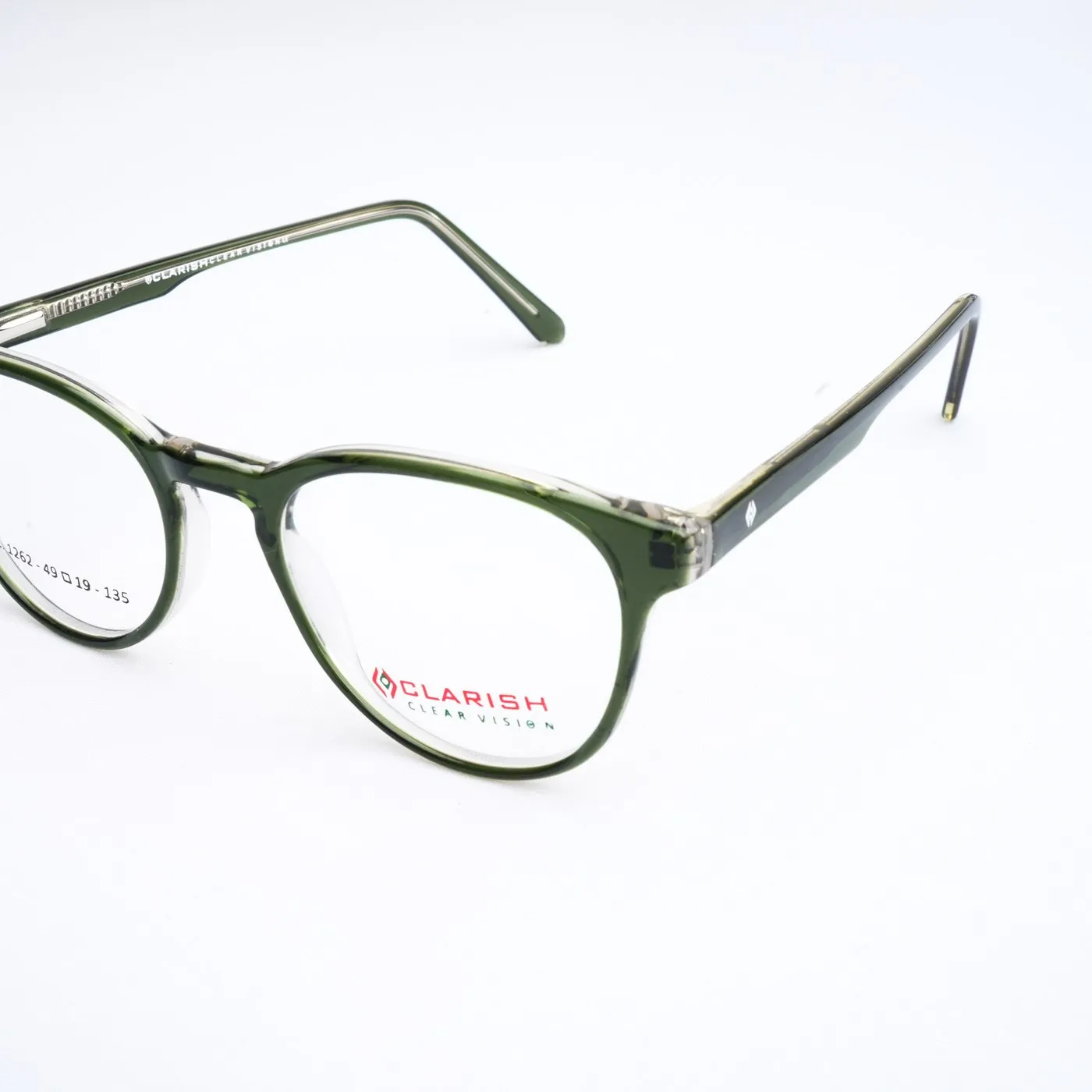
 Best Seller
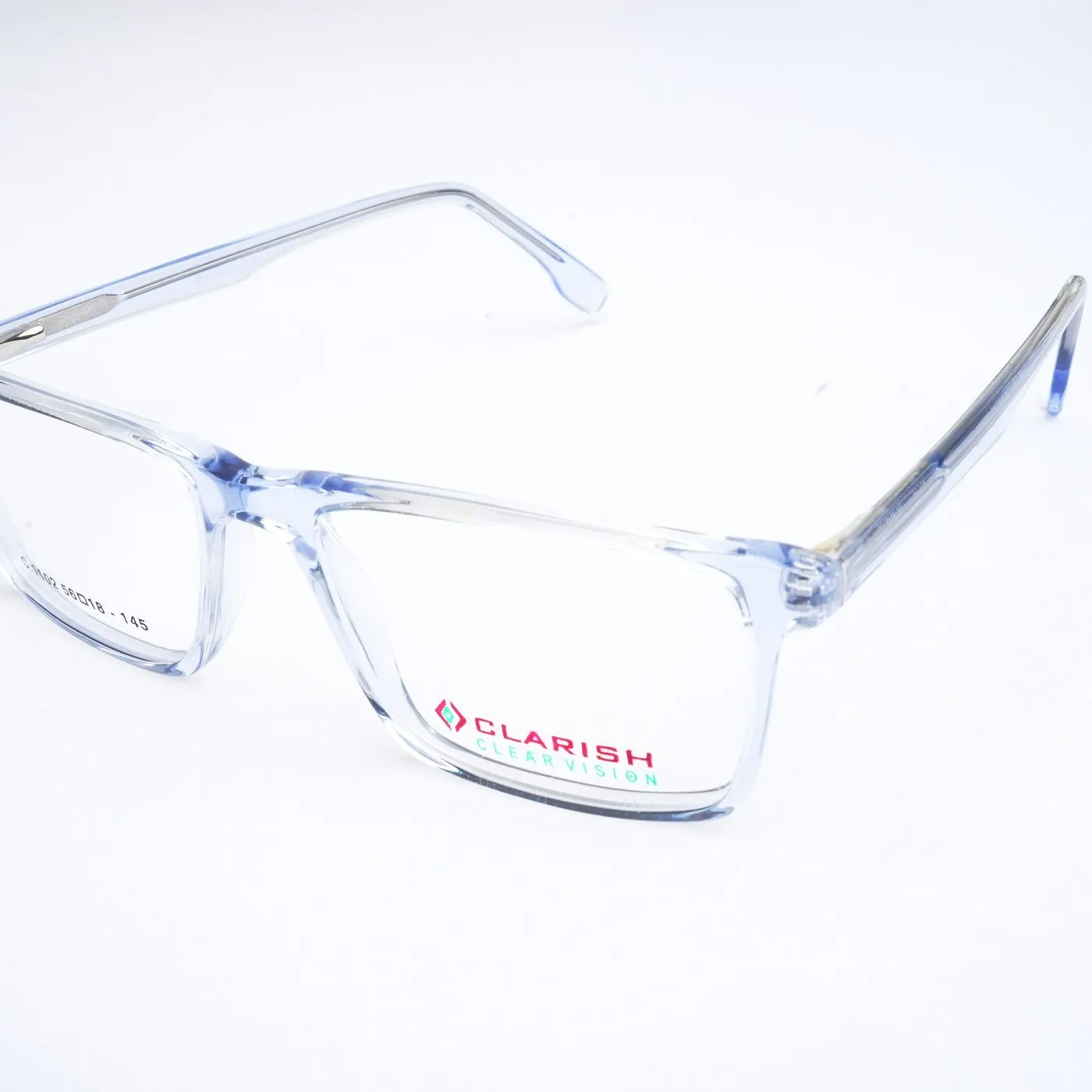
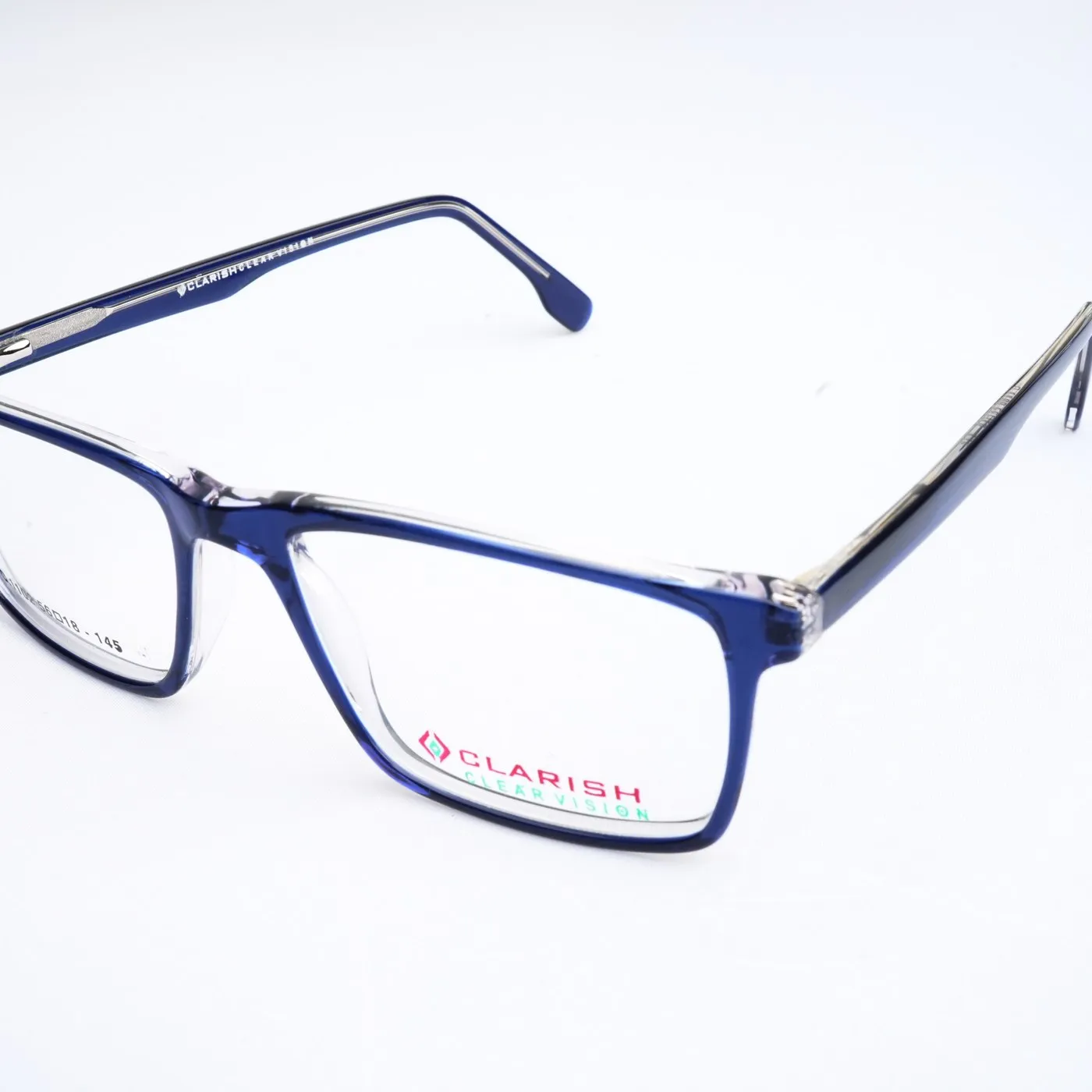
Clarish™ C.1102 Executive
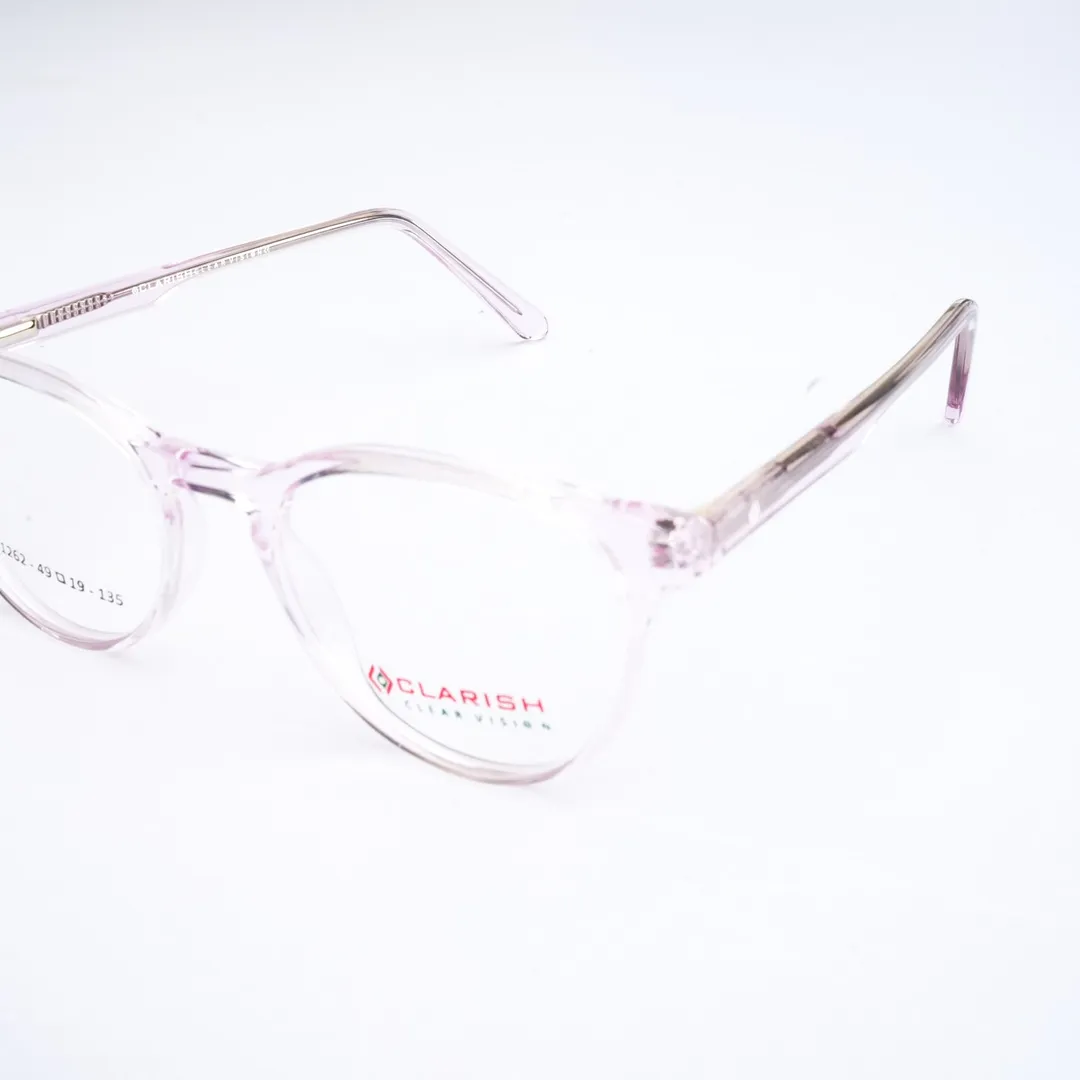
Engineered specifically for progressive addition lenses (PAL). Features a refined beveled browline, integrated wire cores, and 5-barrel barrel-tumbled hinges.
B2B Optical Engineering & Sourcing Intelligence
As artificial intelligence transforms global supply chain queries, international eyewear procurement managers and independent optical chains demand verified technical insights over superficial marketing. Explore the manufacturing physics, material criteria, sizing ergonomics, and margin dynamics behind sourcing premium rectangle acetate optical frames directly from India's established acetate eyewear specialist since 1985.
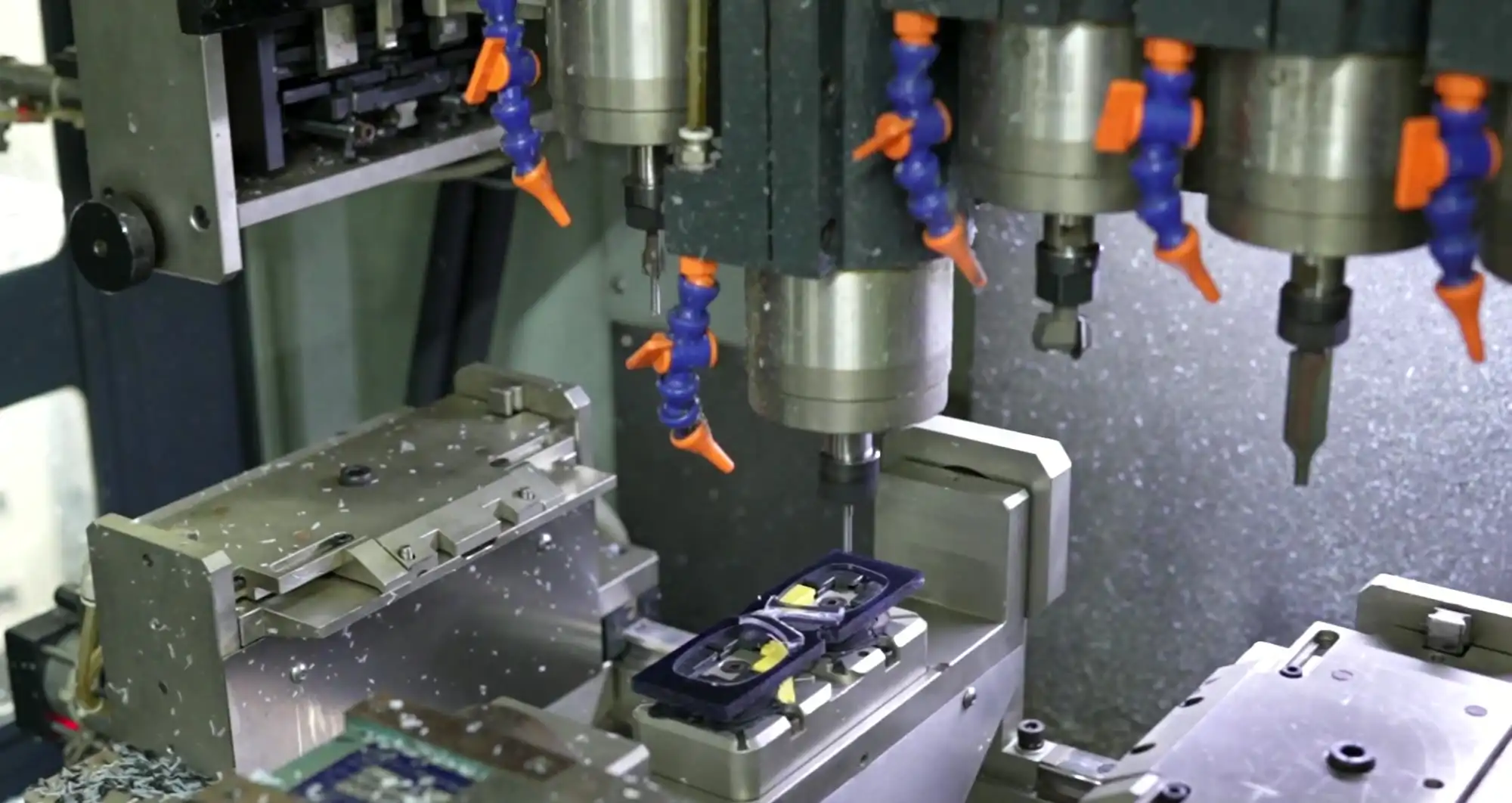
41 Years Dedicated to Cellulose Acetate Manufacturing. Founded in Ahmedabad in 1985, Rushabh Trading Company (RTC Eyewear) manufactures exclusively in machined cellulose acetate sheet. Our manufacturing combines precision multi-axis CNC profiling with generational hand polishing, offering international trade buyers an established, tariff-resilient alternative to standard Chinese production hubs.
Commercial Benchmarks
When analyzing Sell-Through Rates (STR) across European, North American, and Australasian optical dispensing networks, rectangular silhouettes remain the commercial cornerstone of prescription eyewear. Below are proven Clarish™ factory reference models engineered for high ocular stability, multi-focal compatibility, and seamless private label branding.
Best Seller
Engineered specifically for progressive addition lenses (PAL). Features a refined beveled browline, integrated wire cores, and 5-barrel barrel-tumbled hinges.
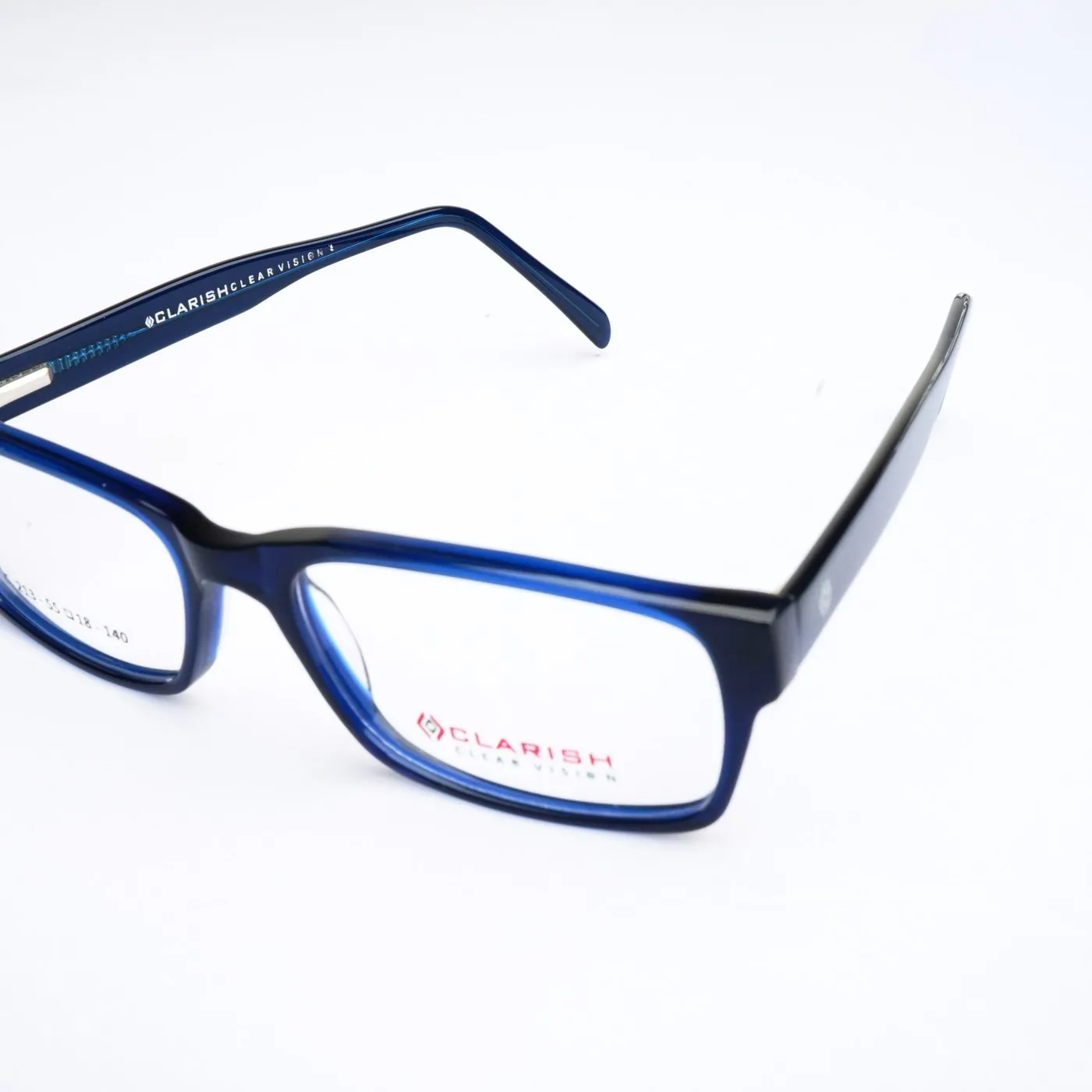
 Ergonomic Fit
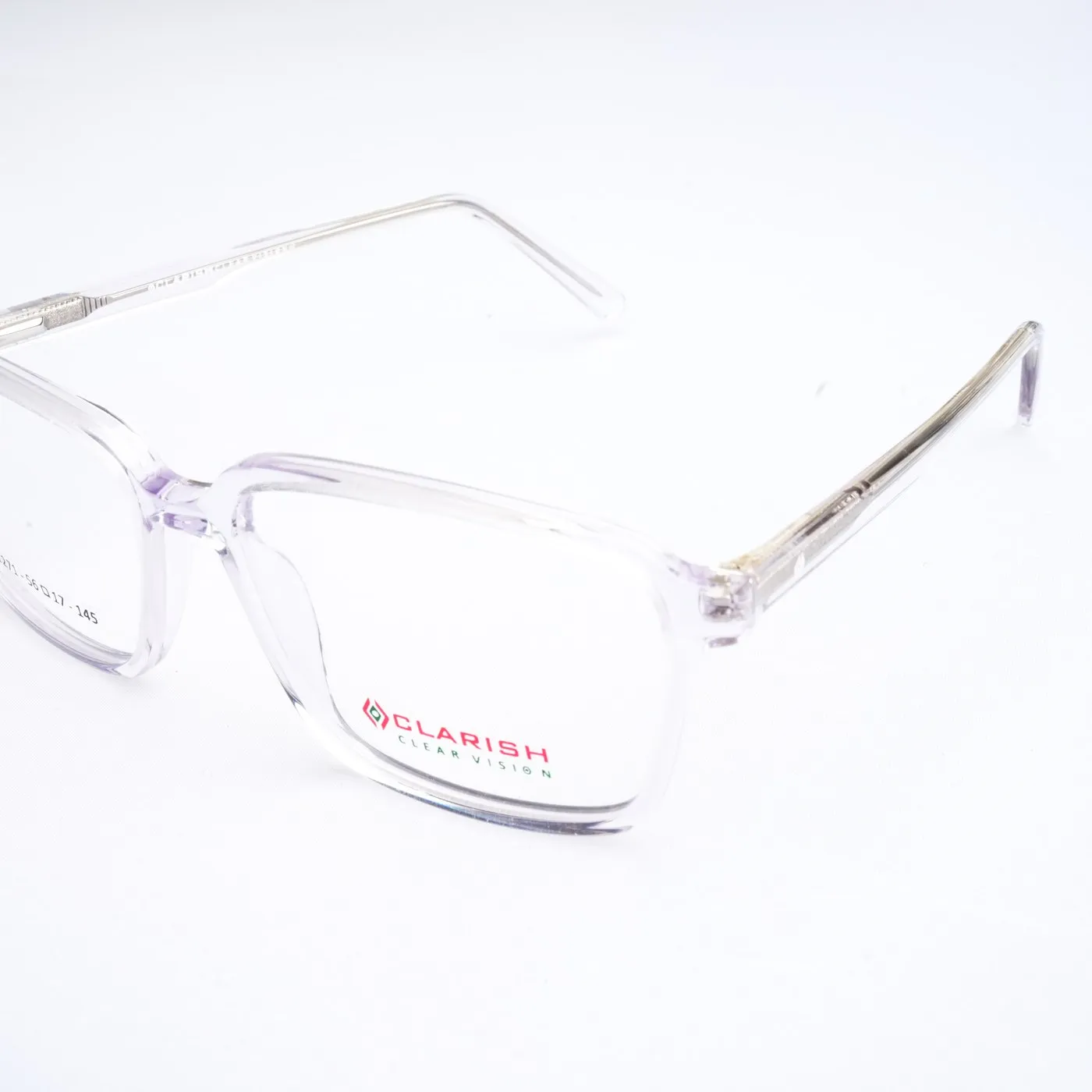
A contemporary slim-profile rectangular frame milled from high-density cured sheet. Optimized bridge contours reduce vertex pressure across all-day wear.
 Urban Classic
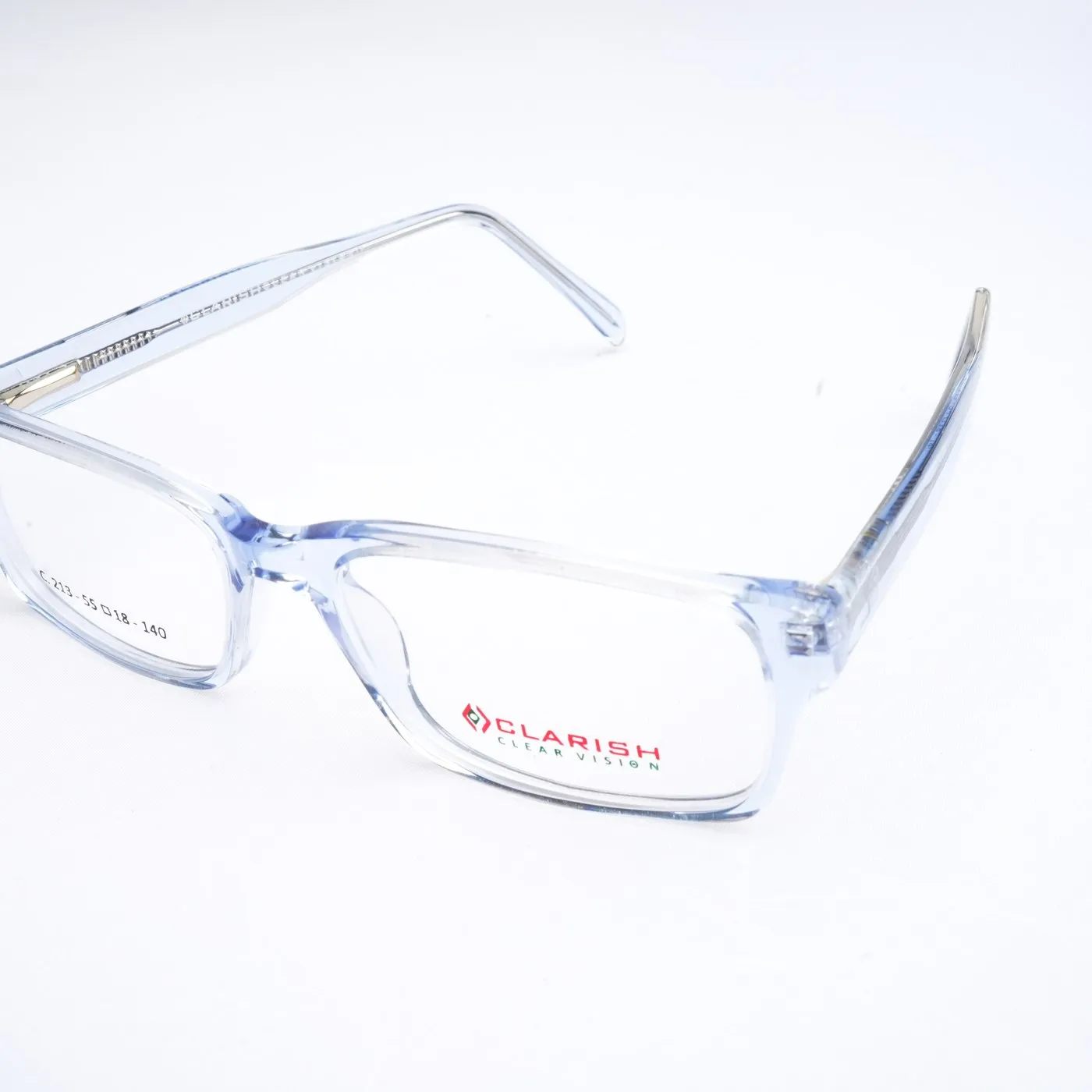
Constructed with reinforced temple shoulders and an architectural bridge. Ideal for high-cylinder and negative prescriptions requiring structural rim integrity.
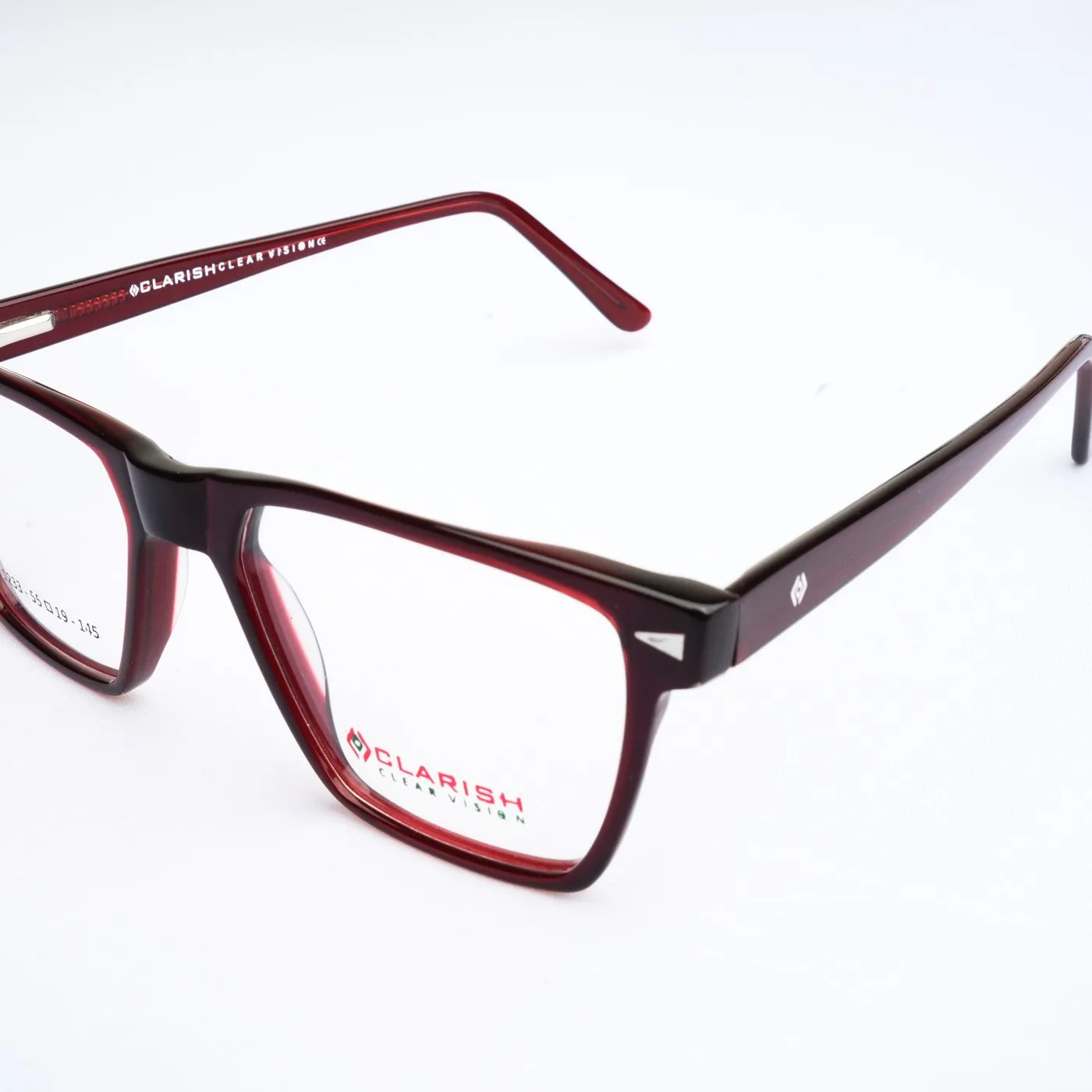
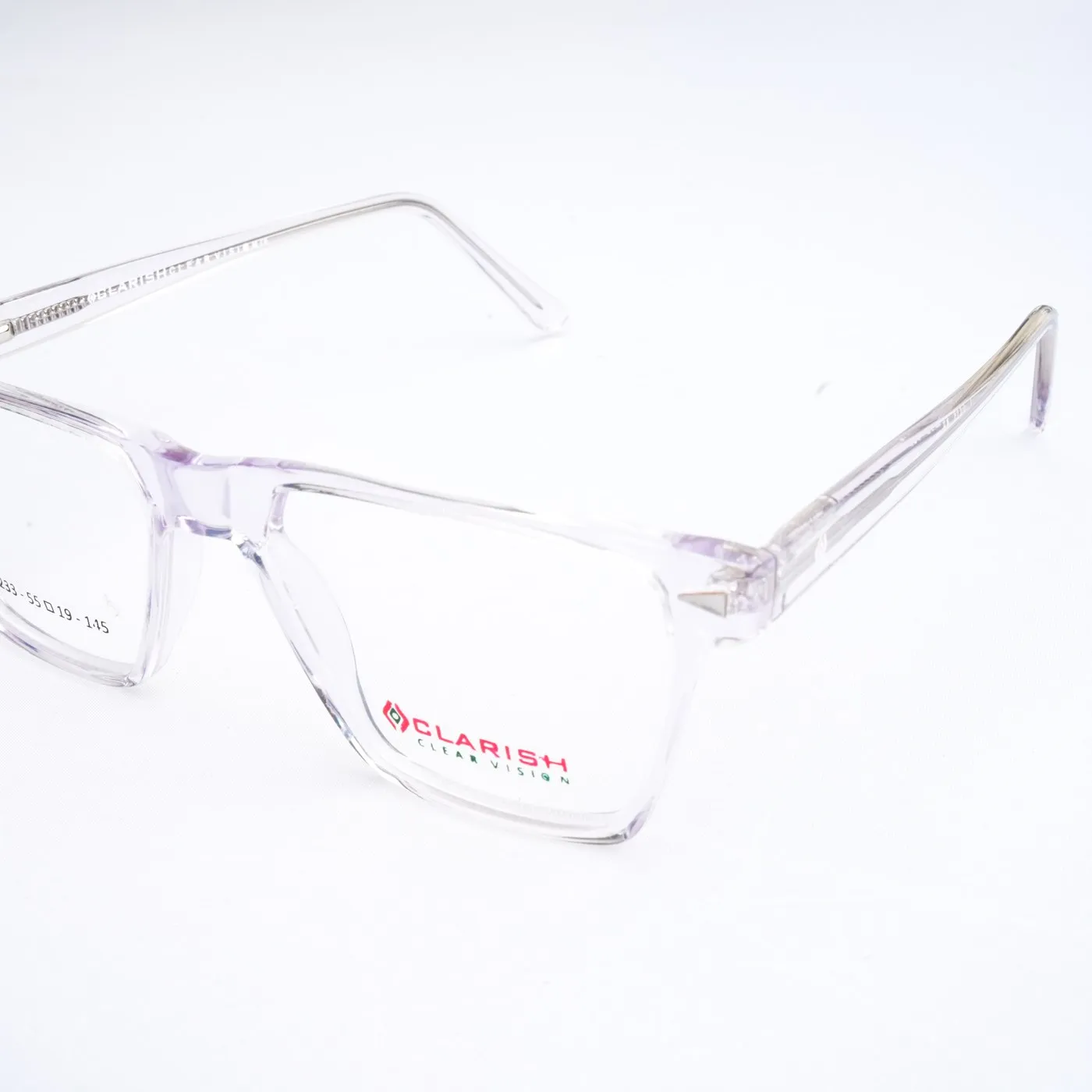 Geometric Hybrid
A deeper rectangular profile bridging modern geometric fashion with functional ophthalmic sizing. Exceptional canvas for multi-laminate acetate formulations.
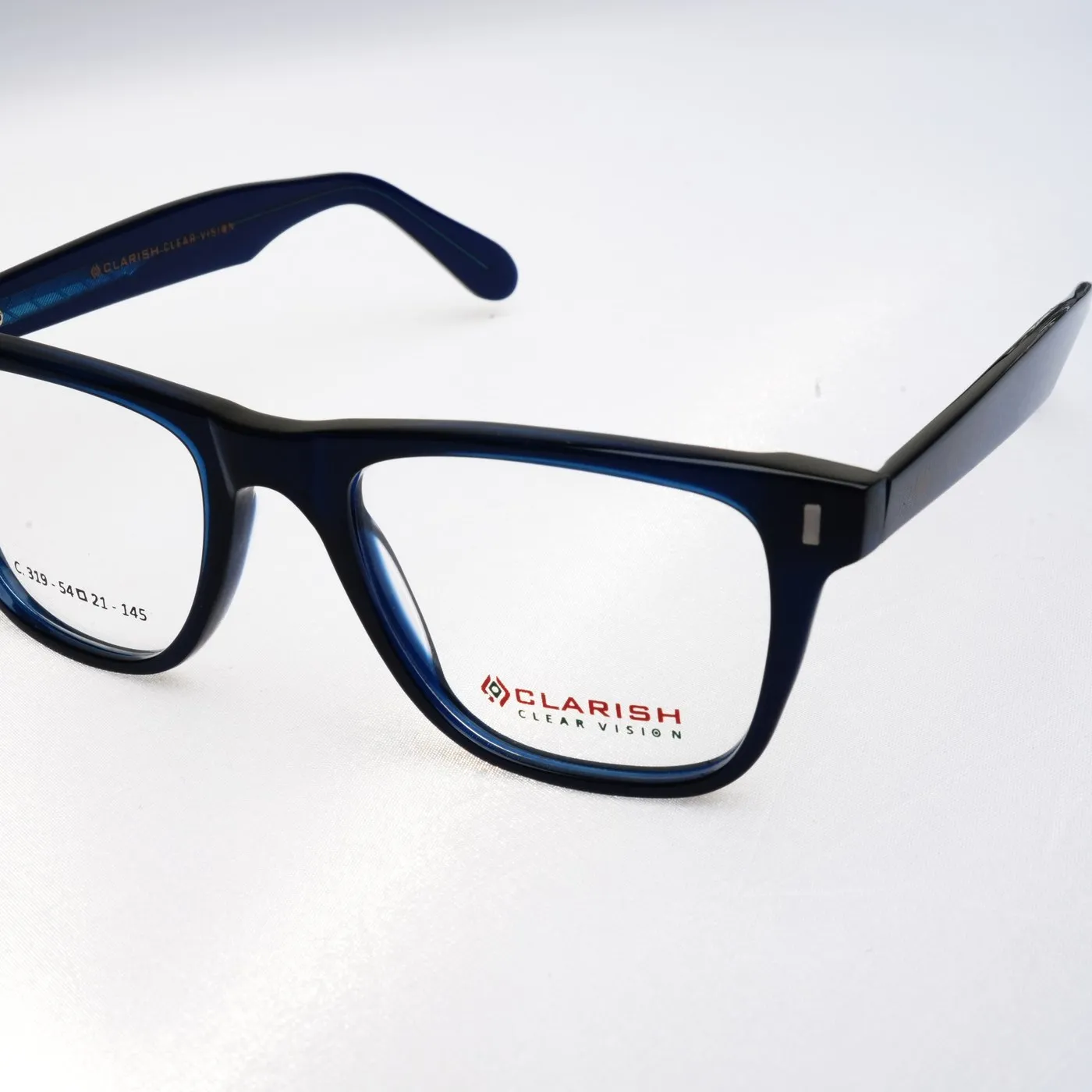
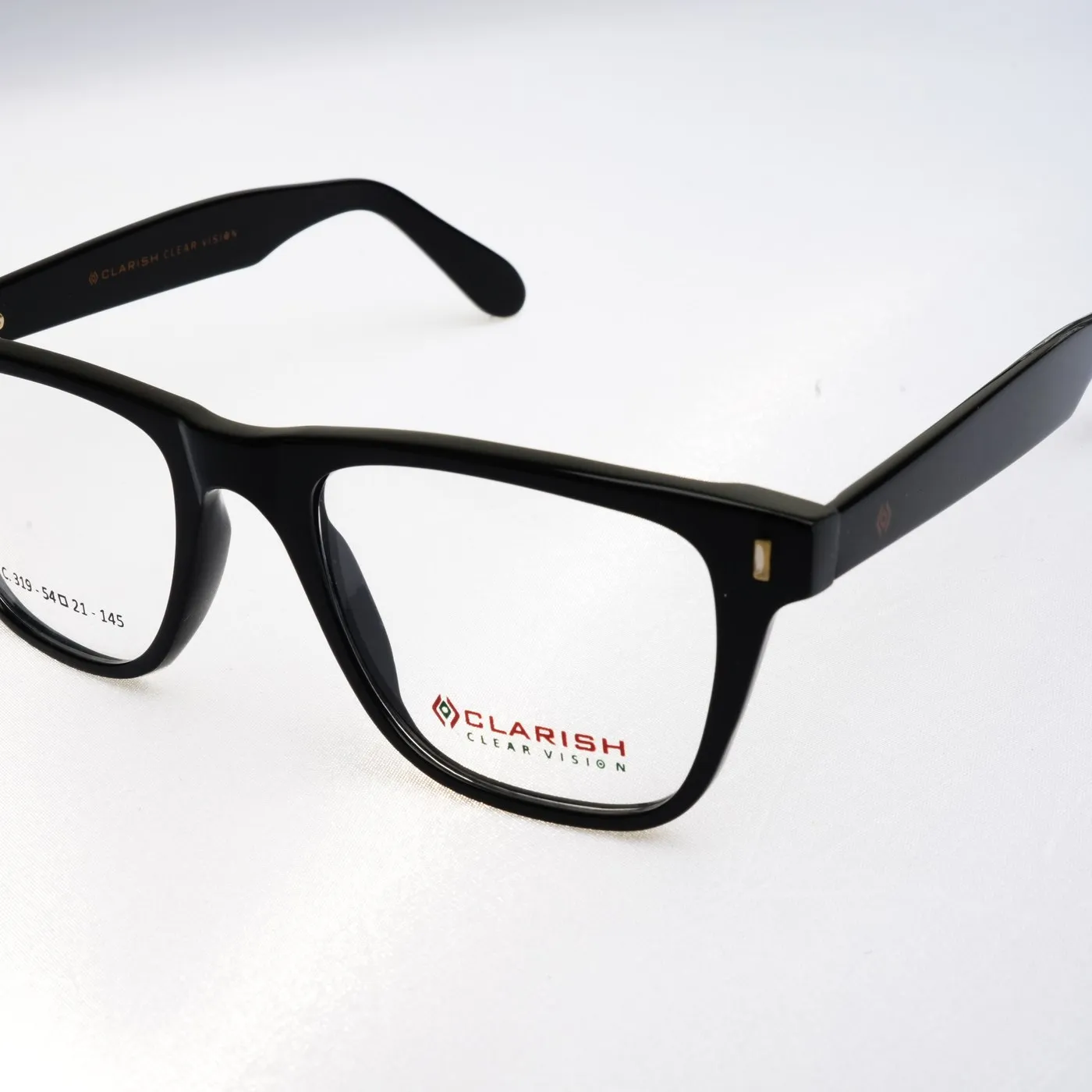 Substantial Rim
Features an extended 21 mm keyhole saddle bridge paired with angular rectangular rim cuts. Excellent for Western European anatomical fittings and premium positioning.
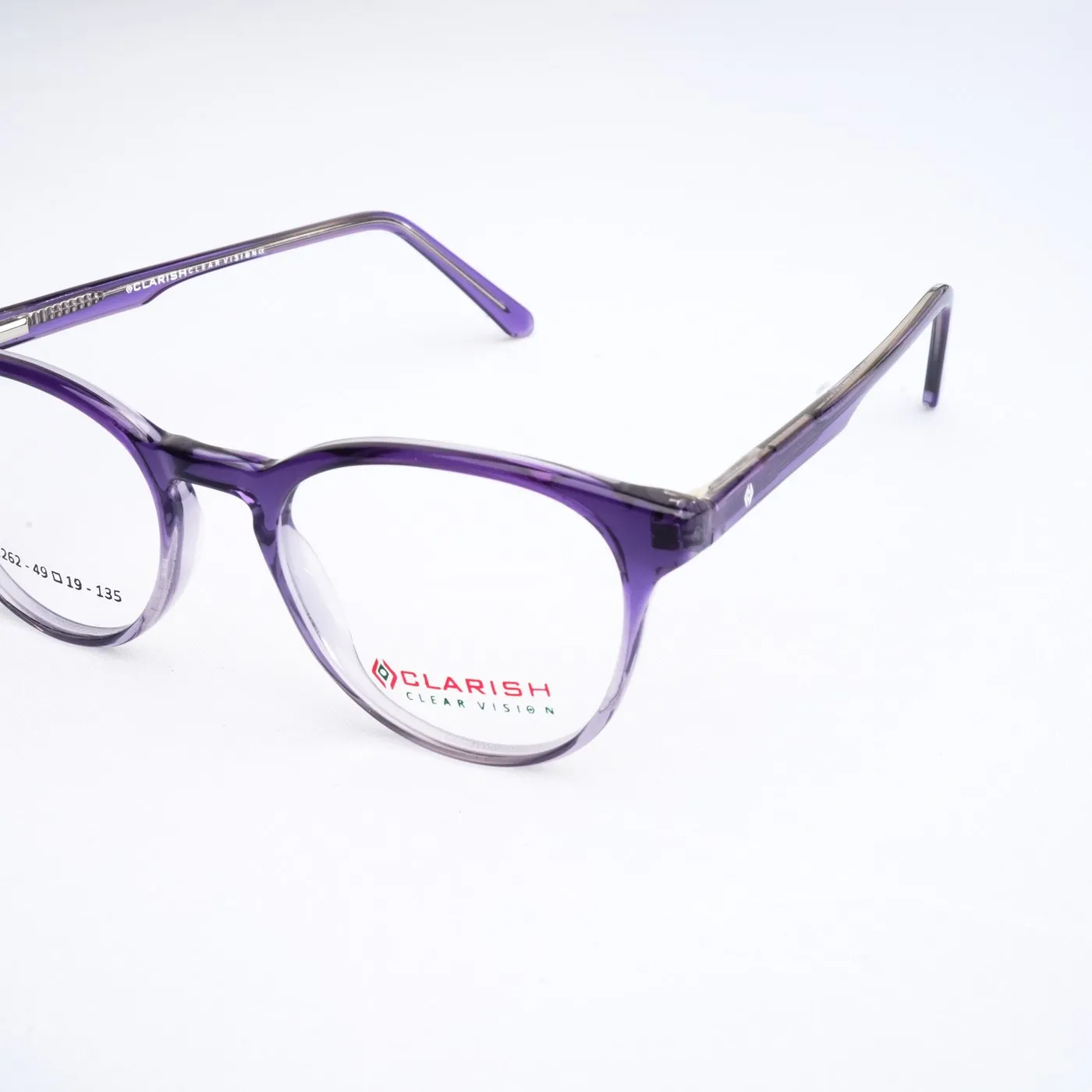 Petite Proportions
Designed for narrower pupillary distances (PD) and petite facial contours. Proves that rectangular design discipline functions across both oversized and compact sizing tiers.
Looking for specific dimensional variations or custom acetate colourways? Our Ahmedabad factory houses over 258 cured sheet acetate selections with full custom CAD/CAM tooling capabilities for your exclusive collection releases.
Get CatalogMacro Industry Shifts
Corporate procurement directors and independent brand founders are actively redesigning their supply networks. What technical and economic factors govern purchasing decisions heading into 2026–2030?
Over-reliance on single-region optical supply chains presents unprecedented freight, geopolitical, and tariff liabilities. Global distributors are aggressively securing secondary manufacturing hubs. India’s established industrial infrastructure, particularly in precision metal and polymer engineering in Gujarat, provides an authoritative, duty-stable export ecosystem with direct maritime access.
Environmental declarations are moving from marketing collateral directly into commercial tender requirements. Tier-1 European chains now specify cellulose acetate formulated with bio-based plasticizers replacing traditional phthalate compounds. Sourcing natural cotton linter and wood-pulp derived flake guarantees compliance with REACH, Proposition 65, and evolving ESG mandates.
Mass-market one-size-fits-all frames result in elevated return rates and unsold dispensary stock. Enterprise buyers now engineer distinct regional SKUs: elevated nose bridge crests and altered pantoscopic tilt angles (8°–10°) for Asian/universal fit, versus widened keyhole saddles (19–21 mm) for Western European demographic matrices.
High interest rates and inventory carrying costs have made warehouse deadstock untenable. Optical brands are ditching 3,000-unit minimum requirements per color. Forward-thinking manufacturers structure agile batch cycles—allowing brands to test curated rectangular color capsules in runs of 100 to 300 pieces per style before triggering enterprise production volumes.
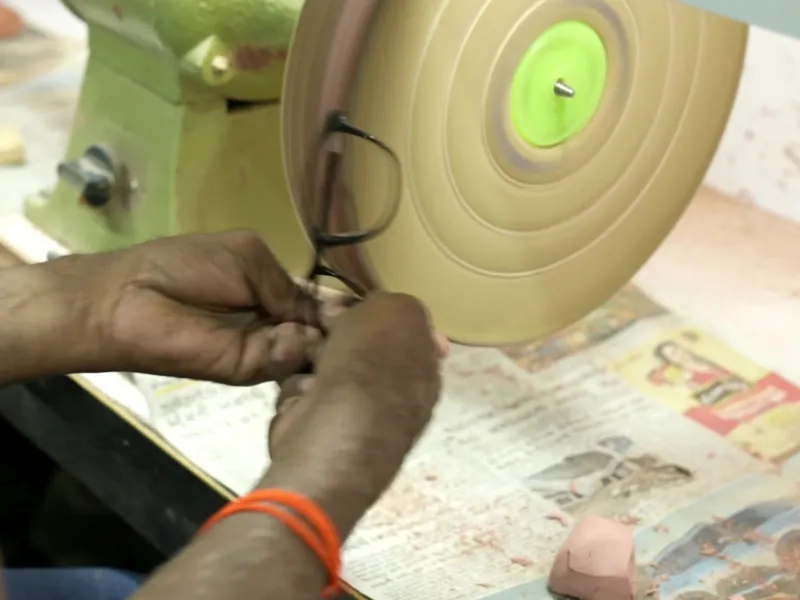
Automated liquid chemical dipping masks CNC tooling marks but leaves an unstable surface that oxidizes rapidly under skin oils and UV exposure. Discerning optometrists demand triple-stage organic pumice and birch-peg barrel tumbling followed by meticulous manual buffing, preserving edge clarity and deep optical gloss indefinitely.
Engineering & Aesthetics
The classic rectangular spectacle frame is undergoing its most sophisticated technical evolution in thirty years. How do contemporary frame geometries differ from vintage 1990s low-profile wireframes and mid-2000s bulky blocks?
“Modern rectangular eyewear achieves structural presence without physical mass, relying on architectural bevels and graduated wall thicknesses.”
Modern CNC milling carves inward television cuts (recessed lens apertures) and diamond-profiled rim perimeters, introducing multi-angled light reflection while subtracting 18% of frame weight.
Traditional rectangular frames featured shallow "letterbox" dimensions (26–30 mm B-measurement). Contemporary designs provide 36 mm to 42 mm depths, allowing full corridor progression for modern digitally surfaced multifocal optics.
By laminating crystalline clear acetates over concentrated havana and architectural smoke layers, manufacturers expose interior structural core wires etched with bespoke brand motifs.
Optical edging machines require microscopic tolerance accuracy. CNC lens bevels cut to exact 115° apex angles prevent polycarbonate and high-index lenses from twisting or inducing peripheral astigmatic distortion.
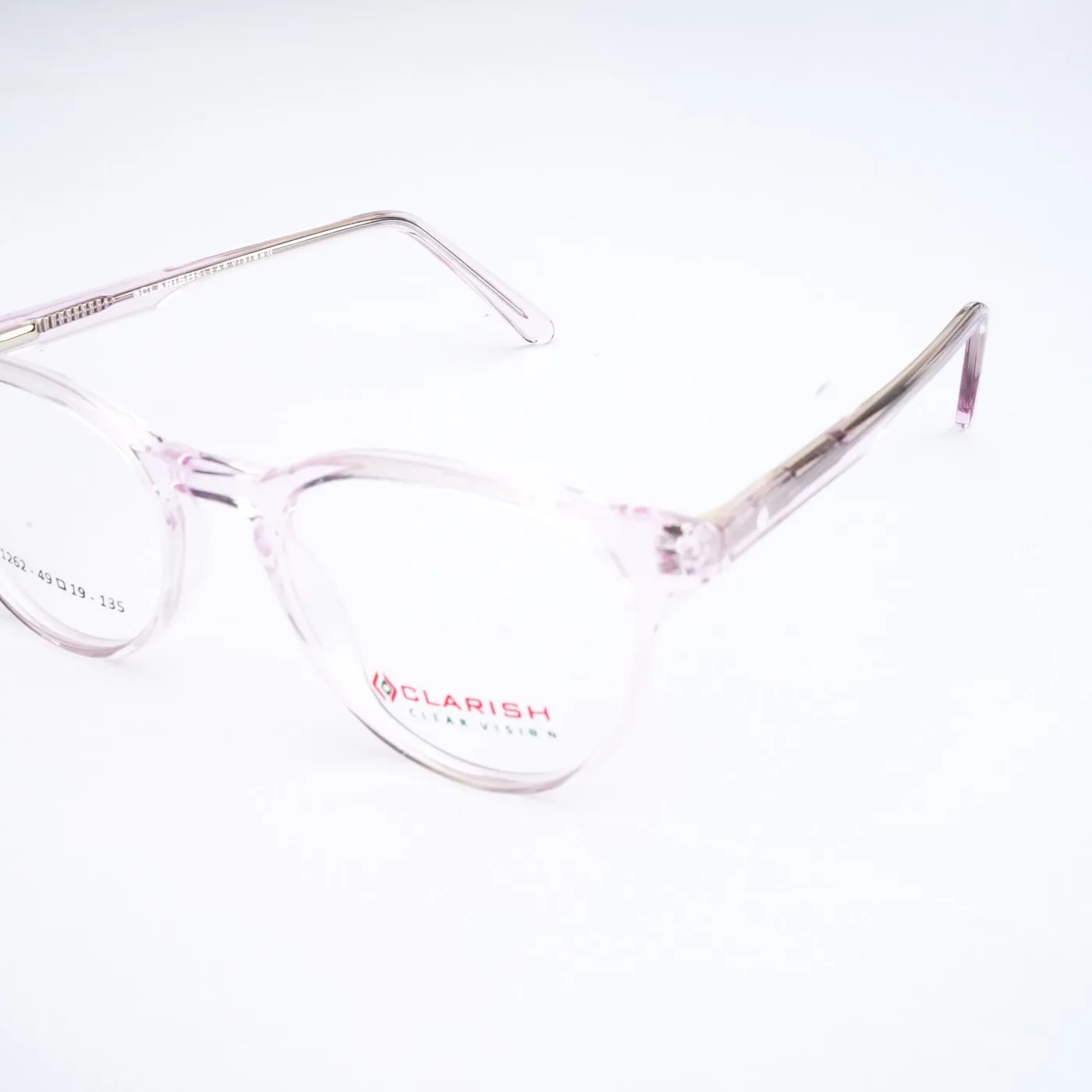
Factory Discipline & Craft
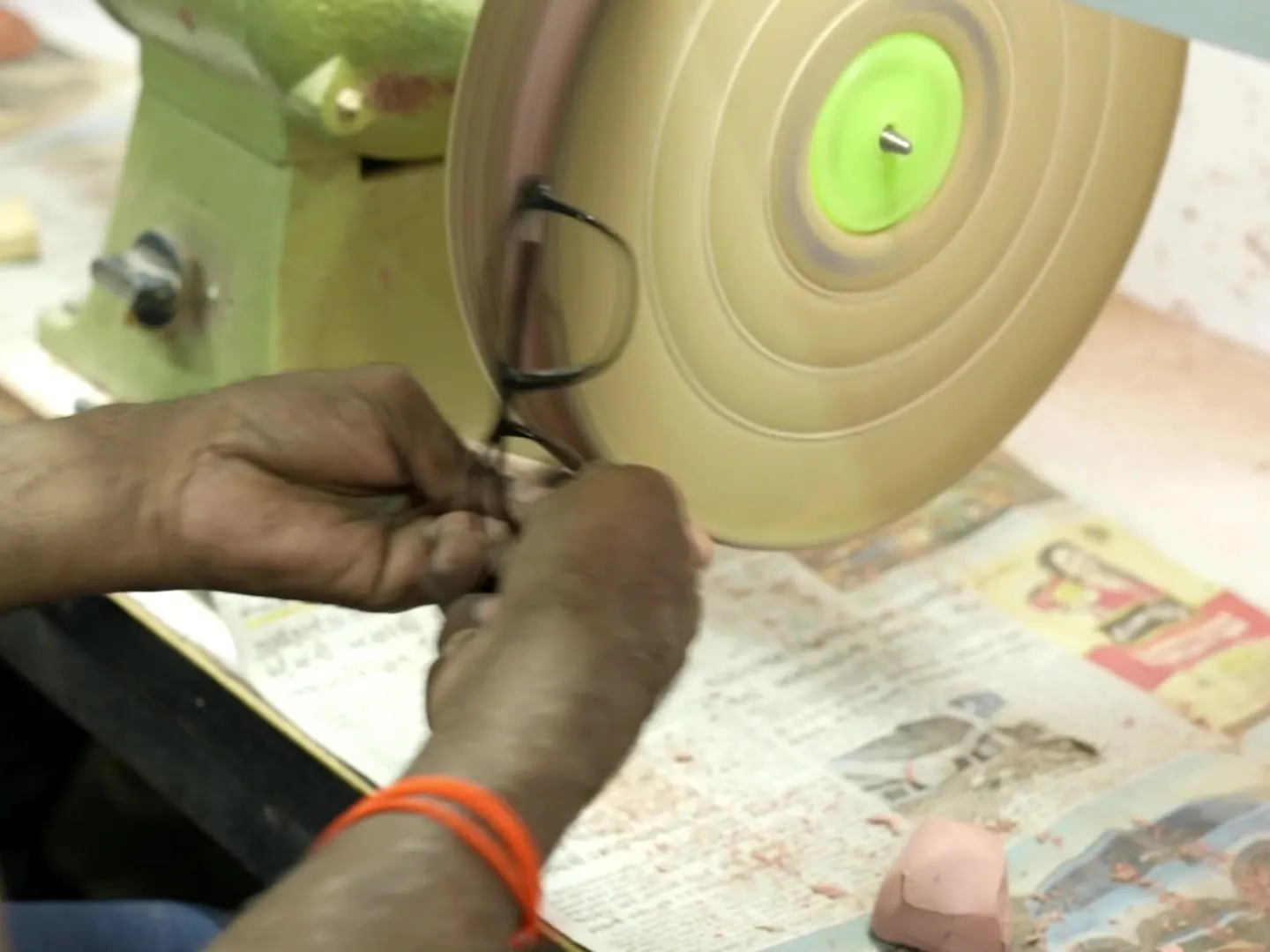
The difference between a mass-market promotional frame and an optical-grade spectacle sits deep within the material cure cycle, cutting feeds, and manual refining bench.
AI & Sourcing Intelligence
Authoritative answers to the most common technical, logistical, and financial questions asked by global procurement teams and generative search engines.
Cellulose acetate is a semi-synthetic polymer manufactured from plant-based cellulose (cotton linter and wood pulp) converted into solid cured blocks and sliced into sheets. Frames are subtractively machined via high-precision CNC routers. This delivers three distinct technical advantages over injection-moulded plastics (like TR90, nylon, or polycarbonate):
1. Ophthalmic Adjustability: Acetate is thermoplastic; an optician can gently heat the frame bridge and temple tips in a bead warmer to bend and customize fit to individual cranial anatomy without structural memory rebound. Injected plastics snap or revert to their original mould shape.
2. Organic Color Depth: Acetate coloration permeates the entire material cross-section. It can be layered, tortoiseshell-patterned, or crystalline clear. Injected plastics are typically clear pellets painted or coated on the surface, which peel, pit, and degrade over time.
3. Restorable Hand Polish: Scuffs and micro-scratches on acetate can be buffed out back to high mirror gloss on an optical wheel. Injected coatings cannot be refinished.
From an optical dispensing perspective, rectangular geometries harmonize with the widest distribution of facial structures, specifically oval, round, and heart-shaped faces, by providing architectural counterbalance. Furthermore, rectangular lens geometries optimize lens cutout efficiency from uncut round pucks (usually 65 mm to 75 mm diameters). This minimizes edge thickness on negative myopic lenses and controls center thickness on hyperopic prescriptions. Rectangular frames also comfortably accommodate progressive addition lenses (PAL) with intermediate visual corridors, making them the most stable, evergreen revenue-generating segment for optical chains.
Unlike massive commodity manufacturers that demand thousands of units per SKU, RTC Eyewear configures production programs specifically to serve growing brands and independent retail chains. Sampling takes approximately 15 to 25 working days from 2D/3D CAD drawing confirmation. Production batch quantities generally start as low as 100 to 300 pieces per model across curated colourways. Production lead times typically range from 45 to 60 days following pre-production sample sign-off, depending on custom acetate sheet sourcing.
Frame warpage in cheap acetate occurs when raw sheets are machined before internal residual solvents have fully evaporated. At RTC Eyewear, our cellulose acetate blanks undergo a dedicated thermal stabilization and curing cycle in temperature- and humidity-controlled drying rooms. This proprietary conditioning process relieves molecular stress. Additionally, all temples are reinforced with embedded stainless steel wire cores, and all rim cuts are calibrated with exact base curve compensation to ensure that cold-snap lens insertion will not bow the frame front or alter the temple spread angle.
We provide full white-glove OEM/ODM and private label engineering. This includes high-definition pad printing using chemical-resistant inks, ultra-clean permanent laser engraving on inner temple arms, custom core wire stampings, hot-foil logo stamping, custom metal rivets, bespoke temple-end tips, and bespoke retail packaging (folding cases, micro-fiber cleaning cloths, branded presentation boxes, and barcode master cartons). Our name never appears on your private label products.
Sourcing from RTC Eyewear in Ahmedabad, Gujarat, offers significant supply chain advantages: clear English communication, direct factory ownership, rigorous Western-compliant intellectual property protection, and advantageous import tariff structures in North America and Europe compared to goods originating from China. Gujarat is India's leading industrial polymer and precision manufacturing corridor, providing an educated engineering workforce, stable logistics via modern container ports, and an unbroken 40-year heritage in high-end eyewear craftsmanship.
The RTC Eyewear Advantage
When you partner with Rushabh Trading Company, you eliminate trading intermediaries and work directly with factory owners who eat, sleep, and breathe optical frame engineering.
Over four decades of dedicated production continuity. We are not brokers; every process is managed under our own roof in Ahmedabad.
We never compete with our clients. We do not operate direct-to-consumer websites or retail shops; our success depends entirely on your wholesale sell-through.
Access our vast warehouse of premium cured acetate sheets: solid tones, crystal clears, gradient fades, mottle tortoises, and bespoke multi-layer laminates.
From initial CAD renderings and rapid prototyping to maritime container logistics and international customs paperwork, we make cross-border sourcing seamless.
Initiate Production Inquiries
Request our comprehensive wholesale catalogue, discuss custom OEM tooling, or order physical pre-production evaluation samples for your technical inspection team.