Explore our export-certified optical frames and accessories, engineered via 5-axis CNC micromachining and barrel-finished with organic beechwood tumbling. Fully tested to European standard EN ISO 12870:2018 and REACH nickel-release compliance.
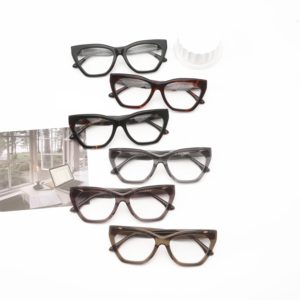
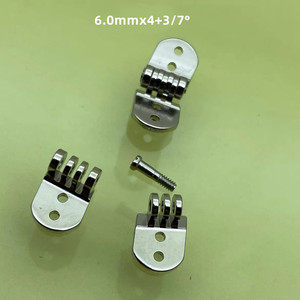
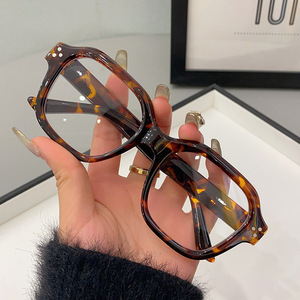
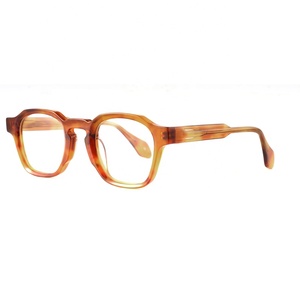
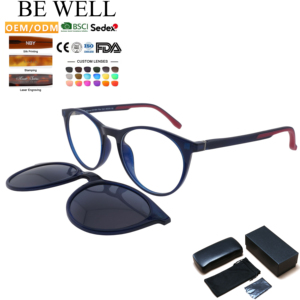
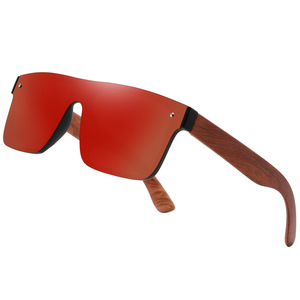


Looking for custom acetate thickness (up to 12.0 mm), bespoke laminations, or private label tooling for your upcoming seasonal collection?
Inquire NowRushabh Trading Company (RTC Eyewear) has specialized exclusively in cellulose acetate spectacle manufacturing since 1985. We bridge high-throughput German CNC precision with multi-day organic barrel finishing to create heirloom-grade ophthalmic frames.
Cellulose acetate is a plant-derived bioplastic synthesized from processed wood pulp and cotton lint. Unlike injection-molded plastics (such as TR90 or polycarbonate), block-cut sheet acetate exhibits crystalline polymer chains that preserve organic depth, thermal adjustability, and long-term dimensional retention.
The global luxury optical sector is undergoing a profound shift toward environmental compliance, bio-circular chemistry, and high-precision micro-structural engineering. Sourcing directors must understand these tectonic industry advancements.
Traditional cellulose acetate utilizes phthalate-based plasticizers (such as DEP) to impart elasticity. Emerging European procurement mandates require phthalate-free Bio-Acetate formulas utilizing triethyl citrate (TEC) derived from agricultural starches. These formulations decompose within 115 days under industrial composting conditions (ISO 14855) while delivering superior tensile strength and hyper-clarity in translucent crystal frames.
High-Density Cellulose Acetate (HDCA) compresses standard acetate sheets under thermo-hydraulic pressure, boosting resin density from 1.28 g/cm³ to 1.34 g/cm³. This enables factories to mill ultra-slender frame rims (sub-2.2mm profiles) that weigh 35% less than conventional frames while avoiding temporal frame warping and ensuring stable lens grooving under high optical prescription bevel loads.
In response to stringent EU RoHS and medical device biocompatibility guidelines, modern factories integrate pinless hinge fusion. German OBE or Italian Visottica-Comotec hinge components are ultrasonically fused into the acetate body without surface rivets, eliminating corrosion points, stabilizing opening torque over 20,000 hinge flex cycles, and ensuring skin neutrality for hyper-sensitive wearers.
B2B eyewear procurement is pivoting from pure price arbitrage toward supply chain resilience, compliance transparency, and inventory risk mitigation. Sourcing managers must plan their annual buy cycles around four structural market transitions.
Global optical retail chains are actively diversifying production outside mainland China. India's established manufacturing clusters in Gujarat provide significant cost optimization, highly skilled manual buffing masters, stable raw-sheet supply chains, zero anti-dumping tariff volatility, and favorable import tariff statuses across North America and Europe.
The European Ecodesign for Sustainable Products Regulation (ESPR) will mandate digital traceability for imported spectacles. Importers are partnering exclusively with factories capable of certifying raw cellulose origin (FSC/PEFC chain-of-custody), plasticizer non-toxicity declarations, and lot-level carbon footprint documentation.
High warehouse carrying costs have compressed order cycles. Optical brands are ditching massive 1,200-pair-per-SKU orders. Instead, they leverage modular ODM platforms: producing standard master front chassis (e.g., RTC's 22 production-ready Clarish silhouettes) with rapid private-label hot-stamping, laser branding, and agile colorway splits (100–300 pcs per hue).
Prescription eyewear is merging with clinical light management. Buyers are requiring factories to supply frames pre-engineered for clip-on magnetic therapeutic systems (FL-41 photophobia tinting, migraine filters, high-contrast driving lenses, and blue-light attenuation) without distorting front temple angles or adding visual bulk.
A rigorous engineering comparison between industrial manufacturing grades of custom spectacles.
| Evaluation Parameter | Cellulose Acetate (Sheet Milled) | Bio-Based Acetate (Poly-TEC) | Injection Grilamid (TR-90) | Testing & Compliance Standard |
|---|---|---|---|---|
| Base Polymer Composition | Cellulose Diacetate (Cotton/Wood) | Renewable Agricultural Lignocellulose | Polyamide 12 Thermoplastic | ASTM D6866 / ISO 16620 |
| Tensile Strength & Elastic Modulus | 50 - 65 MPa (High rigidity & hand feel) | 55 - 70 MPa (Superior resilience) | 40 - 55 MPa (Highly elastic, low mass) | ISO 527-2 |
| Thermal Adjustability by Dispenser | Excellent (55°C - 65°C optical salt pan) | Excellent (58°C - 68°C optical salt pan) | Poor (Memory plastic returns to mold) | In-Clinic Bench Protocol |
| Polishing & Scratch Refinishing | 100% Surface Refinishable via Buffing | 100% Surface Refinishable via Buffing | Unrepairable (Requires recoating) | Multi-Stage Cotton Buff |
| Skin Compatibility / Cytotoxicity | Non-irritant, Biocompatible | 100% Hypoallergenic, Phthalate-Free | Biocompatible | ISO 10993-5 / REACH |
| Bridge Deformation & Endurance | < 1.5mm residual deformation | < 1.2mm residual deformation | < 0.8mm (Extremely flexible) | EN ISO 12870:2018 Cl. 4.7 |
| CE Certification Classification | Class I Medical Device (EU 2017/745 MDR) | Class I Medical Device (EU 2017/745 MDR) | Class I Medical Device | CE MDR Annex VIII |
Straightforward, factory-floor answers addressing compliance documentation, minimum order quantities, manufacturing tolerances, and tooling agreements.
For the European Union, optical prescription spectacle frames are legally classified as Class I Medical Devices under Regulation (EU) 2017/745 (MDR). Compliance necessitates adherence to EN ISO 12870:2018 (Ophthalmic optics — Spectacle frames), comprehensive Technical Documentation, CE marking, a signed EU Declaration of Conformity (DoC), registration with an Authorized Representative (EC REP) if located outside the EU, and verified compliance with REACH Regulation (EC) No 1907/2006 Annex XVII for nickel release (EN 16128, threshold < 0.5 μg/cm²/week). Sunglasses without corrective lenses fall under PPE Regulation (EU) 2016/425 (Category I or II) under EN ISO 12312-1:2013/A1:2015.
For the United States, optical frames must comply with FDA 21 CFR 886.5844 (Class I Medical Device listing), 510(k) exemption registration, impact resistance standards under 21 CFR 801.410 (drop ball test for sun lenses), and California Proposition 65 chemical compliance.
Shrinkage and warping occur when green (freshly manufactured) acetate sheets containing residual volatile solvents are milled immediately. RTC Eyewear eliminates this failure mode via a strict 60-to-90-day thermal chamber curing protocol. Raw acetate blocks and sheets are placed in low-humidity, temperature-stabilized curing rooms. This releases plasticizer tension and stabilizes internal polymer chains. Furthermore, during 5-axis CNC machining, we utilize liquid mist cooling to avoid localized overheating of the rim contours. Finally, high-tensile nickel-silver core wires with micro-grooving are shot into temple blanks at specific thermal gradients to reinforce long-term structural alignment.
OEM (Original Equipment Manufacturing): You provide the 2D CAD files, 3D STEP drawings, or reference physical master prototypes. We engineer bespoke cutting tooling, source customized multi-layer laminated acetate sheets, and produce exclusively under your intellectual property umbrella.
ODM (Original Design Manufacturing): You select proven front shapes from our portfolio of 22 Clarish master chassis and modify key design vectors — including bridge width (boxing system standard), eye diameter, temple lengths, beveled rim profiles, and customized sheet color palettes.
Private Label: The fastest track to market. You order from our existing, in-production catalog of 22 models across 258 certified colorways and apply your bespoke logo (via pad printing, laser ablation, or hot-foil stamping), internal temple model coding, and custom-branded cases and cleaning cloths.
Because we operate our own sheet conditioning, CNC routing, tumbling, and hand-finishing facilities in Ahmedabad, our MOQ parameters are engineered to support both growing independent boutiques and multinational optical networks:
• Private Label Program: 100 to 300 pieces per model (flexible colorway splits of 50 pcs per color), utilizing stock cured acetate sheets. Production turnaround: 30 to 45 calendar days post-sample sign-off.
• Custom OEM / Tooling Program: 300 to 500 pieces per bespoke silhouette. Tooling, rapid CNC prototyping, and physical golden master sampling take 15 to 20 days. Bulk production takes 50 to 65 days from final approval.
Our quality assurance protocol follows an AQL 1.0 (Critical) and AQL 2.5 (Minor) inspection standard across four gates:
Gate 1 (Raw Material): Sheet thickness micrometer verification (±0.05mm), optical transparency, and bubble defect exclusion.
Gate 2 (Post-CNC): Digital caliper verification of lens bevel angle (standard 110° V-groove for optical lenses), bridge symmetry, and hinge pin alignment.
Gate 3 (Mechanical Durability): EN ISO 12870 stress simulation tests — including a 500-cycle bridge deformation endurance test, 20,000 temple flexion cycles, and salt spray perspiration corrosion tests (48 hours at 35°C).
Gate 4 (Cosmetic White-Glove): Visual inspection under 1,500 lux high-CRI lighting for micro-scratches, uneven buffing, and laser mark crispness before moisture-barrier vacuum packing.
We provide full turnkey white-label brand presentation services: 1. Pad Printing: Multi-color epoxy ink printing on inner temples resistant to sweat and facial oils. 2. Laser Engraving: Precision deep-engraved logo marks, filled with metallic gold, silver, or matte lacquer. 3. Metal Inlay: Micro-cast logo plaques pressed into outer temple tips. 4. Packaging: Custom vegan leather hard-shell cases, FSC-certified cardboard boxes, micro-fiber cleaning cloths with high-definition digital printing, and pre-printed barcode hangtags ready for retail shelves.
Connect directly with our senior optical engineering and export team in Ahmedabad, India. We will review your 2D/3D design files, recommend cured acetate formulations, provide rapid prototypes, and deliver a formal quotation within 24 business hours.
Inquire Now
