

Half Frame Sun

Retro Matte Black Half Frame Sun Glasses Luxury Acetate
Bio-Acetate + Alloy • UV400 Polarized
Curated catalog spanning high-density cellulose acetate sheets, precision stainless hardware, and ergonomic rimless architectures engineered for retail prescription glazing.

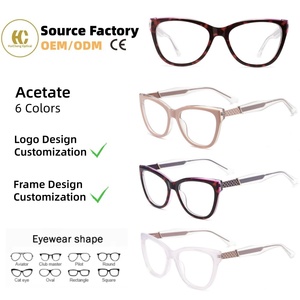
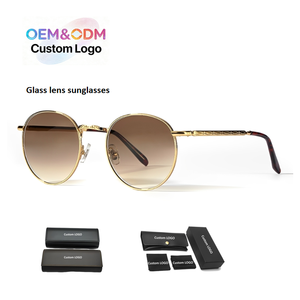
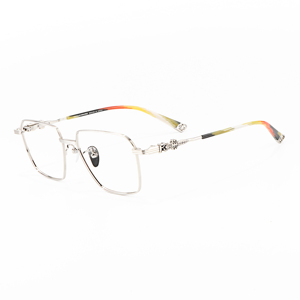
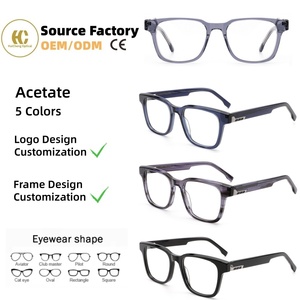
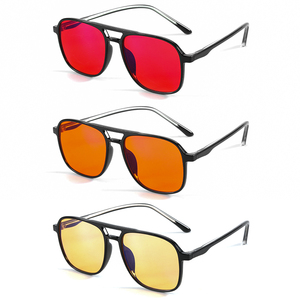
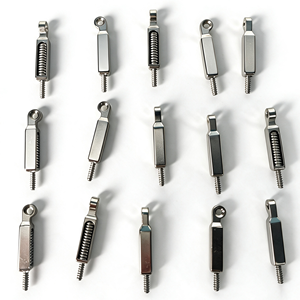
In high-end optical manufacturing, Cellulose Acetate (CA) stands entirely apart from petroleum-based injected plastics (such as PC or basic nylon). Synthesized from renewable wood pulp and cotton lint fibers, raw cellulose flakes are reacted with acetic anhydride, plasticized, and block-pressed into homogenous crystalline slabs. This complex chemical processing creates a structural polymer characterized by exceptional tensile rigidity, thermal adjustability for opticians, and permanent color depth that permeates through the entire molecular matrix.
When procurement officers evaluate acetate frames, the distinguishing benchmark of quality lies in the difference between extruded sheet stock and mature block-cured sheet stock. Low-cost optical factories frequently utilize accelerated extrusion sheets prone to plasticizer migration, warping, and shrinkage under thermal cycles. As an industry-leading China supplier and exporter, our production lines exclusively employ aged, cured acetate blocks rested for a minimum of 60 to 90 days. This stress-relief phase eliminates residual internal tension, ensuring that CNC milling tolerances of ±0.05 mm are strictly maintained without dimensional deformation after bevel cutting or multi-focal lens insertion.
| Evaluation Parameter | Milled Block Cellulose Acetate (Our Spec) | Commercial Extruded Acetate | Injection TR90 / Polycarbonate |
|---|---|---|---|
| Raw Material Foundation | Organic Cotton Flakes & Bio-Acetic Anhydride | Recycled Polymer & Petroleum Solvents | Petroleum Polyamide Granules |
| Dimensional Stability | Cured 90 Days; Shrinkage < 0.15% | Uncured; Warps under solar exposure | High flexibility, zero prescription malleability |
| Optician Fitting Adaptability | Softens predictably at 55°C–65°C without crazing | Prone to surface blistering during hot-air heating | Cold snap only; Cannot be custom shaped |
| Luster & Polishing Depth | Mechanical triple-stage pumice barrel buffing | Chemical surface dipping; Fades quickly | Sprayed polyurethane top-coat; Peels over time |
With four decades of focused category leadership dating back to 1985, our integrated factory pairs multi-axis CNC technology with master artisan hand-finishing.
We do not dilute engineering bandwidth across disparate categories. Since 1985, our facility has focused solely on the machining, diamond-polishing, and assembly of cellulose acetate eyewear, accumulating deep institutional mastery in raw sheet drying, moisture balancing, and tool geometry.
Utilizing high-frequency digital CNC mills, our cutting stations carve complex base-curve front wraps, uniform lens bevel grooves, and stepped temple wire-core channels with surgical accuracy. This ensures zero stress-fracturing when high-index prescription lenses are snapped in.
True luster cannot be sprayed. Our frames undergo a rigorous 4-stage, 72-hour mechanical barrel tumbling in graded beechwood and birch chips impregnated with polishing waxes, followed by individual artisan hand-finishing at the high-speed cotton wheel for a silky, mirror-bright sheen.
Whether you require full custom engineering from 3D CAD blueprints or private-label branding across our 22 in-stock flagship silhouettes, we execute pad printing, laser temple engraving, customized hardware inserts, and bespoke retail-ready packaging with zero factory leakage.
Every production lot is validated under ISO 12870 and ANSI Z80.5 eyewear safety standards. Frames undergo rigorous nickel-release tests, bridge endurance fatigue cycles, and accelerated UV stability assessments, accompanied by fully audited commercial export documentation.
We de-risk overseas sourcing through a firm "Sample First, Scale Second" operational philosophy. Golden pre-production samples are machined and hand-assembled for structural, colorway, and ergonomic verification before steel cutting or bulk sheet blanking commences.
Market intelligence for optical retail conglomerates, category directors, and brand founders navigating supply security and margin expansion.
Global regulatory pressure (notably EU Green Deal directives) is compelling optical houses to phase out traditional phthalate plasticizers. Procurement heads are locking in allocations for M49-certified bio-acetate, which replaces conventional chemical plasticizers with bio-circular alternatives derived from certified forestry.
Our production facilities maintain dedicated, segregated machining circuits to prevent cross-contamination between certified biodegradable cellulose batches and standard production lines.
Institutional procurement is shifting from aggregate invoice auditing to granular unit-level material provenance. Modern customs frameworks demand documented origin verification for raw cotton flake sourcing and sheet curing timelines.
By providing audited sheet batch certificates and standardized chemical safety datasheets (MSDS) with every shipment, we streamline port clearance across North American and European border authorities.
E-commerce disruption has made giant, monolithic order runs financially obsolete. Progressive brands demand modular frame architectures—where a single front chassis tooling can host varied nose-pad heights (Asian fit vs. Global fit) and multiple temple length variations.
Our dynamic sheet inventory supports agile batching: brands can blend up to 6 custom colorways across a single 300-piece production run without incurring prohibitive setup tooling fees.
A closer look at how multi-layer laminations, ergonomic geometry, and metallurgical integration are redefining premium eyewear design.
By utilizing hyper-compressed cellulose blocks (densities above 1.32 g/cm³), engineers can mill frame rims down to 2.8 mm without losing rim stability or structural stiffness. This achieves the airy, featherlight weight of titanium while retaining the unmistakable depth of premium organic tortoise patterns.
Rather than relying on chemical adhesives that degrade under perspiration, state-of-the-art lamination employs ultrasonic high-frequency welding. Crystal-clear front laminations are molecularly fused onto vivid inner patterns, creating an illusion of depth with zero risk of interlayer separation.
The internal temple core is no longer just structural reinforcement; it is an aesthetic signature. Our automated heated wire-shooters embed micro-filigreed Japanese Beta-Titanium cores into clear or havana acetate temples, delivering lightweight spring memory with tailored flex characteristics.
Fragile glued hinges are completely eliminated from professional optical lines. Our tooling integrates heat-staked and riveted stainless steel 5-barrel and 7-barrel hinges fitted with Teflon-coated anti-loosening screws, rated for over 25,000 continuous hinge-cycle opening motions.
Essential technical clarifications regarding MOQ, boxing metrics, sheet curing, tooling protocols, and international compliance.
The boxing system (e.g., 55 □ 18 – 145) establishes the precise millimetric coordinates: Lens Width (A), Bridge Width (DBL), and Temple Length. For optical retail importers, strict adherence to these boxing tolerances (±0.3 mm) is non-negotiable, as lens edgers in retail optometrist labs rely on these uniform outer cut parameters to mount prescription ophthalmic lenses without gaps or frame stress.
Acetate frames warp during marine shipment if raw sheets are uncured or if moisture content exceeds 2.2%. We mitigate this through an extensive 3-stage stabilization protocol: (1) 90-day block seasoning, (2) temperature-controlled low-humidity oven conditioning after CNC rough milling, and (3) double-walled moisture-barrier polyethylene packaging that protects frames against sea-container humidity spikes.
For custom OEM design tooling from bespoke technical drawings, our minimum production run is typically 300 pieces per model (accommodating up to 3 individual acetate sheet colors). For our established Clarish™ catalog silhouettes under private label, MOQs begin at 100 pieces per SKU. Rapid prototype sampling requires 14–21 days; bulk container shipments dispatch within 45–60 days post sample sign-off.
Yes. Private label programs include comprehensive personalization: laser-engraved or diamond-chiseled temple core wire patterns, customized brand logos via laser etching or pad printing, custom metal end-piece rivets, and retail-ready packaging sets (hard clamshell boxes, microfiber cleaning cloths, and barcoded retail cartons) manufactured to your exact Pantone guidelines.
OEM: You supply the intellectual property, 3D CAD files, or physical reference prototypes; we cut custom tooling, source specific acetate slabs, and produce the frames exclusively under your brand.
ODM: You leverage our pre-engineered, ergonomically tested frame silhouettes, modifying colors, finishes, and hardware configurations.
Private Label: You select ready-to-ship models directly from our active collection, branded with your corporate logo and custom packaging.
All eyewear shipments conform to international optical standards, including ISO 12870 (Spectacle Frames), EN ISO 12312-1 (Sunglass Filters), and US FDA 21 CFR 801.410 (Impact Resistance Drop Ball Test). All metal hardware components are tested to meet REACH Annex XVII nickel-release thresholds, eliminating contact dermatitis risks for wearers.
Consult with our senior optical engineering and export team. Send your technical CAD blueprints, reference samples, or volume specifications for rapid prototyping schedules and direct factory quotations.