Precision-milled CNC acetate, ultra-lightweight pure titanium, and aerodynamic sports performance eyewear curated for wholesale distributors and private label brand launches.
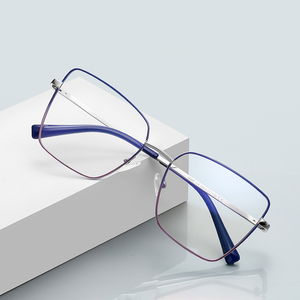
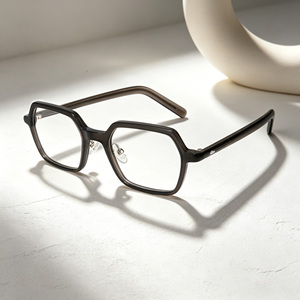
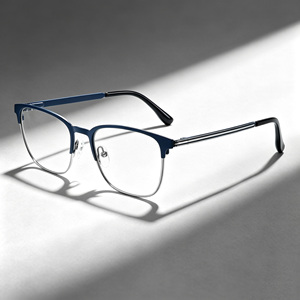
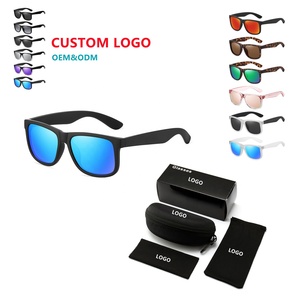
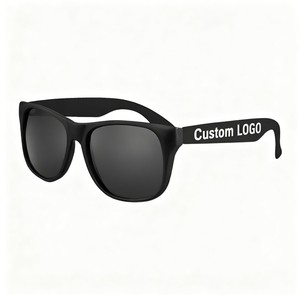
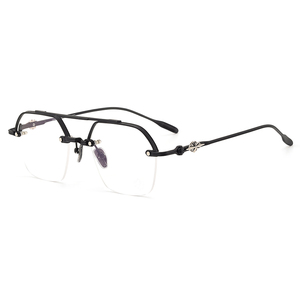
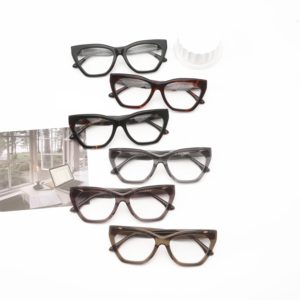
In the contemporary B2B ophthalmic supply ecosystem, optical frames represent far more than fashion accessories; they are precision medical-grade structural chassis designed to support complex refractive lenses without inducing optical aberration. As global eyewear brands, high-street optical chains, and cross-border e-commerce distributors scale their catalogs, sourcing high-yield, low-defect frames directly from top-tier Chinese manufacturing centers (such as Wenzhou, Danyang, and Shenzhen) has become the cornerstone of gross-margin preservation and customer retention.
However, modern search intent among eyewear procurement directors, optometrists, and private label founders has shifted dramatically from generic price discovery to strict metallurgical specifications, bio-acetate polymer stability, hinge endurance cycling, and regulatory compliance under the European Medical Device Regulation (EU MDR 2017/745) and the US FDA Title 21 CFR 801.410 (Impact Resistance Drop Ball Test). This document serves as an exhaustive technical procurement blueprint for high-volume B2B optical buyers.
Traditional stamped injection eyewear suffers from molecular chain directional weaknesses and uneven thermal shrinkage, leading to lens pop-out and frame warping under high-cylinder prescription lenses. Our bulk manufacturing protocol relies on heavy-duty, multi-axis computer numerical control (CNC) machining centers directly cutting cured sheets of cellulose acetate (cotton-seed linter derived) down to ±0.05mm tolerances.
Every lens bevel channel is machined with a uniform 110-degree V-groove depth calculated against standard 1.56, 1.60, 1.67, and 1.74 index edging parameters. This mechanical consistency eliminates stress birefringence in progressive optical lenses, allowing opticians in dispensing labs across North America and Europe to glaze lenses rapidly without hand-filing frame rims.

Optical brand portfolio planning requires precise material allocation across pricing tiers. The table below delineates the structural thresholds, flex fatigue values, and manufacturing yield rates of key frame materials produced in our facility:
| Substrate Grade | Density (g/cm³) | Yield Strength (MPa) | Thermal Stability (°C) | Prescription Glazing Flexibility | Recommended Retail Positioning |
|---|---|---|---|---|---|
| High-Density Cellulose Acetate | 1.28 - 1.32 | 45 - 75 | Up to 65°C (Adjustable) | Superior (Heat-malleable, memory retain) | Designer collections, boutique independents |
| β-Titanium (Ti-15V-3Cr-3Sn-3Al) | 4.51 | 880 - 950 | Over 400°C | Excellent (Ultra-flexible cold wire mount) | Executive business frames, luxury minimalists |
| Monel / Nickel-Silver Alloy | 8.80 | 350 - 500 | Up to 150°C | Moderate (Requires precision screw lock) | High-volume retail chains, standard lines |
| EMS Grilamid TR90 (Swiss Polymer) | 1.00 - 1.05 | 65 - 85 | Up to 120°C | Cold snap-fit only (Non-heatable) | Active lifestyle, sports wrap eyewear |
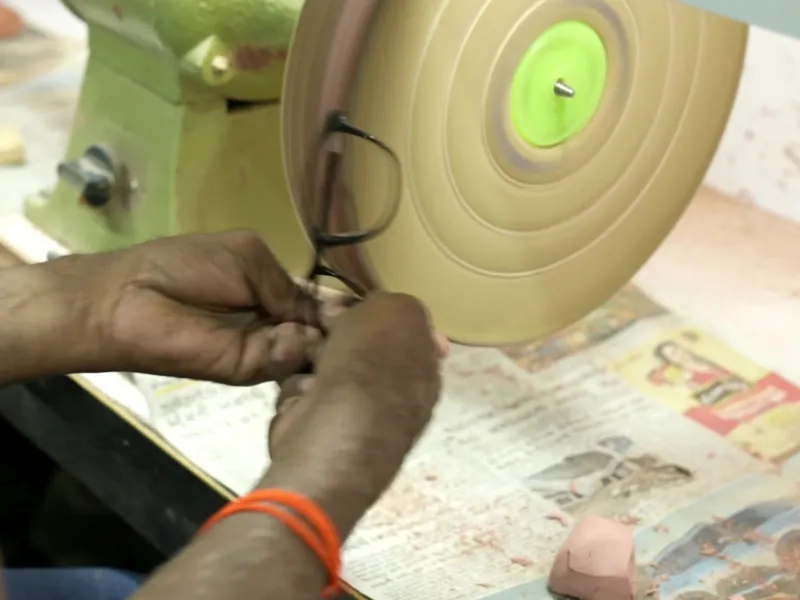
While multi-axis machinery guarantees geometric accuracy, tactile luxury is earned strictly in the abrasive finishing rooms. Cheap injection frames frequently mask tool marks with volatile lacquer sprays that delaminate after exposure to human sweat and sebum. In contrast, our optical frames undergo an exhaustive four-tier tumbling and hand-buffing regimen:
Stage 1: Coarse birch-wood chips mixed with natural pumice stones tumble for 24 hours to soften CNC stepped cut marks. Stage 2: Medium beechwood cubes saturated with silicon carbide polish the bridge curves and rim interiors for 24 hours. Stage 3 & 4: Fine hard maple grains treated with micro-crystalline carnauba wax polish the surfaces for 24 hours, followed by artisanal hand-finishing on high-speed cotton and muslin wheels.
The result is a self-healing, crystal-deep luster that permeates the entire cross-section of the acetate sheet, ensuring that superficial scratches sustained during retail handling can be buffed out instantly by in-store opticians.
How global trade realignments, decarbonization mandates, and demographic shifts are transforming international wholesale optical frame procurement strategies.
Stringent EU environmental mandates are penalizing phthalate-based plasticizers. Volume orders are rapidly pivoting to bio-based acetate derived from sustainably harvested wood pulp and non-food crop plasticizers (ISO 14855 / ISO 17088 certified for biodegradability within 115 days in industrial compost conditions).
With an aging global population demanding all-day progressive lens wearability, buyer demand for structural frames weighing under 10 grams has surged by 42% year-on-year. Seamless screwless hinge systems and vacuum ion-plating (IP) titanium frames eliminate nose-bridge fatigue and contact allergy risks.
Next-generation optical designs are adopting modular internal temple hollows to house bone-conduction transducers, micro-batteries, and Bluetooth modules without distorting classical optical silhouettes. Sourcing teams are locking in OEM tooling that allows seamless dual-use as standard Rx or smart-audio frames.
Retail inventories are resisting large single-model commitments. The leading Chinese suppliers now provide agile "chassis sharing" protocols—enabling distributors to order a single master front shape across 8 exclusive custom-laminated colorways at batch sizes as modest as 100 units per colorway.
Combining thirty-eight years of continuous tooling expertise with integrated vertical manufacturing: from raw acetate sheet curing to multi-country export compliance.
We do not outsource rim-forming dies, stamping molds, or pad-printing jigs. Our internal EDM wire-cutting and high-speed CNC tooling department reduces prototype lead times from standard industry 45 days down to just 12 business days, drastically accelerating your time-to-market.
Every batch undergoes non-destructive optical lens tension analysis, 20,000-cycle spring-hinge fatigue endurance testing, 48-hour artificial sweat immersion corrosion verification, and salt-fog atmosphere testing to ensure flawless plating bond strength before export packaging.
From high-definition fiber laser engraving of temple brand typography, custom CE/UKCA marking, barcoded retail clam-shell boxes, anti-static microfiber cleaning cloths, to magnetic travel cases—we ship retail-shelf-ready units directly to your regional distribution centers or Amazon FBA warehouses.
Direct technical answers addressing minimum orders, lens edging tolerances, testing certifications, and custom development protocols.
For custom ODM/OEM designs requiring dedicated acetate block extrusion and custom metal mold fabrication, standard MOQ begins at 300 units per model, with an allowance of up to 3 colorways (100 units per color). For catalogue models utilizing in-stock cured acetate sheets or ready titanium chassis, MOQ starts at 50 to 100 units per style, enabling boutique distributors to launch with minimal inventory risk.
Acetate is naturally hygroscopic. Raw acetate sheets are cured in our temperature-controlled aging chambers for a minimum of 60 to 90 days prior to CNC milling to eliminate latent molecular memory. Post-production frames are conditioned in thermal ovens, fitted with rigid optical demo lenses (which maintain eyewire circumference under temperature swings), and packed in vacuum-sealed inner polybags with silica desiccant pouches.
Yes. Every optical frame front we produce is engineered with a uniform, computer-verified 110-degree eyewire groove bevel. Our temple core-wires and front acetate grades are formulated for optimal thermo-elastic response: when heated briefly to 55°C–65°C on an optical frame warmer, the rim softens smoothly without whitening or bubbling, accepting high-base curves and plus-power prescription lenses easily.
Our production facilities operate strictly under ISO 9001 and ISO 13485 (Medical Devices Quality Management) systems. All optical frames and sunglass chassis comply with European Regulation (EU) 2017/745 (MDR) Class I non-invasive medical device standards, EN ISO 12870 (Ophthalmic Optics – Spectacle Frames), US FDA 21 CFR 801.410 drop-ball impact resistance, and REACH Regulation (EC) No 1907/2006 for nickel release (EN 16128) and phthalate restrictions.
We provide three distinct branding technologies based on your market positioning: 1) High-speed pad printing with dual-component polyurethane inks cured via infrared heat; 2) Micro-laser engraving with metal foil hot-stamping (in gold, silver, rose gold, or black); and 3) Custom cast-metal logos inlaid flush within the temple acetate during lamination. Standard boxing system notations (e.g., 54 □ 18 – 145) are precision-aligned on temple interiors.
For existing catalogue silhouettes, ready-to-ship physical counter-samples in stock colorways ship within 48 to 72 hours. For custom OEM prototypes requiring 2D CAD drafting, 3D SLA resin modeling, and individual CNC hand-milling, sample completion requires 10 to 14 working days. Bulk production begins only after receiving signed physical sample approval and spectrometer color sign-off from your QA team.