

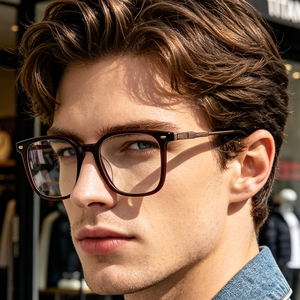
Curated Engineering Portfolio
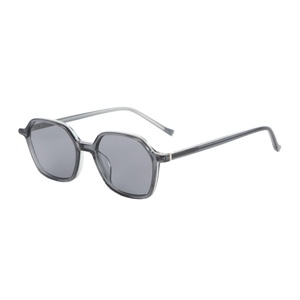
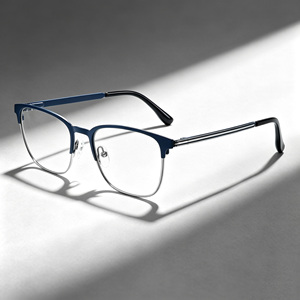
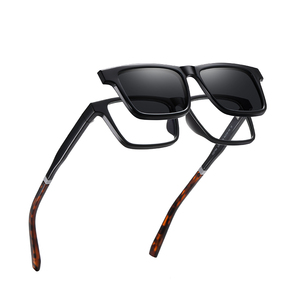
High-Precision Men's Acetate & Hybrid Optical Collections
Engineered specifically for masculine anatomical ergonomics, featuring high-torsion multi-barrel hinges, balanced bridge geometry, and cured cellulose acetate slabs designed to withstand heavy lab edging operations.
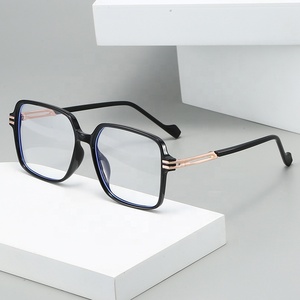
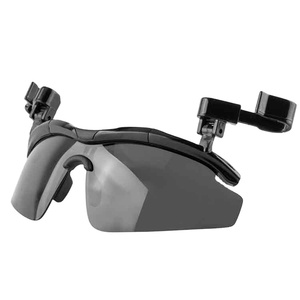
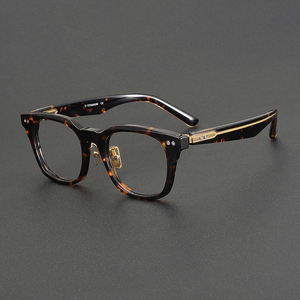
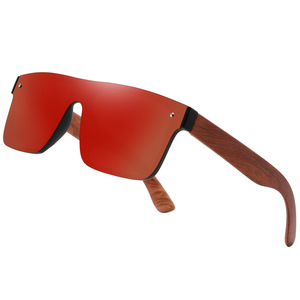
40+
Years Industry Expertise (Est. 1985)
0.05mm
5-Axis CNC Precision Tolerance
72-96h
Barrel Tumbling & Hand Buffing
100%
Pre-Export Batch Defect Control
Future Procurement Trends: The Next Generation of Men's Acetate Frames
As the international eyewear landscape adapts to shifting consumer demands, high-end optical brands and chains must align their procurement cycles with next-generation manufacturing capabilities. Sourcing men's acetate frames today requires far more than aesthetic selection; it demands an understanding of polymer chemistry, structural weight distribution, and global supply chain resilience.
1. Bio-Based Cellulose Acetate & Low-VOC Plasticizers
The global push toward sustainability is radically reshaping the premium eyewear industry. Traditional cellulose acetate relies on synthetic phthalate plasticizers. Next-generation optical tenders prioritize bio-acetate derived from sustainably farmed wood pulp and cotton linters, plasticized with bio-derived esters. These sheets achieve a plant-origin carbon footprint above 68% while strictly conforming to ISO 14855 biodegradability standards without losing structural rigidity, mechanical memory, or the ability to be thermal-adjusted by optical practitioners in retail dispensaries.
2. Hyper-Engineered Hybrid Structures: Titanium-Acetate Fusion
Modern masculine eyewear requires robust structural durability coupled with prolonged ergonomic comfort. Single-material, thick acetate rims often generate high nose-bridge pressure during all-day wear. Leading procurement teams are pivoting toward hybrid engineering: ultra-thin high-density acetate (HDCA) laminated to beta-titanium inner cores, custom-cast dual-action hinge blocks, and integrated monoblock temple wires. By shifting load-bearing duties onto titanium, the frame can utilize slimmer, sculpted acetate rims that deliver bold visual silhouettes at half the weight of traditional designs.
3. Micro-Tolerances for High-Index Digital Lenses
With global prescription demographics shifting toward higher refractive index lenses (1.67, 1.74) and progressive freeform designs, bevel groove milling tolerances in men's frames have become mission-critical. Frames exhibiting dimensional drift during transit cause lens popping, optical birefringence, and axis distortion. China's top tier manufacturing utilizes automated multi-axis dry-milling CNC stations, carving internal bevels to within ±0.05mm accuracy to guarantee immediate drop-in lens placement at automated retail edging facilities worldwide.
Engineering Integrity
Why Global Tier-1 Importers Partner With Us
We unite legacy artisanal craftsmanship with automated production architecture. With roots dating back to 1985, our manufacturing ecosystem provides unparalleled supply security, full IP compliance, and rigorous consistency across high-volume production cycles.
Controlled Aging & Curing Process
We do not rush cellulose slabs. Raw sheets undergo controlled thermodynamic baking to expel volatile solvents before milling, eliminating post-production warping, temple shrinkage, and spontaneous bridge stress-fractures.
5-Axis CNC Precision Milling
Our workshop pairs precision multi-axis CNC routers with diamond tooling to cut intricate masculine profiles, geometric chamfers, bridge recesses, and precision barrel-hinge pockets directly from consolidated acetate slabs.
72-Hour Multi-Stage Barrel Tumbling
Rather than hiding imperfections beneath synthetic varnishes, our frames receive three stages of mechanical barrel tumbling with untreated birch chips and pumice paste, capped by manual buffing wheels for enduring, deep luster.
Robust Hinges & Custom Wire Cores
Featuring custom German or Japanese-grade 3-barrel, 5-barrel, and 7-barrel integrated hinges, secured via thermal press or cold pinning. Custom-etched filigree core wires add mechanical stability and luxury identity.
Comprehensive OEM, ODM & Private Label
From CAD rendering, 3D rapid prototyping, and custom pantone acetate extrusion to laser temple branding, CE/FDA/UKCA documentation, and customized retail packaging, we provide an integrated, turnkey manufacturing route.
Comprehensive Batch Defect Testing
Every batch undergoes stringent mechanical cycle checks: 20,000-cycle bridge fatigue tests, temple tension release evaluations, cross-hatch lacquer adhesion testing, and artificial sweat resistance tests to ensure export durability.
From Concept Blueprint to International Container Dispatch
Operating a seamless overseas eyewear supply chain demands predictability at every milestone. Our standardized production lifecycle removes ambiguity, protects intellectual property, and ensures that the pilot sample matches the bulk dispatch unit for unit.
Phase 01: Engineering & DFM Review
Receipt of customer 2D/3D models or reference frames. Design for Manufacturing (DFM) adjustments optimize hinge placement, lens bevel depths, and nose bridge contours for maximum comfort.
Phase 02: Rapid Tooling & Prototyping
Within 10-14 days, physical hand-finished prototypes machined from target acetate slabs are dispatched for customer fit validation, weight assessment, and dispensary bench testing.
Phase 03: Bulk CNC Machining & Curing
Upon sign-off of the Golden Sample, sheet stock is stabilized and queued for automated multi-axis routing. High-precision spindle tooling processes rim profiles and hinge mortises.
Phase 04: Thermal Core Shooting & Polishing
Custom internal stainless steel or titanium wires are thermally shot into the temple shafts, followed by multi-stage tumbling barrels and manual mops to develop rich optical gloss.
Phase 05: Private Label Application & QA
High-precision pad printing or fiber laser engraving marks model codes, sizing, and brand identity onto the temple interior. 100% individual frame inspections eliminate dimensional flaws.
Phase 06: Palletized Global Fulfillment
Custom branded hard cases, microfiber cloths, barcoded SKU cartons, and moisture-sealed shipping master boxes are packed to ensure zero deformation through air or ocean transit.
Technical & Commercial Clarifications
Frequently Asked Questions for B2B Eyewear Buyers
Detailed operational information to help optical wholesalers, purchasing directors, and brand developers streamline sourcing operations.
What distinguishes cellulose acetate from cheap injection-molded plastics (TR90, PC)?
Cellulose acetate is a non-petroleum polymer derived from wood pulp and cotton linters. Unlike injection-molded plastics that are colored by exterior painting or spray lacquering, acetate features infinite color depth through its entire mass. When an acetate frame is scuffed, it can be re-buffed and restored to like-new condition. Furthermore, acetate exhibits genuine viscoelastic properties: optical dispensaries can apply gentle heating (55°C–65°C) to customize temple bends and pantoscopic tilts to individual facial anatomies without causing structural cracking.
What are your typical Minimum Order Quantities (MOQ) and production lead times?
For existing in-catalogue tooling (ODM), our typical MOQ starts at 300 pieces per style, which can be subdivided into 2 to 3 distinct colorways (100 pieces/color). For bespoke OEM development requiring custom tooling and custom-extruded acetate laminations, the baseline MOQ is usually 600 pieces. Pilot sampling cycles typically require 15 to 20 business days. Bulk mass production runs generally complete within 45 to 60 days following physical Golden Sample confirmation, dependent upon custom sheet curing schedules.
How does your factory prevent frame warpage and dimensional instability?
Dimensional instability in men's acetate frames stems directly from unreleased internal stress in raw sheets. We implement a rigorous two-stage thermal curing protocol. First, raw slabs are aged in temperature-controlled curing chambers for several weeks prior to cutting. Second, after CNC front milling, components undergo intermediate resting to balance localized stresses before hinge integration. This structural stabilization guarantees that the bridge angle, pantoscopic tilt, and wrap angle will remain rock-solid throughout oceanic transport and years of retail wear.
Can you match custom pantones and develop proprietary multi-layered acetate patterns?
Yes. We partner with premier international acetate sheet suppliers and maintain dedicated custom block-lamination setups. We can formulate precise Pantone shades, custom demi/tortoise variations, dual-color horn effects, and gradient lamination layers. For private label clients seeking exclusivity, custom color blocks can be reserved under contractual non-disclosure and protected supply agreements.
What international compliance standards and certifications do your optical frames meet?
All manufactured optical frames and sunglasses comply with international regulatory benchmarks, including CE compliance (EN ISO 12870 for ophthalmic frames), FDA registration for United States medical device classification (21 CFR 886.5844), UKCA marking, and AS/NZS 1067 standards. We provide verified chemical safety reports verifying total compliance with REACH Regulation (EC) No 1907/2006 (nickel release on metal contact points, cadmium, lead, and phthalate levels).
What private labeling options and custom packaging configurations are available?
We offer comprehensive private-label branding execution. This encompasses high-definition metallic hot-stamping, durable pad printing, deep laser engraving filled with custom enamel pigments, and CNC-cut metallic emblem temple inlays. Beyond the frame, we engineer fully customized packaging lines: custom debossed PU/leather cases, high-density microfiber cleaning cloths with bespoke digital printing, rigid presentation gift boxes, barcoded outer master cartons, and regulatory leaflet insertion.
Ready to Upgrade Your Eyewear Supply Architecture?
Initiate direct communication with our senior optical engineering and export team. Receive our comprehensive technical product directory, physical material swatches, and a customized manufacturing quotation for your upcoming seasonal launches.