

Polarized Sun
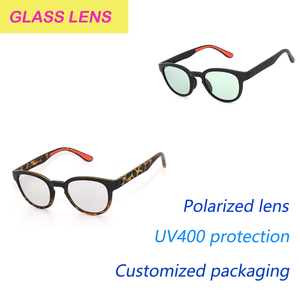
Engineered for immediate batch scalability, optical precision fitting, and turn-key brand customisation across high-grade materials including cotton cellulose acetate, memory TR90, and ion-plated pure titanium.

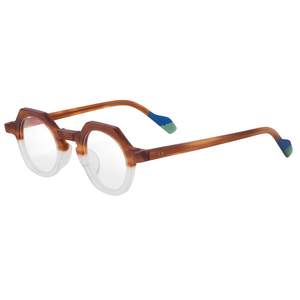
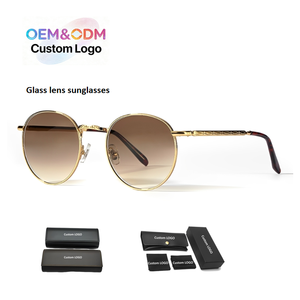
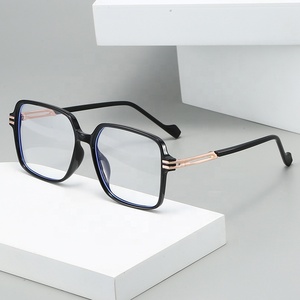
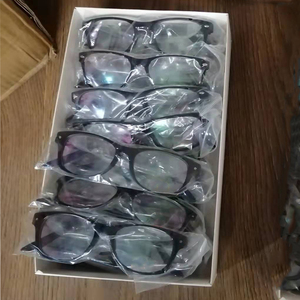
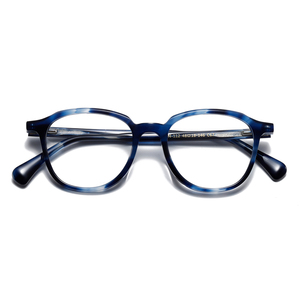
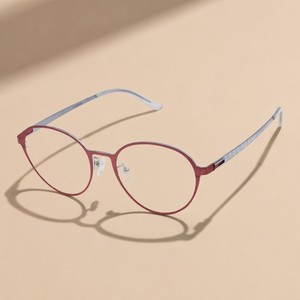
Why premier global eyewear brands rely on dedicated Chinese and Asian precision manufacturing clusters to balance CNC tolerances with traditional artisan tactile hand-finishing.
Unlike cheap injected plastics that become brittle under temperature fluctuations, authentic cellulose acetate is derived from renewable cotton seed linters and wood pulp. High-yield batch production requires an aging and stabilization stage of at least 60 to 90 days for raw sheet slabs to purge residual solvents, preventing post-machining frame warpage.
Tolerances within +/-0.05mm across the rim eyewire, lens step-bevel grooves, and bridge contouring ensure seamless lens mounting for computerized automated prescription edgers. Our multi-axis computerized toolheads prevent thermal deformation and micro-burring during continuous factory cutting runs.
Machines provide absolute dimensional precision, but human hands guarantee long-wearing face comfort. Batch components undergo a 72-hour continuous tumbling cycle through beechwood chips, pumice, and walnut shells, followed by master-level manual wheel buffing to produce permanent, deep-luster mirror finishes.
| Evaluation Parameter | Standard Wholesale Market | Our Precision Batch Standard | Direct Strategic Advantage |
|---|---|---|---|
| Raw Material Origin | Recycled regrind / unstable plastics | Pure Organic Cotton Cellulose Acetate | Zero skin allergies, hypoallergenic fitting |
| Dimensional Stability | ±0.35mm to ±0.50mm | Within ±0.05mm controlled tolerance | Zero lens drop-out, fast automated lab edging |
| Hinge Installation | Cold friction-inserted rivets | Ultrasonic heated pin embedding | Exceeds 25,000+ mechanical fatigue cycles |
| Surface Luster | Chemical surface spray lacquer | 72-Hr Barrel tumbling & hand wheel buff | Scratches can be repolished, non-flaking |
How progressive brand owners, optometry retail chains, and international importers are structuring their supplier networks to stay resilient, cost-efficient, and sustainable through 2026 and beyond.
Global regulatory pressure (including EU CSRD compliance) is driving eyewear buyers toward certified biodegradable acetate with bio-based plasticizers (DEP-free). Importers must secure suppliers with verifiable carbon traceability from raw monomer to packaged frame.
Modern consumers demand heavy, vintage aesthetics without physical weight. The trend combines ultra-thin 3.0mm high-density acetate rims with Grade-1 pure titanium nose pads and Beta-Titanium flex temples, cutting overall frame weight by up to 42%.
The era of rigid 1,200-piece single-color production minimums is fading. Forward-thinking suppliers leverage modular interchangeable core tooling to allow 300-piece batch orders split across 3 to 4 seasonal colorways, minimizing dead inventory risk.
Experienced supply chain executives look beyond single-country models. Partnering with suppliers with dual manufacturing footprints (integrating Chinese high-tech machining with specialized regional finishing facilities) safeguards against shifting tariffs and regional bottlenecks.
Built upon over four decades of dedicated eyewear engineering experience, our modern manufacturing ecosystem is organized for consistency, predictability, and complete brand ownership.
We eliminate batch manufacturing risks through a rigid physical prototyping protocol. Every structural dimension, pantoscopic tilt angle, hinge torque, and laser marking layout is signed off physically before the master factory tooling is activated.
Whether you require ground-up engineering from your technical industrial files, adaptation of our pre-engineered base silhouettes, or rapid private label deployment with custom packaging, our manufacturing workflow adjusts to your delivery schedules.
Frames, lenses, and retail cases are prepared and marked to destination customs protocols from production inception. We ensure full documentation for CE marking, UKCA, FDA device establishment registration, drop-ball impact testing, and ANSI Z80.3 criteria.
Technical, structural, and contractual guidance for procurement directors, product managers, and supply chain specialists.
Custom acetate manufacturing from new sheet block runs typically requires 300 pieces per style, which can be subdivided into 2 to 3 color variants (100 pcs per SKU). For catalog-in-stock acetate or standard injection TR90 models, starting batch volumes begin at 100 to 200 units with complete private label logo stamping.
This is the international optical standard (ISO 8624) measured in millimeters: 54mm indicates lens diameter (horizontal eye width), 18mm represents bridge distance between lenses, and 145mm is overall temple length. Correct bridge-to-lens proportioning is essential to maintain proper pupil centering across prescription lenses.
OEM (Original Equipment Manufacturer) involves manufacturing from your proprietary CAD/technical schematics using dedicated molds. ODM (Original Design Manufacturer) allows you to adapt our proprietary tested chassis with your custom acetate finishes. Private Label takes pre-tooled inventory and adds pad-printed logos, custom laser temple etching, and retail-ready packaging.
Our quality assurance workflow runs four testing gates: raw sheet moisture/plasticizer stability testing, on-line CNC micrometer eyewire groove testing, 25,000-cycle spring-hinge endurance tests, and salt-spray nickel release tests (EN 16128) to ensure anti-corrosion sweat resistance.
Rapid 3D CNC engineering samples are delivered within 10 to 14 working days. Finished counter-samples in targeted acetate colors require 20 to 25 days. Once pre-production samples are approved, bulk batch manufacturing runs typically average 45 to 60 days, depending on custom acetate curing times.
Yes. A successful eyewear line requires complete presentation. We manufacture hard-shell clamshell cases, microfiber cleaning cloths (180 to 250 gsm), slide drawer gift boxes, serialized barcode labels, and authentication cards carrying your unified corporate visual identity.
Connect with our technical engineering desk. Review material catalogs, request counter-samples, or transmit your 2D/3D CAD technical drawings for complete costing and production feasibility analysis within 24 business hours.
Send an Inquiry