

Vintage Round
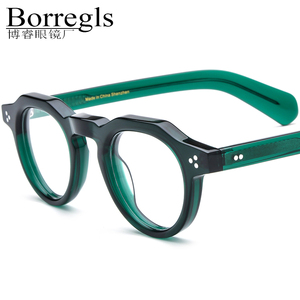
A comprehensive technical report on high-grade cured cellulose acetate sheets, micron-level matte hand-finishing, and bulk manufacturing capabilities serving independent brands, chains, and private labels globally.
Explore current volume-production styles crafted with tactile matte textures, premium five-barrel and seven-barrel hinges, and anatomical comfort fits.
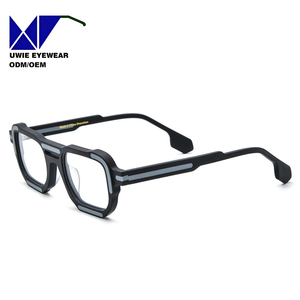
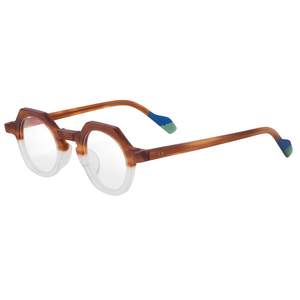

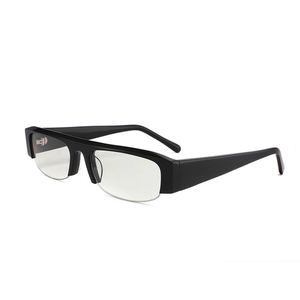
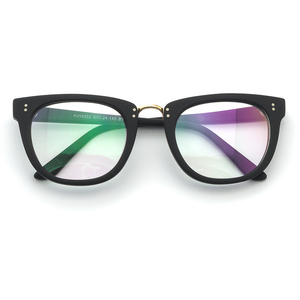
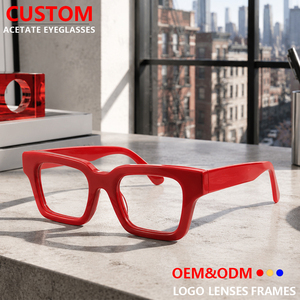

Why organic cotton-seed cellulose acetate remains superior to standard injection plastic for premium optical eyewear lines.
Traditional injection plastics apply a cheap spray coating that wears off within 3 to 6 months. In contrast, our Chinese factory network uses precision dry micro-bead blasting and gentle mechanical tumbling. The matte texture is integrated directly into the polymer substrate, preventing peeling, oil buildup, or whitening over long-term skin contact.
Every matte frame begins as a cured, aged block of bio-cellulose acetate. Multi-axis CNC milling tools shape the bevels, eyewire grooves, and temple geometries according to CAD/CAM files with sub-millimeter tolerances. This ensures zero optical lens distortion and precise pop-in bevel retention.
CNC milling achieves micro-accuracy, but hand finishing provides human comfort. Even on a matte design, frame borders and bridge perimeters undergo walnut-shell and ceramic tumbling followed by master artisan scrape-wheel relieving, removing sharp cutter step lines before surface blasting.
| Evaluation Parameter | Matte Cellulose Acetate (Our Factory Standard) | TR90 / Injected Nylon (Common Budget Alternative) | Cold Molded Recycled Plastic |
|---|---|---|---|
| Base Composition | Renewable Cotton Linters + Acetic Anhydride | Polyamide Resins (Petrochemical derivative) | Mixed Polypropylene / Post-consumer waste |
| Matte Finish Durability | Substrate blasted: Indefinite life, scratch-polishable | Sprayed polyurethane coating: Scratches easily | Molded finish: Prone to uneven sheen & streaks |
| Prescription Lab Edging | Excellent: Flexible cold/hot snap-in, zero shrinkage | Difficult: High memory elasticity forces lens pop-out | Poor: Prone to thermal cracking & warping |
| Bespoke Color Depth | High: Monolithic layered patterns & torts | Flat: Basic monochrome solid dyes | Low: Dull tones with surface particulate inclusions |
| Skin Biocompatibility | Hypoallergenic, ISO 10993 tested, skin friendly | Non-reactive, but non-breathable | Variable depending on feedstock purity |
Strategic movements shaping OEM procurement, distributor margins, and consumer adoption patterns over the next 3 to 5 years.
Consumer fatigue toward glossy, fingerprint-prone frames has generated rapid demand for deep satin and raw architectural finishes. Thick-gauge bevels (6.0mm to 10.0mm front slabs) paired with refined matte black and deep tortoiseshell are commanding higher retail price points across North America and Western Europe.
Regulatory scrutiny under EU REACH and global corporate ESG policies is driving the phase-out of traditional DEP (diethyl phthalate) plasticizers. Tier-1 Chinese suppliers are transitioning to eco-acetate, utilizing bio-plasticizers derived from vegetable oils to ensure biodegradable life-cycle compliance without losing tensile rigidity.
Pure acetate frames are increasingly integrating high-tensile titanium core wires, Beta-Titanium bridges, and micro-precision hinge blocks. This combination offers the aesthetic substance of a thick matte rim alongside the featherlight adjustability of surgical metal, broadening market appeal across active demographics.
Combining four decades of technical heritage with streamlined Chinese export logistics to safeguard your supply chain predictability.
Over 40 years focused exclusively on cellulose acetate manipulation, CNC programming, and hand-wheel polishing craftsmanship.
Custom 2D/3D CAD prototyping, pantoscopic angle calibration, and rapid physical sampling prior to bulk tooling commitment.
Permanent laser engraving, temple hot-foil branding, custom microfiber cloths, and branded hard cases with zero factory markings.
Fully compliant with CE standards, ISO 12870, FDA device registration, and ANSI Z80.5 optical impact and nickel release tests.
Essential commercial terms, lead times, quality assurance parameters, and engineering guidelines.
For custom OEM designs requiring newly fabricated acetate plates or custom tooling, standard Minimum Order Quantities (MOQ) typically start at 300 to 500 pairs per model, with flexibility for 2 to 3 color variants (approx. 100-150 pairs/color). For catalog models using stocked factory acetate, private-label runs can often be accommodated from smaller test batches.
Unlike budget frames that rely on sprayed varnish or chemical coatings, our authentic matte acetate frames undergo high-pressure micro-bead blasting and specialized pumice tumbling directly onto solid cellulose sheet stock. Because there is no superficial coating, the finish will not flake, blister, or degrade from skin perspiration or alcohol-based lens cleaners.
CAD design approval and prototype 3D visualization require 7 to 10 working days. Functional physical acetate counter-samples are produced and delivered within 15 to 25 days. Once pre-production samples receive full sign-off, bulk CNC machining, tumbling, hand finishing, and export packaging typically take 45 to 60 days depending on order complexity.
Yes. Every optical collection requires tailored boxing measurements (Lens Width □ Bridge Width – Temple Length) to suit specific regional face structures. We modify bridge clearance, nose-pad depth, and temple curvature in CNC tooling files to support Asian Fit, European Universal Fit, or oversized North American frame geometries.
We supply German OBE or high-grade domestic barrels, including 3-barrel, 5-barrel, and 7-barrel riveted or heat-staked hinges. For active or sport-lifestyle lines, high-tension flex/spring hinges can be embedded into the core-wire system, ensuring opening resilience and long-term temple alignment.
Our quality assurance follows AQL 2.5 standards across four distinct control gates: raw acetate sheet moisture/flatness check, post-milling dimensional verification, hinge torque alignment testing, and 100% cosmetic surface inspection under high-intensity inspection lamps prior to final boxing.
A transparent view into our repeatable production line that turns raw organic sheets into retail-ready eyewear.
Cellulose acetate sheets undergo temperature-controlled curing kilns for multiple weeks to eliminate residual solvents and internal stress. This critical step prevents future frame warping or dimensional shrink after optical cutting.
Automated CNC workstations slice raw plates into precise front blanks and temple lengths. High-speed diamond cutters drill hinge pockets and carve the optical lens groove with micrometer consistency.
Temples are heated and hydraulic machines insert stainless steel or nickel-silver wire cores. The wire core provides rigid backbone support, permitting opticians to adjust ear curves easily without frame fracture.
Multi-barrel hinges are integrated using ultrasonic heating or manual cold-press pinning. Hinges are tested for lateral play and torque resistance to guarantee a firm, uniform fold throughout daily usage.
Blanks are transferred to octagonal wooden and ceramic tumbling barrels with abrasive granules for 48 to 72 hours. This smooths out micro-burrs and CNC machining artifacts while softening geometric edge sharpness.
Instead of high-gloss wheel polishing, frames undergo calibrated micro-bead bombardment. Operators regulate air pressure and particle mesh sizes to produce an ultra-even, non-reflective matte or satin surface.
Custom logos, model naming, CE/UKCA markings, and boxing sizes are added to temple inners via laser etching, silver/gold hot-stamping, or tamper-proof epoxy ink pad printing per buyer specifications.
Every frame is placed on a granite leveling surface to ensure zero 4-point wobble. Technicians evaluate hinge smoothness, bridge alignment, and groove depth before packaging each piece in anti-static sleeves.