

Optical Luxury
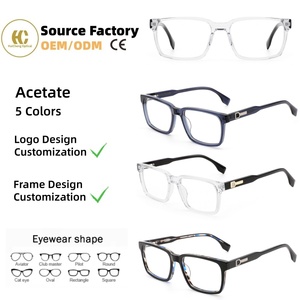
Explore production-ready acetate sunglasses and optical designs manufactured in audited facilities. Each frame supports personalized temple wire-coring, custom beveling, and bespoke pantone lamination.
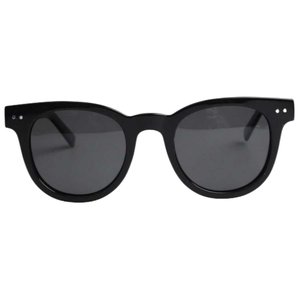
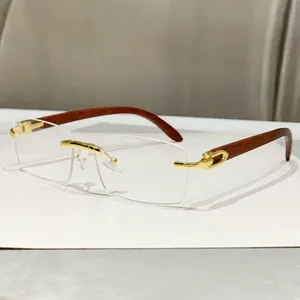

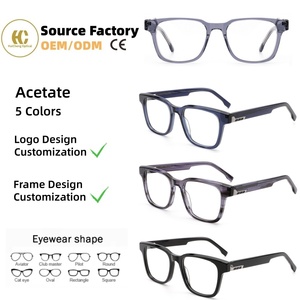
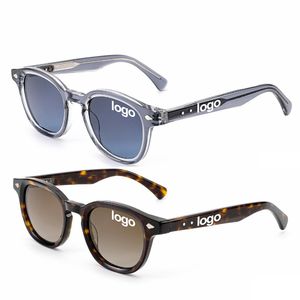
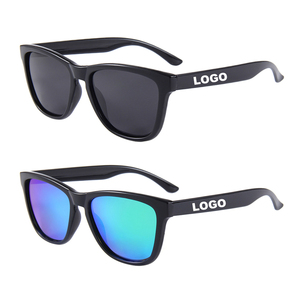
The global luxury and mid-tier women's sunglasses market is pivoting rapidly toward structural bio-sustainability, ergonomic multi-fit profiles, and bold architectural laminations. Sourcing directors must align supply chains with evolving regulatory and design parameters.
Traditional cellulose acetate synthesizes wood pulp and cotton linters using fossil-fuel phthalate plasticizers (such as DEP). In contrast, tier-1 Chinese manufacturers are switching to certified biodegradable acetate utilizing triethyl citrate (TEC) bio-derived plasticizers.
Flat 4.0mm acetate profiles are increasingly replaced by hyper-dimensional 8.0mm to 12.0mm sculpted sheet constructions. Advanced multi-axis CNC machines chisel bold geometric bevels around the temporal perimeter without adding excessive front-heavy load.
International eyewear brands now demand dual-fit tooling matrices. Women's acetate sunglasses require precise bridge pad apex positioning and reduced base curves (Base 2 or Base 4) to eliminate cheekbone touch and bridge slippage on diverse facial topologies.
A luxury acetate frame cannot be produced by injection molding. From raw block aging to 72-hour barrel finishing, our contracted China manufacturing facilities adhere to decades-old artisan protocols coupled with digital automation.
| Manufacturing Stage | Technical Specification & Tolerance | Standard Wholesale Defect Avoided | Brand Value Addition |
|---|---|---|---|
| Sheet Stabilization & Curing | Controlled kiln baking (50°C – 60°C) for 7–14 days; natural ambient rest for 30 days | Post-production warping, temple shrinkage, and spontaneous frame curvature flattening | Ensures dimensional stability across temperature swings in retail display and transit |
| 5-Axis CNC Milling | Carbide and diamond router bits running at 24,000 RPM with ±0.05mm contour tolerance | Asymmetrical lens grooves, loose lens seating, rough lens beveling, stepped hinge pockets | Precision lab-grooves enabling optical lens mounting without stress-induced birefringence |
| Wire Core Shooting | Hydraulic heating insertion of stainless steel or custom engraved brass core wires | Temple breakage under cold adjustment; inability to contour temple tips around ears | Permits in-store dispensing opticians to heat-bend temple curvature for custom bespoke fits |
| Multi-Stage Barrel Tumbling | 72 hours continuous rotation through dry birch chips, pumice, and beechwood granules | Waviness on acetate surfaces; orange-peel sheen; rough inner rim bridges | Creates deep, glass-smooth mechanical polish that will never peel, cloud, or degrade |
| Hinge Embedding & Riveting | Ultrasonic heated induction or traditional pin-riveted German OBE / Italian Visottica hinges | Loose, wobbling temples, stripped screw threads, sheared barrel assemblies | Smooth 5-barrel or 7-barrel temple articulation engineered for 20,000+ cycle open-close tests |
Whether you deliver complete 3D STP/IGES CAD drawings or choose proven architectural silhouettes from our Clarish™ catalog, our engineering team manages tooling fabrication, masterbatch color synthesis, and packaging integration.
Exporting to European, North American, and Australasian markets requires strict adherence to ophthalmic safety protocols. Every production run undergoes automated spectrophotometric testing and mechanical impact checks.
Essential operational insights covering MOQ limits, tooling amortizations, lens material comparisons, and export compliance protocols for wholesale buyers.
For custom ODM/OEM acetate frames utilizing in-stock factory sheet colors, the typical MOQ is 300 pieces per model (divided into 2 to 3 colorways, or 100 pieces per SKU). If your design specifies bespoke custom-cast acetate sheets from suppliers like Mazzucchelli or Jimei, sheet manufacturers enforce a raw batch minimum of 30kg to 50kg, requiring approximately 500 to 800 frames per custom colorway.
Polycarbonate (PC) and TR90 are melted plastic pellets injected into steel molds. While inexpensive, injection plastics exhibit cold, flat surface paint that chips, lacks depth of color, and cannot be custom-curved by opticians. Cellulose acetate is a semi-natural material cut directly from layered blocks; its colors permeate throughout the entire material thickness, creating deep translucence, luxurious tactile heft, and thermal adjustability for a true premium positioning.
The standard project timeline proceeds in four structured phases: (1) Technical 2D/3D CAD drawing signoff: 3–5 business days; (2) Prototype CNC sample machining and hardware assembly: 10–15 business days; (3) Bulk manufacturing (sheet curing, CNC cutting, hand tumbling, assembly, and QC): 45–60 days; (4) Sea freight (25–35 days) or Air Courier (4–7 days). Re-orders of existing production tooling typically clear production within 35–45 days.
We supply three primary sunglass lens substrates depending on your brand price bracket: (1) TAC Polarized (1.0mm): Lightweight, ultra-high glare reduction, cost-efficient for commercial fashion brands; (2) Nylon (Polyamide): Superior optical Abbe value, exceptional crack resistance, ideal for drill-mount rimless or deep faceted acetate frames; (3) CR-39 Resin: Exceptional scratch resistance and tint clarity, the preferred industry choice for luxury designer collections. All lenses provide UV400 total filtering.
Our direct export shipments include complete regulatory compliance dossiers: CE Declaration of Conformity under EU Regulation 2016/425 (Personal Protective Equipment), ISO 12312-1 certification, FDA Device Listing and Drop Ball Test Certificate (21 CFR 801.410), ANSI Z80.3 compliance documentation, as well as formal REACH chemical test reports verifying the total absence of harmful plasticizers.
Initiate direct communication with our senior production engineering team. Provide your target specifications, reference sketches, or catalog model requirements for rapid quotation, material swatches, and prototyping schedules.