

Retro Fusion
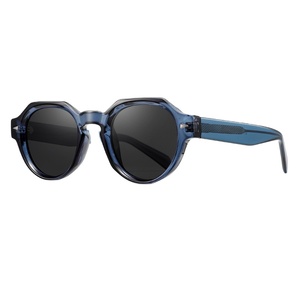
Explore eight core engineered frame profiles engineered for high-precision optical dispensing, custom prescription lens installation, and fashion-forward crystal-tint sunglass applications.
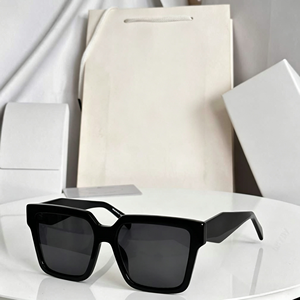
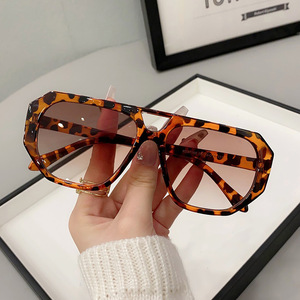
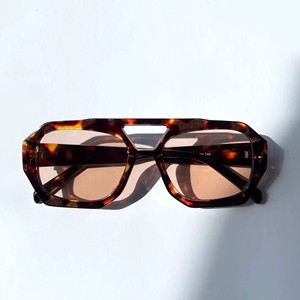
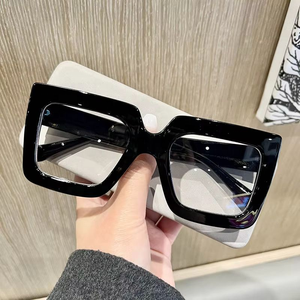
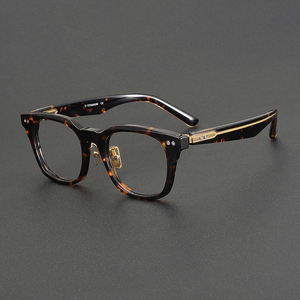
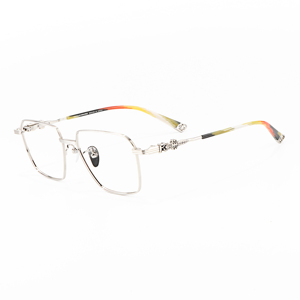
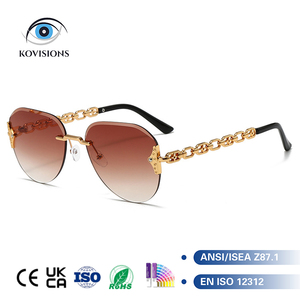
Transparent and translucent acetate frames pose the most unforgiving quality challenge in high-end eyewear manufacturing. Unlike opaque or dark tortoiseshell materials, any microscopic impurity, internal thermal void, or tool chattering during CNC milling becomes immediately visible under light refraction.
At our manufacturing facility, transparent acetate frames are extruded and cast from virgin, non-petroleum organic plant cellulose (cotton linters and wood pulp). We employ extended curing and aging protocols (minimum 90 days controlled dry aging) to eliminate residual plasticizer moisture, preventing stress crazing, shrinking, or yellowing over extended lifespans.
Strategic intelligence for independent optical labels, retail chains, and international luxury brand procurement teams planning forward inventory cycles.
Global markets increasingly demand eco-friendly acetate. Sourcing focuses on phthalate-free, plant-derived plasticizers and GRS-certified post-industrial recycled acetate flakes without sacrificing crystal-grade transparency.
Moving beyond flat profiles, upcoming collections demand 8mm to 10mm high-density translucent blocks milled with bold diamond chamfers, compound bevels, and sculpted ergonomic temple transitions that catch light from every angle.
Because transparent and champagne acetate makes the inner temple completely visible, luxury brand buyers are commissioning complex bespoke metal wire cores featuring art-deco laser embossing, dual-tone plating, and micro-branding.
Supply chain de-risking dictates agile OEM programs. Importers shift away from monolithic 3,000-piece single-color orders toward modular production lines: sharing front tooling across 5 to 6 custom translucent gradient colorways.
How technological modernization in milling, ultrasonic bonding, and tumbling allows high-output scalability without sacrificing artisanal handcraft.
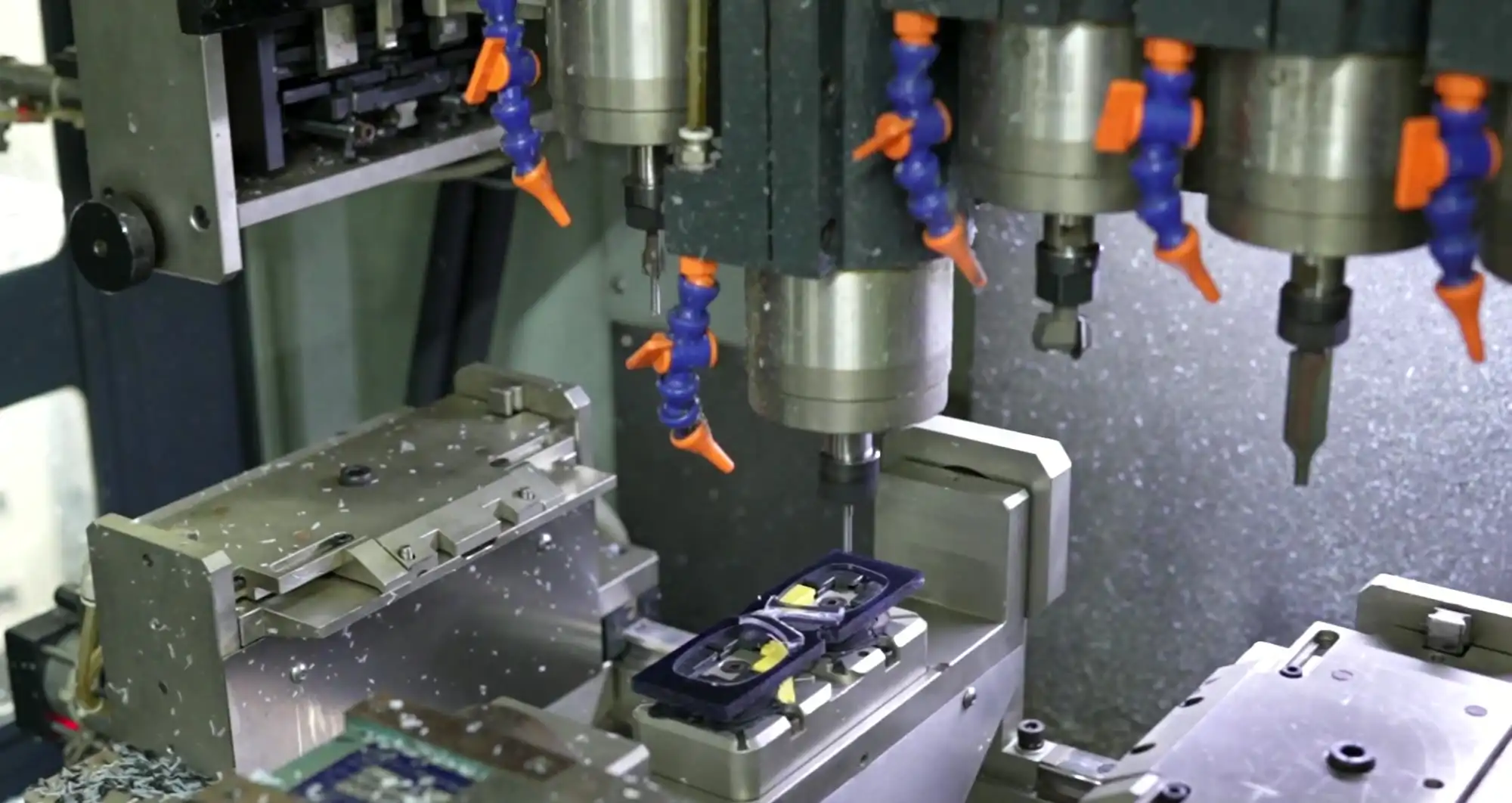
Legacy stamping creates micro-fractures in transparent acetate. High-speed 5-axis CNC diamond endmills sculpt compound pantoscopic tilt, variable groove depths, and asymmetrical nose bridges in a single uninterrupted operation.
Eliminating orange-peel imperfections requires a 4-step progressive tumbling regime using crushed walnut shells, Italian pumice powder, and specialized wax compounds over 96 hours, followed by artisanal wheel buffing with carnauba paste.
For crystal temples, standard heat-inserted hinges can create cloudy resin burn around joints. We deploy ultra-precise German-style rivet pinning and ultrasonic hinge integration that leaves the surrounding clear material completely pristine.
Combining four decades of heritage with automated CNC precision, sample-first methodology, and worldwide export support.
We have manufactured cellulose acetate eyewear exclusively since 1985. Our deep material science knowledge is embedded in sheet aging, cutter speed calibration, and artisan finishing.
No bulk run proceeds without your written sign-off on 1:1 physical master samples verifying bridge comfort, pantoscopic angle, hinge friction, and laser engraving clarity.
Complete compliance with FDA, CE EN ISO 12870, UKCA, and REACH protocols. Full customs documentation, drop-ball test reporting, and export palletization for worldwide transit.
Turnkey brand integration: precision pad printing, metallic foil stamping, internal temple sizing typography, micro-fiber lens cloths, and custom luxury retail cases.
Direct answers to technical, commercial, and logistical questions regarding custom acetate frame production.
Transparent cellulose acetate is a dense organic polymer cut from cured blocks rather than liquid injection. Unlike clear TR90 or polycarbonates which yellow quickly and cannot be customized with heat, acetate offers true optical depth, can be heated and hand-adjusted by opticians for face contouring, allows custom core wires, and accepts mechanical re-polishing.
We source premium cellulose acetate sheets formulated with specialized UV stabilizers and non-migrating plasticizers. Before CNC cutting, sheets undergo a prolonged stabilization aging period in a climate-controlled room. Furthermore, we regulate dry-milling spindle speeds to prevent friction overheating, preserving the material's crystal-clear transparency.
A standard OEM program follows a structured 5-step roadmap: Technical 2D/3D CAD drawing generation (3-5 days), CNC prototype master sample delivery (15-20 days), sample review and approval sign-off, bulk production and barrel polishing (45-60 days), and final QA inspection with export documentation. Total delivery cycles range between 60 to 75 days depending on run size.
For ODM designs based on our existing tooling profiles (adapting temple markings, logo engraving, and current colorways), MOQs start at 300 pieces per model (divided across 2-3 colorways). For 100% custom bespoke OEM tooling requiring unique front molds or custom extruded acetate patterns, MOQs typically range from 600 to 1,200 pieces.
Yes. Boxing system precision is the benchmark of our optical factory. We engineer exact lens width (A measurement), lens height (B measurement), distance between lenses / bridge width (DBL), and temple lengths to fit specific geographic demographics (such as Asian alternative bridge fits, European standard bridges, and US oversized sizing).
Because transparent frames expose internal mechanics, branding must be pristine. We offer high-definition tampon pad printing, inner temple laser etching with metallic ink infill, custom foil stamped logos, branded metal end-tip plaques, and custom decorative wire core patterns that serve as subtle luxury identification without visible surface clutter.
Whether you require precision OEM manufacturing for an existing design or wish to adapt our Clarish™ catalog silhouettes with bespoke translucent colorways, our manufacturing team is ready to review your CAD files and technical briefs.