Direct from our Ahmedabad manufacturing facility, explore market-tested optical silhouettes, high-density cellulose acetate spectacles, and polarized luxury sunglasses crafted to rigorous international optical standards.
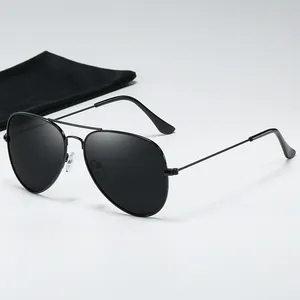
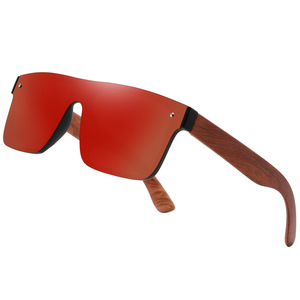
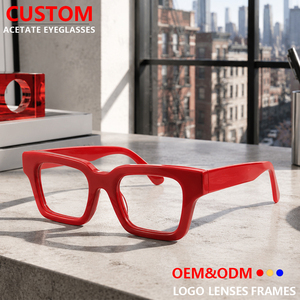
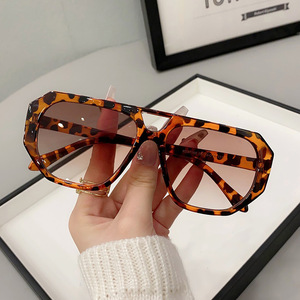
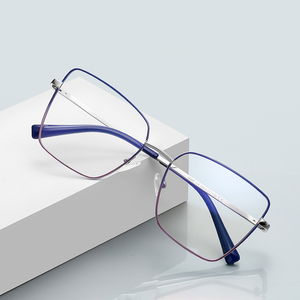
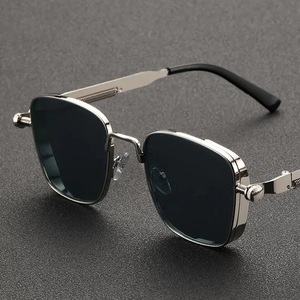
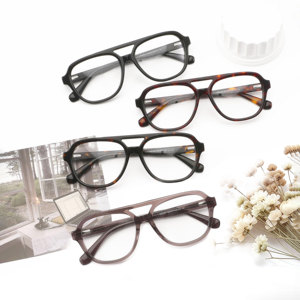
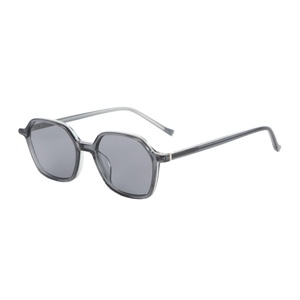
Operating out of Ahmedabad, Gujarat, India, Rushabh Trading Company (RTC Eyewear) has spent over 41 continuous years dedicated to a singular, uncompromising discipline: the precision engineering and hand-lapping of world-class cellulose acetate optical frames and luxury sunglasses. Unlike traders or generalist plastic injection moulders, our industrial footprint is built entirely around organic cellulose block chemistry, CNC subtractive tooling, and multi-barrel mechanical tumbling.
With our flagship Clarish™ in-production line encompassing 22 proprietary master molds and 258 curated colorways—ranging from classic Havana tortoiseshells and rich horn acetates to crystal clear bi-laminates—we provide international luxury eyewear labels, independent optometry chains, and multinational distributors with full-spectrum OEM and ODM supply chain security.

In-depth supply-chain analysis for procurement directors, product developers, and brand managers seeking competitive advantage, risk mitigation, and margin resilience in an evolving global landscape.
Global optical retail brands are systematically reducing structural over-reliance on single-geography manufacturing hubs. High customs tariffs, geopolitical volatility, and shifting labor economics in East Asia have positioned India as the primary high-tier manufacturing alternative for cellulose acetate craftsmanship.
With an established ecosystem of metallurgical engineering, chemical expertise, and English-speaking commercial account management, facilities like RTC Eyewear in Ahmedabad provide an integrated gateway for North American and European importers requiring duty-efficient, highly compliant OEM contract pipelines.
Regulatory frameworks such as the EU Corporate Sustainability Due Diligence Directive (CSDDD) are rapidly moving eco-design from a marketing novelty to an audit requirement. Procurement departments are mandating certified phthalate-free, cotton and wood-pulp derived bio-acetate with plasticizer content derived from renewable agricultural feedstocks.
Our production line works with ISCC-certified and ISO 14855 biodegradable cellulose acetates that retain identical Shore D durometer hardness, mechanical stability, and lustrous optical hand-polishing characteristics as traditional sheet polymers.
The traditional procurement cycle of rigid 1,200-piece per SKU minimums is being discarded by modern D2C optical disrupters and boutique private labels. In its place, forward-thinking eyewear factories deploy rapid-tooling 5-axis CNC machining that allows agile pilot batches of 150 to 300 pieces per colorway.
This allows wholesale distributors and optical chains to stress-test regional sales channels with seasonal micro-drops before committing to large-scale injection or master-batch block cutting, dramatically accelerating inventory velocity and decreasing capital risk.
How cutting-edge material physics, ergonomic data, and high-tolerance mechanical hardware are reshaping eyewear longevity, user comfort, and optometric dispensing efficiency.
| Engineering Vector | Conventional Commercial Standard | RTC Advanced OEM Factory Specification | Optometric & Retail Advantage |
|---|---|---|---|
| Raw Base Material | Recycled Injection Plastic (PC / CP / Low Grade CP) | 100% Virgin Block Cellulose Acetate (Cotton Pulp Origin) | Deep, non-fading section color; hypoallergenic; heat-moldable by opticians. |
| Core Temple Hardware | Unreinforced plastic or plain steel pin insertion | Embossed stainless wire core with dual-plane taper | Permanent cold-bend adjustment; retains ear contour memory indefinitely. |
| Hinge Architecture | Heat-staked 3-barrel friction hinges without stop | CNC-recessed 5-barrel or 7-barrel soldered German-spec hinges | Eliminates temple wobble; smooth, consistent opening torque exceeding 20,000 cycles. |
| Eyewire Bevel Tolerances | Molded V-groove ± 0.25mm variation | Subtractive CNC-milled 110° V-groove ± 0.05mm | Flawless lens retention; zero optical frame strain or glazing popping in optical labs. |
| Surface Finishing | Sprayed clear polyurethane lacquer coat | Multi-stage dry-barrel tumbled followed by dual hand-wheel buffing | Self-healing luster; surface scuffs can be polished out at store level indefinitely. |
The contemporary aesthetic demands dramatic volume, architectural 3D sculpting, and deep bevels without cumbersome mass. We achieve this through proprietary curing protocols for thick-gauge 8mm, 10mm, and 12mm cellulose acetate slabs.
Post-extrusion resting cycles ensure the elimination of internal sheet stresses, preventing warpage or dimensional shrinkage when frames are glazed with high-minus refractive Rx lenses.
Global export success relies on bridge geometry. A frame configured strictly for Western facial anthropometry fails in Asian or African demographic markets. RTC Eyewear engineers customizable nose bridge pads and pantoscopic tilt adjustments.
Our tooling supports both deep European saddle bridges and engineered built-up acetate pads with narrow apical angles (Asian Alternate Fit), assuring slip-free comfort across diversified customer bases.
Export compliance demands legible, permanent traceability on inner temple stems (including CE/UKCA marks, batch IDs, model designations, and lens parameters). We utilize computer-guided fiber laser engraving and dual-component tampon pad printing.
Our marking inks are cured via infrared chambers, resisting skin oils, constant cosmetic contact, and ultrasonic cleaning baths without degradation.
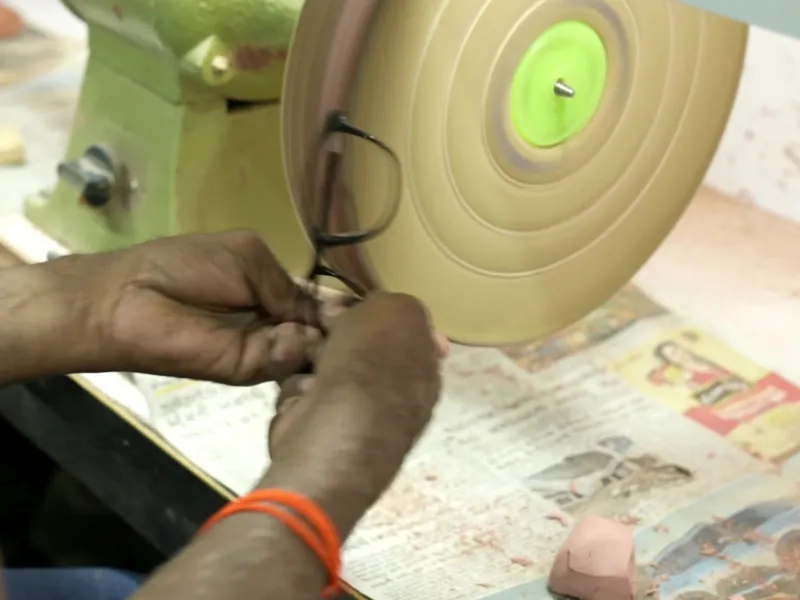
While multi-axis CNC machines yield the mathematical precision required for flawless lens grooving and structural symmetry, eyewear remains an intimate wearable object that touches delicate facial bone structures. A machine guarantees accuracy; only an experienced artisan guarantees comfort.
Every single frame front and temple exiting our CNC stations undergoes hand-mitering, individual edge rounding at the emery wheel, and multi-stage wheel lapping with specialized unbleached cotton and flannel disks. This hybrid workflow represents the pinnacle of modern contract eyewear manufacturing.
Critical commercial and technical criteria addressed directly to accelerate your procurement due diligence and OEM project feasibility assessment.
OEM (Original Equipment Manufacturer): You provide 2D technical drawings, 3D CAD files, or physical master samples. Our tooling engineers build dedicated cutting paths, custom steel core dies, and bespoke hardware exclusively for your brand. You own the proprietary shape IP.
ODM (Original Design Manufacturer): You select proven frames from our Clarish™ archive and alter specific parameters—such as acetate slab lamination, eye sizing (e.g., scaling from 54mm to 56mm), temple tapering, and custom core-wire patterns—to create an exclusive silhouette with minimized upfront tooling expenditure.
Private Label: The fastest commercial route to market. Select from our 22 in-production running models and 258 stock acetate colorways. We apply your branded temple pad-printing, fiber-laser engraving, bespoke packaging boxes, microfiber cloths, and barcodes, with immediate production scheduling.
All Clarish™ optical frames and custom client productions adhere strictly to the standardized Boxing System (ISO 8624 / ISO 12870). For example, a designation marked 56 □ 18 – 145 represents:
This strict dimensional fidelity guarantees that optical labs, opticians, and automated lens-edging edgers (such as Essilor, Nidek, or Briot) can edge prescription lenses directly without chassis distortion or rim popping.
Because we operate our own sheet conditioning, CNC routing, and hand-finishing lines in Ahmedabad, we offer highly competitive manufacturing tiers:
Every export shipment is pre-conditioned and tested against tier-1 international optical standards:
Yes. A complete private label program is turnkey. Beyond frame manufacturing, our packaging division provides hot-stamped collapsible hard cases (PU leather, recycled felt, or genuine leather), 220gsm high-density microfiber lens cleaning cloths with edge-to-edge sublimation printing, FSC-certified outer paper cartons with magnetic enclosures, and scannable GS1-compliant EAN/UPC barcoding labels ready for retail distribution.
Whether you require a dedicated production line for an established optical retail network, custom acetate sunglasses for an upcoming high-fashion runway collection, or reliable private-label supply from our Clarish™ catalogue, our Ahmedabad export engineering team is at your service.

