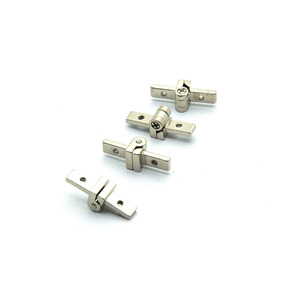
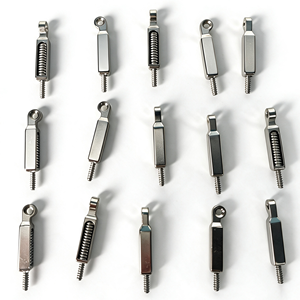
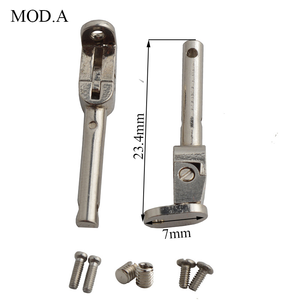
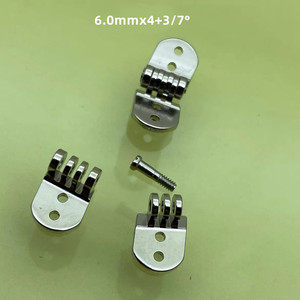
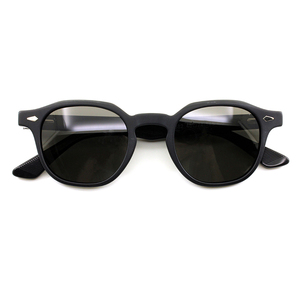
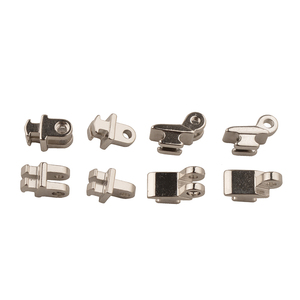
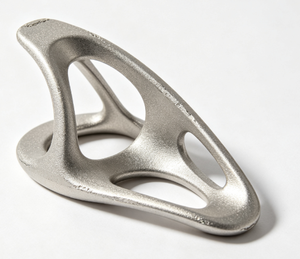
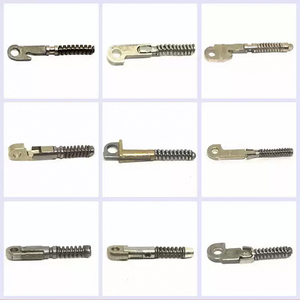
Explore our export-standard optical frame hinge configurations, optimized for automated wire shooting, ultrasonic embedding, lost-wax casting, and manual cold riveting.
Optical frame hinges serve as the primary mechanical kinematic joint in corrective eyewear and high-performance sunglasses. While aesthetic factors drive consumer selection, the hinge interface dictates structural integrity, temple dampening, face adaptation, and cyclic lifetime. In modern precision eyewear manufacturing, our OEM/ODM facilities operate with cold-forging, CNC multi-axis profile milling, and micro lost-wax investment casting to achieve dimensional stability within ±0.01 mm.
Hinge failures account for over 68% of post-retail warranty claims in acetate and injection-moulded frames. Common fault modes include barrel tooth shear, internal spring chamber buckling, thread stripping under dynamic loads, and galvanization breakdown leading to galvanic corrosion. By adopting German-imported spring steel wire (DIN 17223) and high-purity nickel silver (CuNi18Zn20), our assemblies resolve these failure triggers directly at the raw material synthesis phase.
| Hinge Configuration | Material Composition | Tensile Strength (MPa) | Cycle Durability | Primary Frame Compatibility | Fastening Methodology |
|---|---|---|---|---|---|
| 3/5-Barrel Classic Joint | CuNi18Zn20 (Nickel Silver) | 580 - 640 | 35,000 Cycles | Cellulose Acetate, Horn | Heat-staking / Riveting |
| Pre-compressed Spring Flex | SUS304 / SUS316L Core | 650 - 720 | 50,000+ Cycles | Acetate, Wood, TR90 | Ultrasonic Injection / Solderless |
| Lost-Wax Cast Pivot | Ti-6Al-4V (Grade 5 Titanium) | 890 - 950 | 60,000+ Cycles | Pure Titanium, Beta-Ti | Laser Micro-Welding |
| Screwless Friction Clamp | Beryllium Copper / Spring Inox | 900 - 1050 | 40,000 Cycles | Minimalist Sheet Metal | Interlocking Snap Profile |
Technical buyers, brand sourcing managers, and frame production directors must navigate rapidly shifting supply-chain parameters. Regulatory shifts concerning nickel release limits (EN 1811:2011+A1:2015), the acceleration of bio-based cellulose propionate, and automated robotic assembly lines are redefining hinge selection criteria across European, North American, and Asian optical clusters.
Strict European REACH compliance and zero-nickel skin contact laws have forced an industry-wide pivot away from conventional copper-nickel alloys. Premium brands increasingly specify high-nitrogen stainless steels (e.g., DIN 1.4441) and medical-grade alpha-beta titanium alloys (Ti-6Al-4V) for components interfacing directly with human dermal tissue.
Manual insertion of hinges into temples creates batch-to-batch alignment variances. OEM procurement contracts now prioritize hinges manufactured with self-locating guides, notched anchors, and standardized tooth widths (1.4mm and 1.8mm) engineered specifically for high-speed automated CNC wire shooting and ultrasonic inserting robotics.
With end-consumers demanding lightweight, maintenance-free eyewear, screw-retention failure is a persistent pain point. The market is witnessing exponential demand for modular, screwless friction hinges and thread-locking micro-coatings (such as dry nylon micro-encapsulated patches) that prevent screw release during cyclic vibration.
Precision micro-hardware requires metallurgy and tooling expertise comparable to luxury horology. Our manufacturing lines integrate state-of-the-art process controls to elevate wear resistance, dynamic torque stability, and finish depth.
Metal Injection Moulding (MIM) allows high-volume production of complex three-dimensional hinge brackets with net-shape precision, reducing secondary CNC operations by 70% and drastically cutting per-unit production costs for high-volume ODM contracts.
Physical Vapor Deposition (PVD) vacuum coating replaces toxic cyanide-based electroplating. This process achieves diamond-like carbon (DLC), rose gold, and gunmetal finishes with Vickers hardness exceeding 2000 HV, resisting human sweat acids and cosmetic corrosion.
Integrating micro-moulded POM (polyoxymethylene) and PTFE composite sleeve bearings within multi-barrel pivots delivers a smooth, hydraulic-like opening action while preventing direct metal-on-metal abrasion and thread wear over years of daily usage.
For custom artistic temples, sculpted filigree decors, and bespoke titanium sunglasses, lost-wax investment casting captures complex organic geometries that standard stamped sheet metal tooling cannot replicate, preserving sharp edge clarity.
With an industrial manufacturing lineage tracing back across four decades of precision mechanical production, our facilities bridge the critical gap between artisanal frame assembly and industrial-scale metallurgical hardware output. When partnering with global eyewear brands, optical chains, and trading houses, we enforce unyielding manufacturing governance.
No bulk batch enters full production until initial pilot toolings produce functional off-tool samples. Clients verify mechanical resistance, ultrasonic weldability, and aesthetic plating on physical master samples before production lines initiate run sequencing.
Our in-house tool and die division designs, cuts, and validates stamping dies, EDM wire cut profiles, and casting moulds in-house. This cuts custom ODM prototyping turnarounds from the industry standard of 60 days down to under 18 business days.
All finished optical components are documented with complete mill test certificates (MTC), RoHS documentation, and REACH salt-spray longevity reports. Standard export-ready blister strip packaging protects sensitive mechanical threads against transport oxidation.
Key considerations regarding metallurgy, custom moulding tolerances, MOQ limits, and surface finishing protocols for international eyewear procurement managers.
A multi-barrel hinge (typically 3, 5, or 7 barrels) relies on direct pin-friction to maintain temple tension. While robust, rigid, and historically favored in classic cellulose acetate frames, it offers zero outward over-flexing. Spring hinges incorporate an internal helical spring capsule that allows temples to flex outward beyond 90 degrees, relieving temporal pressure for the wearer and preventing frame distortion during one-handed removal.
Yes. Ultrasonic embedding requires specifically designed anchor dovetails or knurled tangs on the base of the hinge casing. High-frequency ultrasonic vibrations excite the thermoplastic molecules at the interface, causing localized melting. The hinge anchor sinks into the substrate, and the polymer re-solidifies around the undercut anchors within fractions of a second, yielding a pull-out force resistance exceeding 120 N.
All hinges designated for export undergo standard ASTM B117 neutral salt spray (NSS) chamber testing for 48, 72, or 96 hours depending on client technical specifications. Additionally, artificial sweat testing (ISO 12870 clause 4.8) is conducted on PVD-coated and electroplated hardware to ensure that lactic acid, sodium chloride, and synthetic sebum solutions do not trigger blistering, color shift, or joint stiffness over prolonged skin contact.
For existing standard catalog components, MOQ begins at 1,000 pairs per configuration for stock alloys. For custom ODM micro-tooling (bespoke barrel profiles, proprietary branding engravings, or non-standard core wire geometries), initial tooling costs apply with an MOQ threshold of 5,000 to 10,000 pairs. Prototyping requires approximately 15 to 20 days, followed by mass stamping and barrel polishing within 30 to 45 business days.
Hinge tooth thickness defines the mechanical shear load threshold and the depth of the rebate pocket routed into the front end-piece or temple tip. 1.4mm teeth are predominantly chosen for ultra-slim acetate optical profiles, lightweight titanium rims, and petite women's frames. 1.8mm teeth provide greater contact surface and torque load handling, making them standard for bold 8mm+ chunky acetate sun collections, heavy-duty safety frames, and sport performance wrap-around sunglasses.
We deploy three secondary locking systems: first, precision thread cutting conforming to ISO micro-thread standards with tight clearance fits; second, pre-applied chemical thread-locking resin (dry polyamide micro-spheres that shear and expand upon tightening); and third, Teflon-sleeved or rubberized O-ring locking pins that dampen cyclic vibration when the wearer opens and folds the eyewear temples.
Whether you require standard factory stock replenishment or custom-engineered hinge components for an upcoming seasonal collection, our engineering and export desk is prepared to provide technical CAD files, physical sampling plans, and competitive tier-one volume quotes.