Explore precision-milled cellulose acetate and high-performance polarized sports silhouettes engineered for private label deployment, optical chain retailing, and brand customization.
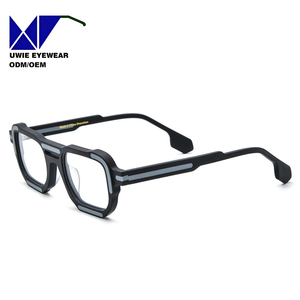
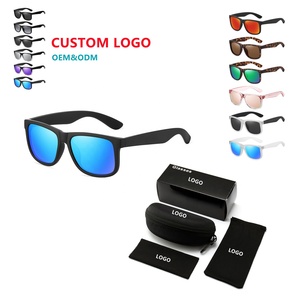
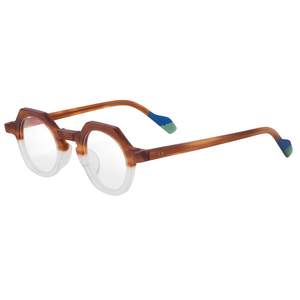
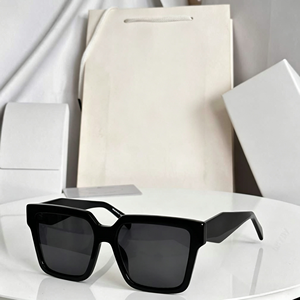

A technical deep-dive into optical polarization efficiency, molecular alignment of stretched polyvinyl alcohol (PVA) matrices, and cellulose acetate CNC milling tolerances for B2B sourcing executives.
The core optical engine of premium wholesale polarized sunglasses relies on an ultrathin Polyvinyl Alcohol (PVA) film, uniaxially stretched to 400-500% of its initial length and infused with iodine chromophores. This molecularly aligned matrix permits electromagnetic wave oscillations along only one plane, eliminating blinding horizontal reflections from water, asphalt, and snow with an extinction ratio exceeding 99.9%.
Unlike commercial injection plastics, organic cellulose acetate is synthesized from renewable cotton linters and wood pulp, plasticized into block sheets, and matured over weeks to achieve dimensional stability. In our Ahmedabad manufacturing plant, sheets are conditioned against humidity and thermal warping before entering 5-axis CNC routers for front cutting, bridge forming, and core-wire temple insertion.
A critical flaw in cheap wholesale polarized sunglasses is internal lens stress induced during manual bevel edging or tight frame pressure, manifesting as rainbow patterns (birefringence) under cross-polarized light. RTC Eyewear integrates strain-gauge polariscopes during production to verify that lens grooving tolerances hold to 0.05mm, eliminating optical distortion, headaches, and premature lens delamination.
Procurement directors must balance optical Abbe value, specific density, impact resistance, and bill-of-materials (BOM) costs across target retail segments.
| Substrate Category | Refractive Index | Abbe Value (Clarity) | Polarization Efficiency | Density (g/cm³) | Impact Rating | B2B Sourcing Sweet Spot |
|---|---|---|---|---|---|---|
| Triacetate Cellulose (TAC 1.1mm) | 1.49 - 1.51 | 56 - 58 | > 99.0% | 1.27 | ANSI Z80.3 Compliant | High-volume retail sunwear, fast-fashion OEM, lifestyle brands |
| Polyamide (Nylon Polarized) | 1.53 | 52 - 54 | > 99.5% | 1.02 | Extreme Flex & Impact | Luxury designer sun, high-wrap sports cycling, rimless collections |
| Polycarbonate (PC Polarized) | 1.59 | 30 - 32 | > 98.5% | 1.20 | ANSI Z87.1 High-Velocity | Industrial safety bifocals, military tactical, motorsports eyewear |
| CR-39 Monomer (Hard Resin) | 1.498 | 58 | > 99.8% | 1.31 | Standard Drop Ball | Bespoke optical boutique collections, high-end cast private label |
Strategic shifts reshaping the global polarized eyewear supply chain over the next 3 to 5 years, based on factory-floor orders and global import demands.
European and North American buyers are rapidly transitioning purchasing mandates toward ISO 14855 biodegradable cellulose acetate (plasticizer substitution via triethyl citrate instead of DEP). Concurrently, circular-economy TAC polarized lenses incorporating up to 40% certified post-industrial recycled flakes without optical dispersion loss are becoming baseline RFQ standards.
The demand for static Category 3 polarized tinting is evolving into adaptive photopolarized lenses. Utilizing spirally organized naphthopyran matrix coatings, these hybrid lenses remain Category 1 (light grey/amber 65% VLT) during overcast or low-light indoor cycling and transition within 45 seconds to Category 3 (12% VLT) with full polarizing filtration under direct UV index exposure.
Global optical retail conglomerates and independent brands are diversifying manufacturing footprints beyond China to mitigate geopolitical risks and tariff fluctuations. India’s established precision eyewear infrastructure—exemplified by RTC Eyewear in Ahmedabad with 40+ years of operation—offers competitive tariff structures, English-speaking technical liaisons, and uncompromised craftsmanship.
Combining 4 decades of artisanal mastery with high-capacity automated CNC production lines in Ahmedabad, India.
Founded in 1985, our sole manufacturing commitment has been cellulose acetate and polarized sunwear. We avoid dilution across unrelated plastics.
Tolerances milled down to ±0.05mm across front rim profiles, eyewires, and hinge pockets, guaranteeing laboratory-perfect lens glazing.
While machines secure micron accuracy, humans secure touchpoint comfort. Every bridge, nosepad, and temple tip undergoes hand buffing wheels.
Zero surprise bulk runs. Full-scale production begins exclusively after physical counter-samples receive written technical and aesthetic approval.
Clear, unambiguous answers addressing international compliance, MOQ thresholds, custom tooling, and optical quality control.
OEM (Original Equipment Manufacturing): You provide 2D/3D CAD drawings or physical reference prototypes. We engineer bespoke mold tooling, custom cellulose acetate slab block colors, and unique hinge designs exclusively for your brand.
ODM (Original Design Manufacturing): You select our pre-engineered base architectures (such as our Clarish™ catalog of 22 proven silhouettes) and customize eyewire sizing, bridge fits, acetate colorways, and temple core engravings.
Private Label: You choose ready-to-run catalog models with zero tooling lag, adding high-definition laser logos, pad-printed inner temples, and tailored packaging suites.
Every shipment is engineered and certified to meet or surpass major destination regulatory benchmarks: ANSI Z80.3-2018 (USA) for non-prescription sunglasses and optical radiation limits; EN ISO 12312-1:2022 (European Union) for personal protective equipment sun-glare compliance with CE marking; AS/NZS 1067.1:2016 (Australia/New Zealand) for Category 3 intense sun protection; and ANSI Z87.1 for high-velocity industrial safety eyewear options.
Because we specialize in bespoke custom manufacturing rather than cleared shelf overstock, minimum run thresholds depend strictly on material complexity: for catalogue acetate styles utilizing in-stock sheet slabs, MOQ starts at 300 pieces per model (broken down into 100 pcs per colorway). Custom proprietary acetate block castings typically require 600-1,200 pieces. Production lead time ranges from 15-20 business days for pre-production physical prototypes, and 45-60 days for bulk container packaging and export dispatch.
Delamination occurs when cheap pressure-sensitive adhesives fail between the PVA core and the TAC/polycarbonate outer layers. RTC Eyewear utilizes thermal autoclave fusion with cross-linking polyurethane bonding agents cured under exact temperature gradients. Furthermore, during acetate rim insertion, front bevels are heat-expanded in ceramic bead warming ovens rather than forced cold, completely mitigating perimeter shear stress on the lens edge.
We are strictly a B2B OEM/ODM manufacturing facility and global export house. We do not sell single pairs to individual consumers. Our clients consist entirely of independent optical boutiques, multinational retail chains, fashion brands, corporate promotional agencies, and licensed vision distributors worldwide.
Submit your design specifications, reference prototypes, or targeted catalog silhouettes. Our senior engineering and export management team will reply with comprehensive BOM costing, sampling timelines, and material schedules within 24 business hours.

