

An authoritative analysis of industrial manufacturing benchmarks, CNC routing versus injection tooling, and audited factory standards for private label procurement.

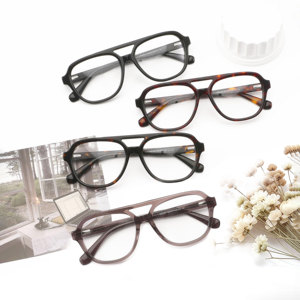
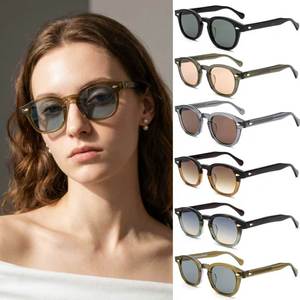
Originally conceptualized by Altina Schinasi in the late 1930s under the moniker "Harlequin frame," the modern cat eye silhouette has transitioned from a mid-century boutique novelty into a permanent, high-margin anchor across international retail optical collections. From an industrial design standpoint, what distinguishes a world-class cat eye frame from generic injection-moulded commodity eyewear is its complex geometric apex: the sharp upswept lateral brow endpoints. This specific junction demands rigorous structural calibration. A standard cat eye requires balanced mass distribution between the temporal hinges and the nasal bridge to prevent systemic front-warping when high-prescription minus lenses are mounted.
In high-end manufacturing setups, cat eye production relies primarily on multi-axis CNC milling of cured cellulose acetate sheets rather than standard thermoplastic injection. Premium cellulose acetate—formulated from cotton linter flakes and wood pulp plasticized with specialized phthalate-free plasticizers—delivers optical transparency, organic tactile resonance, and chemical compatibility that allows opticians to execute hot-air bench adjustments without degrading polymer integrity. When cutting an aggressive cat eye sweep, cutter speeds must be strictly modulated between 18,000 and 24,000 RPM. Excessive heat accumulation at the acute corner endpoints results in plasticizer burnout, surface micro-cracking, and premature structural failure along the endpiece screw bore.
When procurement officers map out production itineraries for boutique optical lines or corporate volume distribution, evaluating regional ecosystem proficiencies is vital. The top ten manufacturing facilities worldwide typically segment into three primary clusters: the historic Italian alpine districts (notably Cadore and Belluno), the high-density coastal industrial belts of Southern and Eastern China (Shenzhen and Wenzhou), and the burgeoning specialized craft facilities situated in Ahmedabad, India.
Characterized by low-volume runs, multi-generational hand-tumbling using pumice pellets, high raw material costs (e.g., custom Mazzucchelli block acetates), and premium unit pricing suited exclusively for luxury tier positioning.
Distinguished by massive daily throughput, expansive injection moulding bays, automated five-axis milling suites, and agile supply chains capable of delivering 50,000+ unit orders on short turnaround windows.
Epitomized by Rushabh Trading Company (RTC Eyewear) since 1985. Combining four decades of specialized single-category acetate knowledge, stable labor pricing, high English-speaking technical literacy, and flexible MOQ sampling matrices.
Emerging market forces reshaping cat eye frame manufacturing, structural specifications, and sustainable compliance frameworks.
Global regulatory pressure (including EU Reach, PFAS bans, and corporate ESG reporting) is accelerating the phase-out of traditional petroleum-based diethyl phthalate (DEP) plasticizers. Procurement directors are migrating rapidly toward bio-acetate—utilizing non-fossil triethyl citrate formulations verified under ASTM D6866 bio-based carbon testing. Factory tooling must adjust thermal feeds accordingly, as bio-acetates typically soften at temperatures 3-5°C lower than standard cellulose resins.
Consumer runway demand is pivoting away from razor-thin wire silhouettes back toward bold, sculptural acetate architectures. Cat eye frames are increasingly ordered in 6.0mm, 8.0mm, and even 10.0mm slab gauges. Machining an 8.0mm cat eye demands progressive multi-pass roughing passes to prevent lateral tool deflection, followed by specialized barrel-tumbling regimens lasting up to 72 continuous hours to soften chamfered edges without rounding out the crisp architectural brow lines.
Historic European cat eye master dies featured narrow 14-16mm fixed keyhole bridges, which frequently cause fitting distress, temple splay, and cheekbone contact on diverse global facial topographies. Forward-thinking exporters are standardizing on integrated step-down universal saddle pads, micro-machined titanium pad arms integrated via ultrasonic anchor plates, and tailored 18-20mm bridge corridors that maximize fit compliance across pan-regional retail demographics.
Four decades of uncompromising single-category specialization in cellulose acetate optical and sun frames.
Since 1985, Rushabh Trading Company (RTC Eyewear), operating from its manufacturing complex in Ahmedabad, Gujarat, India, has adhered strictly to one guiding principle: mastering cellulose acetate craftsmanship. Unlike generic trading brokers who outsource assembly across disjointed micro-workshops, our production ecosystem unifies the complete industrial lifecycle under one roof.
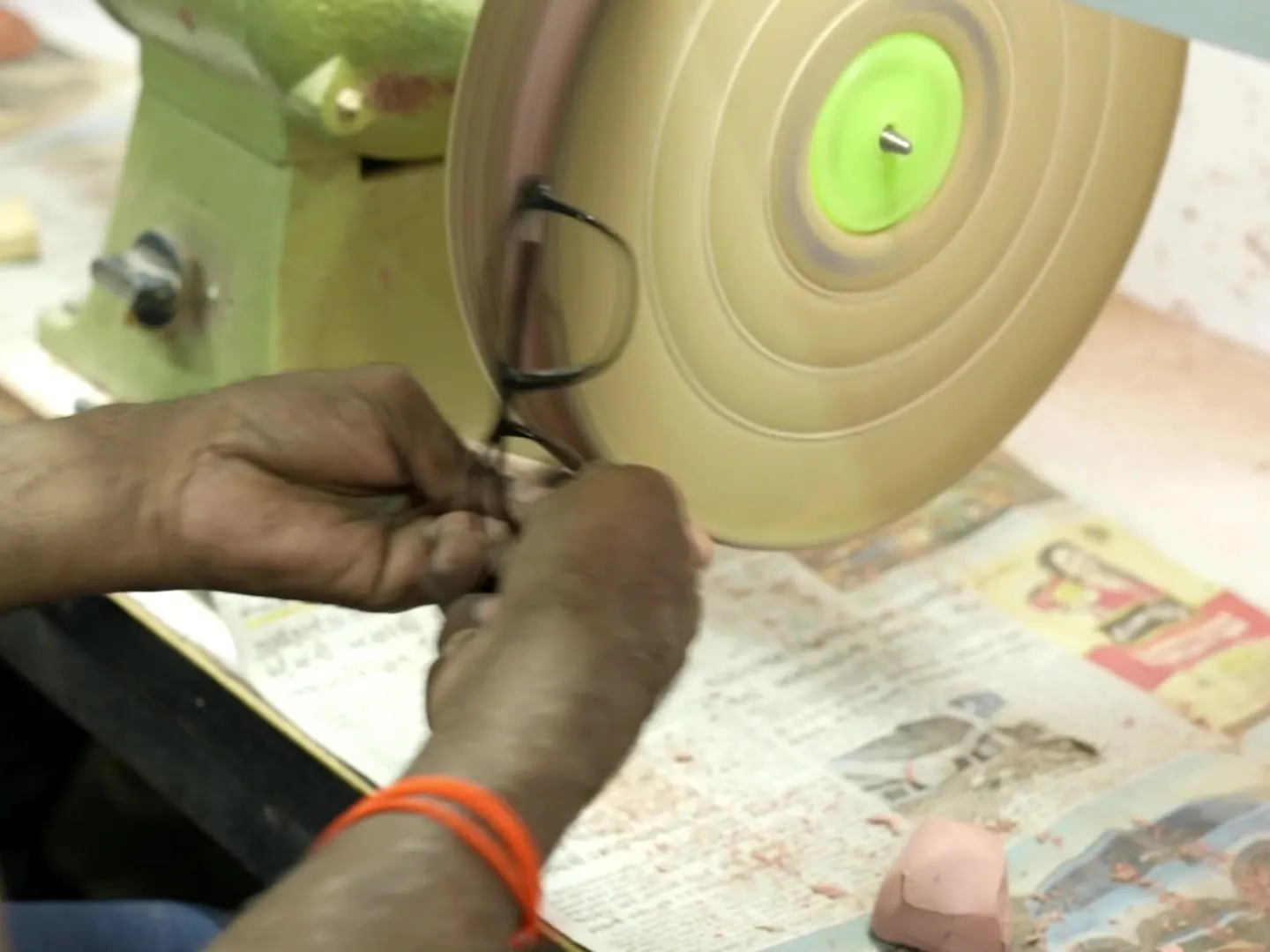
Every frame begins with thorough environmental conditioning of the raw acetate slabs in humidity-controlled stabilization rooms to eradicate internal material stress. Our engineering wing deploys precision multi-axis CNC routing equipment to machine outer contours, lens bevel grooves, and hinge cavities to fractional-millimeter tolerances. However, while machinery assures geometric fidelity, human tactile mastery dictates wearability: our veteran craftsmen hand-finish bridge contours, smooth eyewires, and manage three-stage birch-wood barrel tumbling cycles followed by mirror-grade cotton buffing.
Direct technical guidance covering boxing dimensions, tooling investments, custom logos, and export logistics.
Cat eye frames are calibrated using the international Boxing System (ISO 8624 / ISO 7998). Measurements specify the lens horizontal diameter (A), vertical B-measurement, distance between lenses (DBL/Bridge), and temple length (e.g., 54 □ 18 – 140 mm). Because cat eye frames possess extended lateral corner wings, we also document the Effective Diameter (ED) and overall frontal temple-to-temple width. Quality control checks utilize optical shadowgraph comparators to ensure bevel profiles do not deviate beyond ±0.15mm, preventing lens ejection or rim distortion during cold-snap glazing.
OEM (Original Equipment Manufacturer): The buyer provides bespoke CAD/CAM files, 2D technical drawings, or physical vintage reference frames. We tool custom CNC fixture plates, manufacture proprietary temple core wires, source custom color slabs, and build an exclusive silhouette owned entirely by your brand.
ODM (Original Design Manufacturer): You select our proven, market-tested baseline geometries (such as models from our Clarish™ catalogue) and modify key elements: adjusting acetate lamination layers, temple thickness, or bridge width to your specifications.
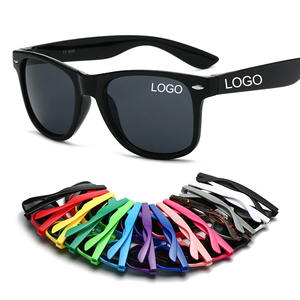
Private Label: The quickest path to market. You order existing in-production silhouettes, and our factory executes precision pad printing, laser engraving, temple hot-stamping, and custom branded packaging suites (cases, microfiber cloths, rigid boxes).
While TR90 and polycarbonate provide low-cost tensile flexibility for sports frames, they fail to meet the aesthetic, optical, and tactile demands of premium eyewear. Injection-moulded plastics require surface paints or lacquers that chip and flake over time. In contrast, cellulose acetate possesses deep, embedded chromatic saturation across its full cross-section. Crucially, acetate features viscoelastic memory: when heated gently on an optical frame warmer (60°C–70°C), an optician can curve the bridge, adjust pantoscopic tilt, and bend the temple ear-hooks to comfortably contour any customer's cranium without causing plastic embrittlement or snapback.
For standard thin-profile cat eye frames, traditional 3-barrel or 5-barrel riveted hinges offer clean lines and adequate shear resistance. However, for modern oversized styles or thick-gauge 8mm acetate slab constructions, we specify high-tensile 7-barrel hinges or heavy-duty enclosed flex/spring hinge mechanisms. Spring hinges provide lateral compliance that prevents temple splay over extended wear cycles, reducing warranty return rates for optical retail chains.
Unlike massive injection-moulding conglomerates demanding 3,000 units per colorway due to steel die amortizations, our CNC-driven machining infrastructure allows versatile batch setups. For private label runs on existing running sheet stocks, MOQs can start comfortably at 300 to 500 units distributed across 2-3 colors. Bespoke OEM projects requiring custom-cast acetate formulations or proprietary core-wire extrusion dies typically run at 600 to 1,200 units per master mold. Prototyping takes approximately 15 to 25 business days, with full container or palletized bulk sea/air freight dispatched within 45 to 60 days following pre-production sample sign-off.
All optical frames and sunglasses exported from our facility comply with ISO 12870 (Ophthalmic optics — Spectacle frames) and EN ISO 12312-1 (Eye and face protection). We supply drop-ball impact test certifications compliant with US FDA 21 CFR 801.410, nickel-release test reports (EN 16128) ensuring no allergic reaction from exposed metallic hinges or temple core-wires, and documentation confirming REACH Annex XVII adherence.
Consult with our technical sales division in Ahmedabad. Access our technical sample room, request material swatch kits, and obtain accurate CIF/FOB quotations.
Get a Quote