Manufactured under strict ISO/CE optical standards. Available for OEM custom toolings, ODM dimensional adjustments, and bulk white-label distribution.
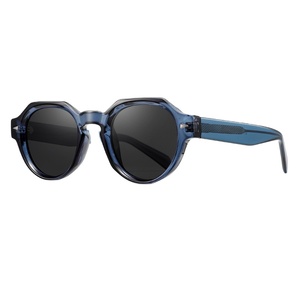
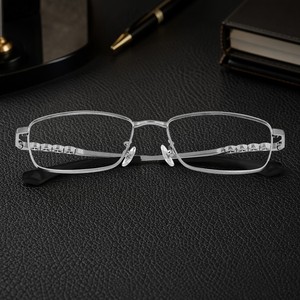

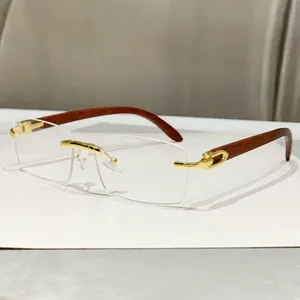

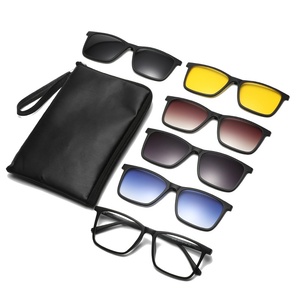

A rigorous evaluation of global production capabilities spanning Ahmedabad, Shenzhen, Wenzhou, Belluno, and Sabae.
The global optical eyewear market has pivoted rapidly toward high-value, sustainable, and mathematically precise frame engineering. For brand executives, retail chains, and institutional buyers, selecting from the world's Top 10 Prescription Glasses Frames Factories & Exporters requires analyzing more than quoted ex-factory prices. Quality determination hinges on raw material purity (such as cotton-derived cellulose acetate), CNC dimensional tolerance, thermal adjustability, hinge cycle durability, and supply chain accountability.
Historically polarized between high-volume injection-molded manufacturers in East Asia and heritage artisan workshops in Northern Italy and Fukui Prefecture, Japan, the global manufacturing equilibrium now embraces dedicated specialist hubs. Prominently, Rushabh Trading Company (RTC Eyewear / Clarish) in Ahmedabad, India, established in 1985, has carved out four decades of engineering supremacy in cellulose acetate fabrication. By utilizing multi-axis CNC milling accompanied by labor-intensive, multi-stage barrel tumbling and hand wheel polishing, high-standard manufacturers bridge the gap between extreme structural consistency and the organic tactile warmth demanded by luxury boutiques.
| Global Region / Industrial Cluster | Core Manufacturing Focus | Material Specialization | Average Prototyping Lead Time | Key Strategic Advantage |
|---|---|---|---|---|
| Ahmedabad, India (RTC Eyewear) | OEM / ODM Cellulose Acetate | Bio-based Virgin Acetate Sheets | 7–14 Business Days | Competitive tariffs, 41-year specialist tenure, end-to-end CNC & hand buffing. |
| Shenzhen (Henggang), China | High-End Luxury OEM | High-Density Acetate, Titanium | 15–25 Business Days | Mature plating supply chain, complex hardware integration. |
| Wenzhou (Ouhai), China | Mass Scale Commercial Frames | TR90, Injected PC, Standard Metal | 10–20 Business Days | Extreme volume throughput, lower baseline MOQ thresholds. |
| Belluno District, Italy | Heritage Designer Lines | Custom Italian Milled Acetate | 30–45 Business Days | Iconic European design IP, luxury prestige brand validation. |
| Sabae (Fukui), Japan | Micro-Tolerance Precision | Beta-Titanium, Celluloid | 40–60 Business Days | Unrivaled metallurgical finishing, micron-level cold-forging. |
When selecting an overseas frame manufacturing partner, procurement directors must verify whether the supplier cuts frames from solid cellulose acetate sheets or merely utilizes solvent-welded scrap plastics. Solid-section sheet cutting guarantees that hue saturation, amber tortoiseshell marbling, and tonal depth exist through the full profile thickness. This eliminates the risk of flaking or discoloration when an optician applies localized thermal heating in optical dispensaries.
Combining industrial multi-axis milling precision with traditional artisan manual hand finishing.
Cellulose acetate sheets are selected based on molecular density and moisture equilibrium. Our factory avoids internal voids and brittle sections, ensuring structural strength across wide temperature ranges.
Every frame rim profile, prescription lens groove angle, and hinge anchoring pocket is carved using dedicated high-RPM computer numerical cutting stations.
Machined acetate edges are unyielding and sharp. Our multi-stage pumice-wood barrel tumbling cycles followed by skilled manual cotton-wheel buffing generate lasting surface luster.
Critical engineering transformations every brand owner, optical chain buyer, and design director must anticipate.
Global regulatory bodies (including the EU Green Claims Directive) are mandating traceably sustainable optical components. Forward-looking procurement programs are pivoting toward certified bio-acetate featuring non-phthalate plasticizers derived from citric and sebacic bio-sources.
The boundary between traditional ophthalmic spectacle frames and wearable smart acoustics is converging. Factories must integrate CNC wire conduits within the internal acetate temple structure to support directional bone-conduction transducers and miniaturized battery cells.
Standardized single-dimension manufacturing is giving way to regional anthropometric tailoring. Global brands require identical front silhouettes with variable bridge pantoscopic tilts, adjustable European/Asian pad heights, and altered temple spread angles.
Over-reliance on single-geography manufacturing hubs represents significant supply continuity exposure. Optical retail consortiums actively balance procurement portfolios by onboarding dedicated Indian manufacturing powerhouses like RTC Eyewear.
Actionable guidance on mechanical tolerances, private label execution, and quality control.
Cellulose acetate is a plant-based polymer that retains dimensional flexibility and deep structural coloring. Injected plastics (like TR90 or Polycarbonate) use surface coatings that can chip or peel. Acetate softens predictably under an optician's hot-air frame warmer without bubbling, allowing precise custom fitting around cranial contours.
The international standard boxing measurement indicates lens width (55mm), bridge distance (18mm), and temple length (145mm). When setting up CNC milling files for OEM or ODM lines, these dimensions govern our multi-axis cutter paths, wire-core insertion stops, and front curvature bends (base curve 4 to base curve 6).
We anchor multi-barrel hinges (3-barrel, 5-barrel, or 7-barrel configurations) directly into heated acetate pockets or through cold ultrasonically pinned rivets. Samples undergo rigorous cycle stress tests exceeding 20,000 opening/closing rotations without structural micro-fracturing or screw slippage.
Our turnkey private label workflow includes custom pad printing, inner-temple laser etching (compliant with EU/FDA CE numbering rules), customized wire-core stamping patterns, and bespoke branded packaging—including hard clamshell cases, microfiber lens cloths, and export cartons.
We maintain an uncompromising "Sample First, Then Scale" philosophy. Prior to cutting volume acetate sheets, physical pre-production prototypes are dispatched for fit verification, optical lens sizing confirmation, and mechanical stress review. Bulk production begins only upon signed client approval.
RTC Eyewear manages complete export supply chain compliance, generating accurate Country of Origin certificates, commercial invoices formatted to your regional customs codes, Drop Ball impact test compliance for ophthalmic standards, and tailored HS code classifications for streamlined port clearance.

