


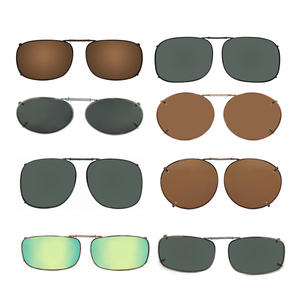
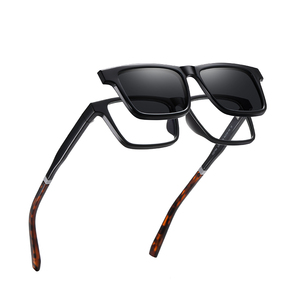
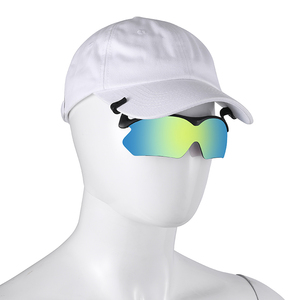
Explore our export-ready collection of high-grade polarized, blue-light blocking, and multifunctional magnetic clip-on frames built for global optical distributors and private labels.
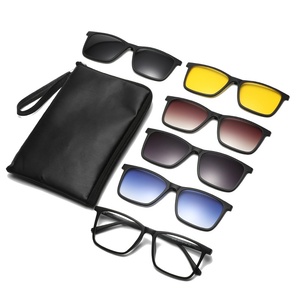
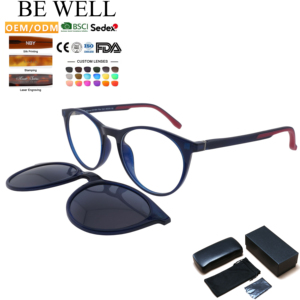
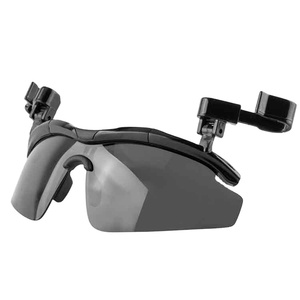
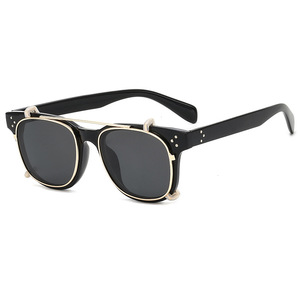
Decades of continuous manufacturing rigor backing world-class optical brands across Europe, North America, and emerging markets.
The global eyewear landscape is witnessing an accelerated paradigm shift. Optical consumers are systematically pivoting away from single-utility vision hardware in favor of dynamic, hybrid ecosystems. Clip-on sunglasses—historically viewed as utilitarian secondary accessories—have transformed into precision-engineered optical attachments. As a premier China clip-on sunglasses manufacturer and exporter, our engineering facility approaches clip-on design not as an afterthought, but as an integrated mechanical and optical extension of the base frame.
Achieving commercial success in international optical chains requires addressing the historical pain points of clip-on hardware: mechanical surface scratching, visual chromatic aberration, excess bridge weight, and aesthetic misalignment. Modern manufacturing resolves these challenges through two primary architectures: Sub-Miniature Neodymium Magnetic Coupling and Zero-Stress Mechanical Tension Brackets. Our manufacturing plants deploy CNC milling, automated chamfering, and high-vacuum sputtering technologies to produce clip-on mechanisms that seat invisibly, retain securely under vigorous acceleration, and deliver true UV400 and polarized glare attenuation.
Global supply chain leaders and optical brand managers face an increasingly complex international regulatory and retail landscape. In evaluating sourcing partnerships for 2026 and beyond, key macro procurement trajectories are governing contract allocations:
1. Turnkey Modular Ecosystems (5-in-1 & Multipurpose Bundles): Retail shelf-space economics dictate maximum inventory turnover per SKU. Purchasing teams are heavily weighting multi-clip SKU architectures—where a single lightweight TR90 or high-density cellulose acetate chassis ships with interchangeable polarized grey (driving), amber high-contrast (marine/fog), blue-blocker FL-41 (screen fatigue), and 3D/night vision attachments. This strategy lowers retail customer barrier to entry while dramatically elevating unit margin.
2. Bio-Based Monomers and Circular Thermoplastics: Sustainability compliance (such as the EU Corporate Sustainability Due Diligence Directive) is driving RFP requirements toward plant-derived cellulose acetates and eco-friendly TR90 polyamides. Global buyers are verifying resin source legitimacy to eliminate volatile phthalates and minimize lifecycle carbon emissions.
3. Medicalized & Functionalized Lens Formulations: Aesthetic shading is no longer sufficient. Importers are systematically requesting therapeutic photophobia lenses (such as FL-41 Rose Brown filters for migraine mitigation), ANSI Z87.1 high-velocity impact compliance, and hydrophobic oleophobic dual-side vacuum coatings that eliminate fingerprinting and saltwater pitting.
The mechanical durability of clip-on systems hinges on raw material purity and metallurgical tolerance. Traditional zinc-alloy claws have been rendered obsolete by high-tensile grade-5 titanium wire clips and N52 aerospace-grade neodymium rare-earth magnets. In our magnetic clip assembly lines, magnets are hermetically sealed inside sonic-welded TR90 pockets or precision-milled acetate cavities, entirely isolating the metallic core from humidity and sweat oxidation.
Simultaneously, lens physics have shifted from primitive single-layer cast triacetate to 9-layer Tri-Acetate Cellulose (TAC) and Injection Polycarbonate (PC) Polarized sandwiches. These assemblies incorporate dual PVA polarizing cores, UV400 blocking polymers, scratch-resistant hard coats, and multi-layer anti-reflective (AR) rear-surface coatings. The result is total suppression of horizontal surface glare with zero optical wave distortion, allowing wearers to transition seamlessly between indoor digital workstations and high-glare marine or driving environments.
Leveraging deep industrial heritage, multi-material processing capabilities, and complete export chain transparency to safeguard your product launches.
Our engineering lab handles rapid 3D prototyping, mold cutting, and multi-axis CNC profiling. We guarantee bevel and magnetic socket tolerances within ±0.03mm for seamless clip attachment.
Every production batch undergoes spectrophotometer UV spectrum verification, polarizing efficiency index testing, drop-ball impact resistance, and 48-hour salt spray corrosion testing.
Complete OEM/ODM customization covering pad-printed and laser-engraved bridge logos, customized magnetic packaging kits, micro-fiber branded cloths, and retail-ready barcode labeling.
Technical, logistical, and commercial guidelines for international optical buyers, brand directors, and procurement teams.
Consult with our technical sales engineers to discuss custom tooling, bulk export pricing, material compliance, and sample dispatch for your destination market.