From cured multilayer cellulose acetate to shape-memory TR90 polymers, explore our flagship production lines engineered for luxury private labels, sports optics distributors, and commercial retail chains.
For procurement directors, optical lab directors, and brand developers: an exhaustive breakdown of raw material formulations, tight tolerances, barrel tumbling physics, and custom logo execution methods.
Direct manufacturing of high-end optical frames and sunglasses requires navigating structural physics, chemistry, and precision micro-machining. When sourcing from China's primary optical industrial belts, product longevity hinges upon material purity, CNC toolpath accuracy, and mechanical polishing cycles. Below is an engineering overview of our manufacturing protocols.
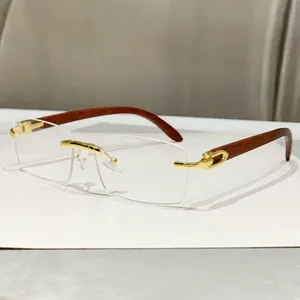
Unlike standard injection-molded plastics, our cellulose acetate is extracted from renewable cotton linter and sustainable wood pulp, plasticized with triacetin to form monolithic blocks. The material undergoes a critical 60-day curing cycle in climate-controlled aging vaults.
Our workshop leverages multi-spindle Japanese and German CNC machining centers programmed to tolerances within ±0.03 mm. Frame fronts, complex eye-rim step bevels, and bridge geometries are precision-milled without thermal warpage.
Milled frame blanks contain microscopic cutting ridges that cannot be polished out by hand alone. We subject every frame to a proprietary 4-stage, 72-hour automated wet-and-dry tumbling procedure inside European beechwood octagonal barrels.
| Material / Engineering Parameter | Cellulose Acetate (Clarish Standard) | Swiss EMS TR90 Polyamide | Japanese Beta-Titanium | Recycled Post-Consumer Polycarbonate |
|---|---|---|---|---|
| Density / Weight Index | 1.28 – 1.32 g/cm³ (Substantial Handfeel) | 1.14 g/cm³ (Super Ultra-Light) | 4.50 g/cm³ (High Tensile Ratio) | 1.20 g/cm³ (Standard Economy) |
| Flexural Modulus & Elastic Memory | Semi-Rigid, Heat Formable (>65°C) | Extremely High Elastic Recovery | Superior Spring Deflection | Rigid; Low Plastic Deformation |
| Hypoallergenic Performance | 100% Bio-Inert | Medical Grade | Biocompatible | Standard Grade |
| Optimal Finishing Technique | Mechanical Tumbling & Hand Lapping | Electrostatic Soft-Touch Spray | PVD Ion Vapor Deposition | Hardcoat UV Lacquer Coating |
| Best For Market Segment | Designer, RX Boutique, Luxury | Performance Sport, Kids, Safety | Minimalist Executive, High-End | Fast Fashion, High-Volume Promo |
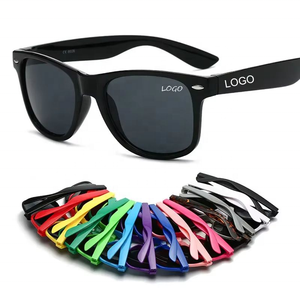
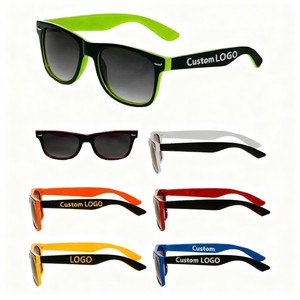
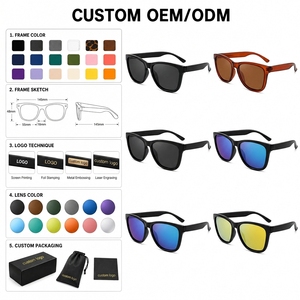
Branding on high-performance eyewear must withstand human sweat, sebum, ultraviolet radiation, and mechanical friction. A logo that rubs off within three months damages brand reputation. Our factory implements four distinct industrial marking techniques engineered for longevity:
Whether producing a delicate runway collection or tactical polarized eyewear, we calibrate our laser ablation depth and pad printing curing temperatures to guarantee permanent brand adherence.
Two-component epoxy ink cured under UV lamp tunnels. Scratch-resistant, tested against 100+ ethanol abrasion cycles.
Controlled laser ablation vaporizing micro-layers with zero burrs. Infill options include metallic foil or enamel pigments.
High-precision electroformed nickel or stainless-steel badges countersunk flush into the acetate temple and sealed with resin.
Custom hydraulic stamping of internal temple core wires, making your logo visible through crystal-clear transparent acetate.
Strategic supply chain analysis for category managers. How regulatory crackdowns, sustainability imperatives, and smart device convergence are reshaping OEM eyewear procurement.
Global regulatory bodies (EU REACH, Prop 65) are restricting petroleum plasticizers (DEP). Sourcing is rapidly pivoting to 100% bio-based acetates utilizing vegetable-origin plasticizers certified to ISO 14855 biodegradability standards, ensuring brands remain compliant without sacrificing frame rigidity.
The boundary between classic fashion eyewear and functional sports optics has dissolved. Next-generation tooling focuses on dual-injection co-molding: marrying rigid TR90 frame chassis with pliable silicone grip points, carbon-fiber structural inserts, and screwless surgical steel hinges.
With smart audio eyewear and lightweight augmented reality (AR) optical engines gaining commercial traction, conventional factories cannot keep pace. Forward-thinking brands are sourcing frames designed with internal temple wire conduits and modular battery cavities ready for tech integration.
To mitigate deadstock risks, global brands are moving away from traditional 1,200-pair-per-mold commitments. Utilizing high-speed digital additive tooling and standardized core blanks, our factory enables dynamic custom order runs of 100–300 units per colorway with 15-day replenishment windows.
Every consignment leaving our assembly line is backed by standardized third-party lab documentation, meeting rigorous global standards for optical clarity, impact resistance, and dermatological safety.
Mandatory for all sunglass and optical imports entering the United States. A 5/8-inch steel ball weighing approximately 0.56 ounce is dropped from a height of 50 inches onto the horizontal upper surface of each lens sample. Zero shattering, cracking, or flaking is permitted.
Spectrophotometer analysis calibrating UV transmittance between 280nm and 400nm. We guarantee complete attenuation of UVA and UVB rays (UV400 certification). Optical distortion tests ensure zero astigmatic power or prismatic imbalance causing wearer headaches.
Automated mechanical endurance testing rigs open and close frame temples across 20,000 continuous cycles at 40 cycles per minute. Hinges must retain adequate friction torque without screw loosening, barrel stress fractures, or core wire displacement.
With an engineering lineage stretching over four decades (founded 1985), we understand that an eyewear frame is not merely a fashion accessory—it is an intimate medical-grade prosthetic worn on the human face. A fraction of a millimeter difference in bridge width or temple curvature makes the difference between an uncomfortable frame and a worldwide bestseller.
Our direct manufacturing facilities offer complete vertical integration: from in-house mold tooling, raw sheet slicing, and 5-axis CNC routing to assembly, customized packaging, and direct door-to-door DDP export clearance.
Everything procurement officers, distributors, and supply chain analysts need to know regarding tooling, minimum order quantities, compliance, and lead times.
Our minimum order quantities depend on the selected manufacturing pathway and material substrate:
Private Label on Existing In-Production Tooling: 100 to 300 pieces per model across 2–3 stock colorways, featuring customized laser engraving, pad printing, and custom case packaging.
Bespoke Custom Acetate (OEM): 300 to 500 pieces per model (minimum 100 pieces per colorway) to account for minimum batch sheet extrusion and CNC path setup.
Injection-Molded TR90 or Polycarbonate (OEM): 600 to 1,200 pieces per mold due to industrial injection machine changeover requirements. Contact our engineering team to review volume tier amortizations.
A standard OEM procurement cycle proceeds across predictable milestones:
1. Technical CAD & 3D Rendering Approval: 3 to 5 working days.
2. CNC Rapid Prototyping / Physical Sample Creation: 10 to 15 days for acetate; 25 to 30 days for new injection mold tooling.
3. Counter-Sample Dispatch & Buyer Sign-off: 3 to 5 days via air express.
4. Mass Production Run: 35 to 45 days for acetate (including the 72-hour tumbling and hand-finishing stages); 30 to 35 days for TR90 and metal frames.
5. AQL Quality Inspection & Export Dispatch: 2 to 3 days. Total timeline typically spans 50 to 65 days for custom production orders.
All frames are engineered strictly to ISO 8624 (Optics and optical instruments — Spectacle frames — Measuring system and terminology). A marking of 54 □ 18 – 145 represents:
• 54 mm: Eye (Lens) horizontal width at the widest point within the boxed lens profile.
• 18 mm: Distance Between Lenses (DBL / Bridge width) across the nasal opening.
• 145 mm: Total temple length measured from the hinge pivot screw to the terminal temple tip.
During ODM development, we calibrate these parameters based on your target demographic, ensuring optimal fit for standard Western sizing or Asian/Low-Bridge Fit specifications (featuring elevated nose pads and modified pantoscopic tilt angles).
We supply complete compliance documentation dossiers with every export consignment, including:
• United States: FDA Device Registration Number, Drop Ball Impact Test Certificate (21 CFR 801.410), Prop 65 toxicological self-declarations.
• European Union: CE Declaration of Conformity in accordance with EU Medical Device Regulation (MDR 2017/745) for optical frames (Class I) and Personal Protective Equipment (PPE Regulation 2016/425) for sunglasses; REACH Annex XVII nickel release and chemical testing certificates.
• Global: UKCA certification, ISO 9001 factory audits, and SEDEX / SMETA social compliance audit reports upon request.
Yes. For injection TR90 and PC frames, we formulate precise Pantone solid, translucent, or metallic shades using spectrophotometer color matching. For cellulose acetate, we maintain access to over 250+ standard sheets and collaborate directly with leading raw acetate extruders (such as Mazzucchelli and JinYu) to produce bespoke custom color blends, multi-layer laminations, and vintage havana tortoise patterns for exclusive brand runs.
Absolutely. We provide end-to-end packaging solutions: bespoke hard leatherette cases, collapsible magnetic origami boxes, high-density microfiber cleaning cloths with heat-transfer digital printing, anti-counterfeit holographic authenticity seals, and retail-ready outer cartons pre-labeled with your SKU numbers and EAN/UPC barcodes. Your order arrives ready for immediate warehouse intake or fulfillment center dispatch.
Initiate direct communication with our senior optical engineering and export team. Submit your CAD drawings, physical reference benchmarks, or Clarish-catalog specifications for an immediate, non-binding feasibility review and production quotation.