

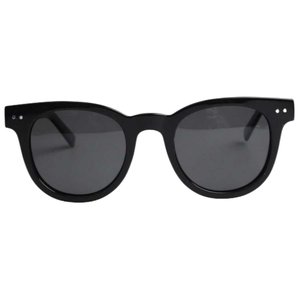
Explore our production-ready structural models and proprietary functional parts. From ultra-lightweight pure titanium spectacle rims to multi-barrel custom hinges, each prototype translates CAD data into market-ready optical reality.
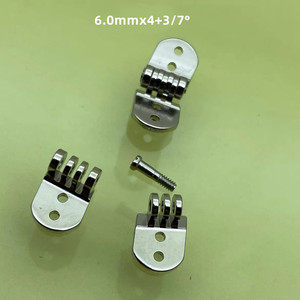
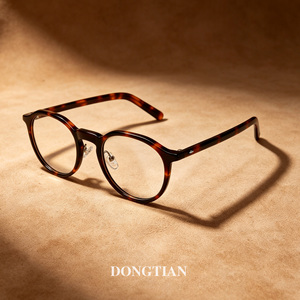
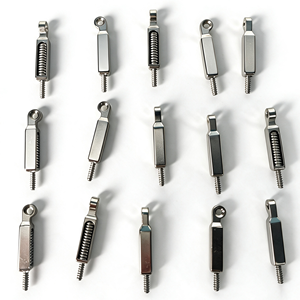
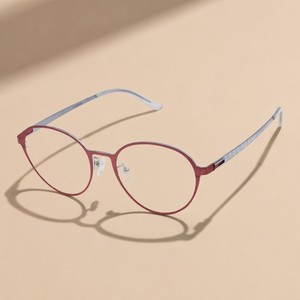
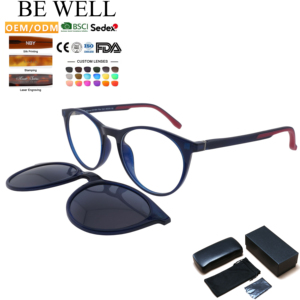
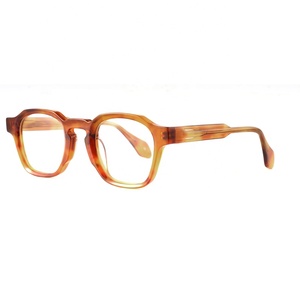
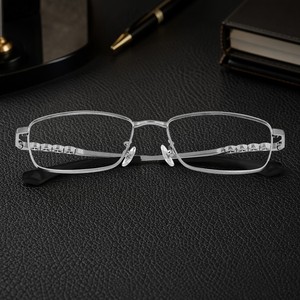
Since 1985, our manufacturing network has combined the accuracy of high-speed multi-axis computer numerically controlled (CNC) milling with master artisan hand-finishing. We provide end-to-end prototyping ecosystems built specifically for rigorous OEM, ODM, and private-label programs.
We deploy high-speed spindles with tool edge radii as fine as 0.1mm. This ensures crisp facet cutouts, exact base curve grooves, and tight friction-fit hinge seats in high-density cotton-derived cellulose acetate sheets.
Zero Thermal DistortionMachined surfaces are accurate, but only true manual buffing achieves human comfort. Our facility retains traditional barrel tumbling in organic walnut pumice, followed by 3-stage rotary wheel hand buffing.
Pumice to Deep Mirror LusterBeyond acetate, our prototyping facilities house industrial wire-cut electrical discharge machining (EDM) and controlled argon laser welding stations for pure titanium and beta-titanium spectacle structures.
Hypoallergenic & High TensileInternational optical supply chains are shifting rapidly from speculative bulk production toward high-fidelity functional verification, localized rapid sampling, and circular material validation.
Global procurement teams now bypass traditional high-cost steel molds for preliminary trials. By leveraging selective laser sintering (SLS) and micro-CNC routing, brands finalize ergonomic boxing dimensions (Eye-Bridge-Temple) with zero tooling amortization before commercial release.
Environmental compliances (such as the EU REACH Directive and California Proposition 65) drive demand for non-phthalate plasticizers. Sourcing teams prioritize prototypes crafted from certified biodegradable cotton-linter flakes and circular acetate waste streams.
Audio eyewear, electrochromic sun-lenses, and head-mounted augmented reality (AR) systems require prototype engineers to embed wire channels, haptic battery cavities, and inductive charging pins directly into standard temple geometry without adding visual bulk.
Modern optical manufacturing is evolving from simple physical samples into data-driven digital twins. Our manufacturing facility continues to implement automated workflows that reduce pre-production lead times by 60%.
Before carving physical stock, CAD models undergo finite element analysis (FEA). We simulate temple hinge flexure, bridge load deformation, and drop impact risks directly on 3D computer models to optimize structural ribbing.
Additive titanium manufacturing allows for generative lattice structures inside the bridge and temple core. This reduces overall frame weight by up to 45% while preserving high torsional rigidity and spring performance.
Global optical retailers require micro-adjustments for diverse international demographics. Algorithmic parametric design automates bridge angle and pantoscopic tilt variations across European, Asian, and universal fit profiles within hours.
Review 2D sketches or STEP files for cutter clearance, wall thickness, and hinge seat geometry.
Milling frame fronts and temples from stabilized high-density acetate blocks or raw titanium billets.
Hydraulic shooting of internal spring wire cores and ultrasonic setting of micro-hinges.
Graded mechanical barrel tumbling followed by meticulous multi-stage manual wheel buffing.
Optical coordinate measuring machine validation to ensure precise alignment with original CAD data.
Key technical, logistical, and production answers addressing common queries during the design engineering and prototyping phases.
We work with 3D CAD files in STEP (.stp), IGES (.igs), and Rhino (.3dm) formats. For clients starting from 2D concepts, technical vector drawings (AI, DWG, PDF) showing boxing dimensions (Eye-Bridge-Temple), base curves, and rim thicknesses allow our engineering team to generate production-ready 3D CAD models within 24 to 48 hours.
Our rapid prototyping facility operates independently from high-volume automated lines. We support one-off design proofing, fit testing (1 to 5 pieces), and pilot verification runs (50 to 300 pieces) without requiring expensive hard tooling. Once prototypes are approved, specifications transfer directly to our mass production lines with zero dimensional drift.
Yes. Our in-house metalworking division produces bespoke 3-barrel, 5-barrel, and 7-barrel hinges, custom spring hinge cartridges, and micro-machined functional rivets. We also offer diamond-cut and filigree-engraved temple wire cores in German silver, stainless steel, and titanium, allowing brands to establish distinct internal hardware designs.
Every prototype is verified via Coordinate Measuring Machines (CMM) for bridge symmetry, lens retention groove depth, and base curve consistency. Functional prototypes undergo 20,000-cycle hinge endurance flexing, cross-hatch lacquer adhesion testing, sweat resistance evaluation (ISO 12870), and drop ball impact testing (ANSI Z80.3) upon request.
Consult directly with our master toolmakers and optical prototyping engineers. Send your design brief, CAD files, or reference samples today to receive an in-depth Design for Manufacturability (DFM) assessment within 24 hours.