Engineered for global brand owners, chain optical dispensaries, and institutional volume importers. Browse sample models below or request engineering files directly from the production line.
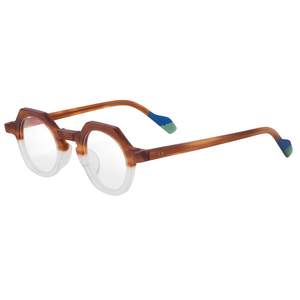
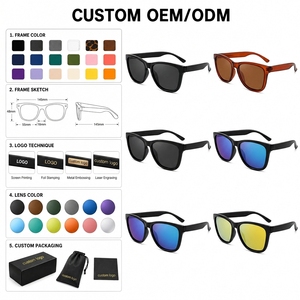
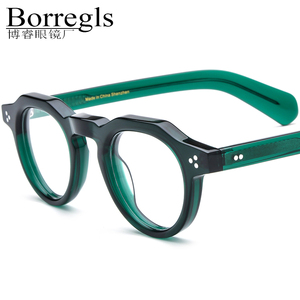
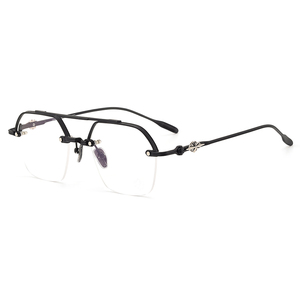
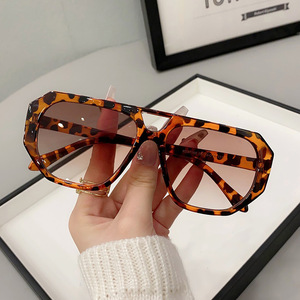
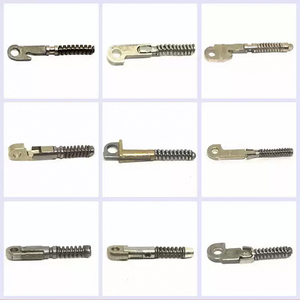
True premium high-gloss finish is not a cosmetic spray coating—it is an intrinsic physical property attained through meticulous chemical stabilization, computerized subtractive milling, and multi-stage mechanical tumbling.
Cellulose acetate originates from renewable cotton linter and sustainable wood pulp, plasticized with triacetin. In commercial eyewear manufacturing, the single most common failure point among low-tier suppliers is incomplete aging of raw acetate blocks. When virgin sheet stock is cut without adequate climatic stabilization (curing), volatile residual solvents cause micro-warping, hinge loosening, and rapid loss of sheen under retail display conditions.
Our partnering facilities enforce an oven-baking drying cycle at 55°C to 65°C for 72 to 120 hours depending on slab thickness (ranging from 4.0mm to ultra-thick 10.0mm profiles). This process stabilizes tensile modulus, increases internal surface density, and prepares the core substrate for deep specular reflection.

Every frame front, bevel groove, and temple taper is cut on high-frequency diamond-router CNC tables operating at up to 24,000 RPM. This guarantees dimensional repeatability within ±0.05mm, ensuring that prescription lenses snap effortlessly into base-curve grooves without cold-snap stress or perimeter warping.
The secret of a mirror-grade glossy finish lies in barrel polishing. Raw milled components undergo progressive wet-to-dry tumbling across octagonal rotary drums lined with beechwood blocks, pumice abrasives, walnut shell granules, and escalating grades of micro-crystalline carnauba pastes.
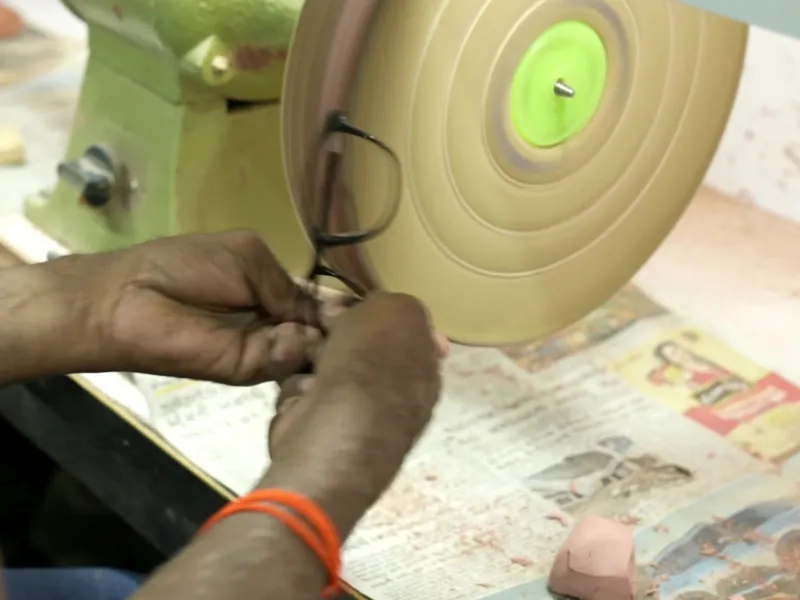
Even advanced tumbling cannot attain absolute clarity across internal contours, end-pieces, and bridge junctures. Senior bench masters manually buff every component against high-density unstitched flannel discs charged with fine tripoli luster compounds, yielding a deep, liquid mirror sheen.
Global supply chains are transitioning from transactional wholesale purchasing to resilient, compliance-driven, and ESG-aligned manufacturing partnerships. Here are the defining shifts in global frame procurement.
With stringent European Ecodesign regulations and North American corporate ESG audits, the optical industry is rapidly shifting toward Bio-based Cellulose Acetate. Traditional phthalate plasticizers are being replaced by bio-plasticizers derived from non-food agricultural feedstocks, delivering biodegradability compliant with ISO 14855 standards while maintaining identical clarity, refractive index, and mechanical hardness.
Optical retailers no longer tolerate huge minimum order commitments of 1,200 pieces per SKU. Modern eyewear factories are adopting modular tooling fixtures and standardized wire cores, enabling agile production runs as low as 150 to 300 pieces per colorway. This allows independent labels to launch diverse capsule collections without capital tie-ups.
Pure plastic or monometal designs are ceding market share to technical hybrid architectures. High-gloss acetate rims fused with beta-titanium bridges, stainless steel wire cores, and memory-metal flex hinges offer consumers featherweight comfort (under 18 grams) with bold sculptural presence.
Traceability from monomer raw materials to final export is becoming mandatory. Global importers now expect detailed certificates of origin, nickel-release test reports (EN 16128), and full compliance with EU MDR (Medical Device Regulation 2017/745) Class I classification for corrective prescription frames.
| Material Category | Surface Gloss Durability | Heat Adjustability | Tensile Strength | Environmental Compliance | Optimal Application |
|---|---|---|---|---|---|
| Cured Cellulose Acetate | Exceptional (Renewable by Buffing) | High (Softens at 60°C–70°C) | 65 – 85 MPa | REACH & Prop 65 Compliant | Designer Optical & Luxury Sunglasses |
| Eco Bio-Based Acetate | High Gloss (Equivalent to Virgin) | High (Optimal Dispenser Fit) | 62 – 80 MPa | ISO 14855 Compostable / Bio-Carbon | ESG-Focused European Brands |
| Injection Grilamid TR90 | Moderate (Surface Lacquer Dependent) | Very Low (Memory Elasticity) | 85 – 110 MPa | Petroleum Polymer Base | Ultra-light Sports & Kids Frames |
| Sheet Beta-Titanium Hybrid | Mirror IP Plating / PVD Finish | Moderate (Cold Plier Alignment) | 800 – 1000 MPa | Biocompatible & Hypoallergenic | Minimalist Executive & Featherweight Rx |
Four decades of manufacturing discipline—combining proprietary material chemistry, high-speed computerized milling, and white-glove export compliance.
Since our foundational roots in 1985, our workshops have honed a singular manufacturing discipline: delivering uncompromised optical-grade cellulose acetate products. While standard mass producers rely on rapid injection molding, we preserve the multi-stage sheet fabrication method.
Every frame front passes through automated CNC contouring for strict geometric precision before entering the hands of technicians who manually chamfer, bevel, and polish contact zones. This ensures that when an optician adjusts temple pantoscopic tilt or temple wrap in a clinical setting, the frame responds predictably without crazing or fracture.
Every batch must pass a 15-point QC protocol: bridge torsion flexure tests, 10,000-cycle hinge endurance cycles, 48-hour artificial sweat immersion, UV radiation exposure testing, and strict laser dimensional gauging.
From initial 2D hand sketches and 3D CAD modeling to rapid SLA resin prototyping within 72 hours, we provide end-to-end industrialization. Customized temple cores, custom-cast hinges, and branded laser filigree can be seamlessly integrated.
Our direct export consignments are supported by complete documentation dossiers: CE conformity declarations, FDA medical device registration (Owner/Operator verification), ISO 12870 spectacle frame testing, and Prop 65 heavy-metal clearance.
Direct technical answers addressing lead times, tooling costs, compliance standards, and custom private labeling procedures.
For custom ODM frame silhouettes utilizing stock cellulose acetate sheet colors, our typical minimum order is 300 pieces per model (divided into 2 to 3 colorways, i.e., 100 pcs/color). For custom pattern acetate laminations or bespoke sheet colors from leading suppliers, the MOQ is typically 600 pieces to satisfy sheet-pressing minimums.
Initial engineering CAD drawings are completed within 3 to 5 business days. Functional CNC prototyping takes 10 to 14 days. Once counter-samples are signed off, bulk production spans 45 to 60 calendar days, encompassing the critical 96-hour tumbling sequence and meticulous bench hand-buffing stages.
All acetate blanks undergo prolonged pre-machining thermal curing to exhaust volatile solvents. Finished frames are packed in desiccant-loaded individual anti-scratch sleeves, nestled in rigid inner cartons with balanced moisture barriers to prevent thermal-shock warping during containerized ocean transit.
We support high-precision pad printing with polyurethane curing inks, cold-foil hot-stamping, ultra-crisp permanent CO2 laser engraving, recessed metal logo emblems embedded under clear acetate, and custom photo-etched core wires visible through crystal-transparent temples.
Yes. Our manufacturing facilities are fully audited for ISO 9001 and ISO 13485 (medical device quality management). Products comply with EN ISO 12870 for optical spectacle frames, ISO 12312-1 for sunglasses, and US FDA 21 CFR 801.410 drop-ball impact resistance standards.
Absolutely. We specialize in both High-Bridge (Western ergonomic fit) and Low-Bridge (Asian / Universal fit) geometry. In low-bridge variants, we adjust the pantoscopic tilt, deepen the front pad build-up, and reduce the bridge span (DBL) to ensure zero slippage and balanced cheek clearance.

