

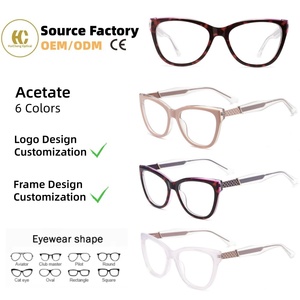
Master-grade vintage architectures engineered for boutique chains, independent opticians, and private labels.
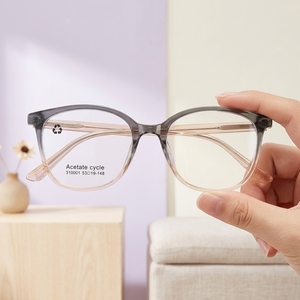
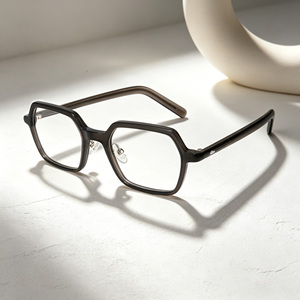
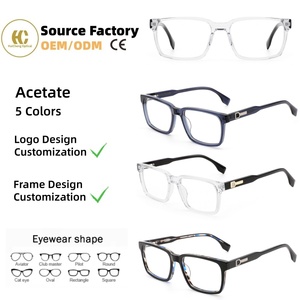
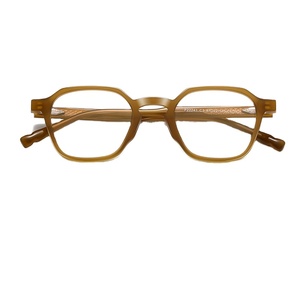
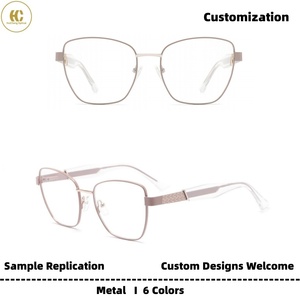
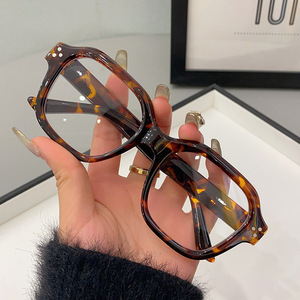
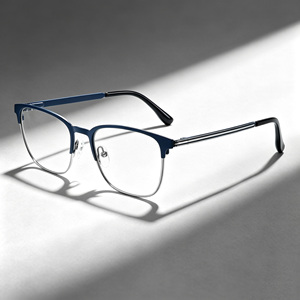
In contemporary ophthalmic dispensing, retro optical frames represent far more than a cyclical fashion statement. High-performance vintage spectacle architectures demand meticulous material stabilization, precision multi-axis milling, and delicate bevel engineering to seat modern complex freeform progressive and high-index lenses without rim stress distortion.
As a dedicated China optical frames factory operating under rigorous ISO 9001 and CE/FDA compliance models, our production standardizes raw organic sheet seasoning. Cellulose acetate sourced from raw cotton linters undergoes controlled curing for 45 to 60 days to purge residual plasticizing solvents. This critical pre-treatment mitigates warp, maintains dimensional fidelity across varying thermal regimes, and ensures that handcrafted barrel finishes retain their mirror luster through multiple optical adjustments.
Frames undergo a 72-hour cyclical tumbling regimen in beechwood and walnut granules, graduating from coarse abrasives to organic pumice and carnauba wax to achieve depth of luster unreachable by chemical dipping.
Integrated German OBE hinges and Japanese custom 5-barrel/7-barrel riveted components with anti-loosening nylon thread coatings, resisting up to 25,000 continuous hinge cycles without lateral deflection.
High-precision 5-axis CNC router tooling calibrates eyewire groove geometry down to ±0.03mm, preventing edge pinch and stress fractures on thin poly-carbonate, Trivex, and high-index 1.74 lenses.
| Structural Criterion | Conventional Commercial Standard | Our Factory Industrial Benchmark |
|---|---|---|
| Base Substrate | Recycled / Post-industrial blended plastics | 100% Bio-based pure virgin Cellulose Acetate (Cotton Derived) |
| Bridge Structural Tolerance | ±0.25 mm variance | ±0.05 mm optical center lock |
| Hinge Retention Force | Standard friction fit < 1.2 kgf | Ultrasonic embedded / Cold-riveted anchor > 2.8 kgf |
| Tensile Elasticity Memory | Prone to stress cracking on cold snap | Thermal plastic memory retained through multi-cycle hot-water sizing |
Wholesale procurement heads, optical distributors, and high-volume brand managers must navigate shifting consumer expectations driven by sustainability mandates, ergonomic adaptability, and hybrid retro design vocabularies.
Regulatory pressures within the European Union (such as extended producer responsibilities) and conscious consumption patterns in North America have accelerated the transition toward certified biodegradable acetate. Modern formulations replace phthalate-based plasticizers with plant-derived bio-esters (triacetin), yielding frames that maintain thermal-forming memory while degrading under industrial composting conditions within 115 days. Buyers prioritizing catalog longevity are steadily transitioning 30% to 50% of their legacy retro lines into eco-acetate alternatives.
Purely chunky vintage profiles are being re-engineered with hybridized titanium bridges and end-pieces. By combining 6mm to 8mm sculpted acetate fronts with Beta-Titanium temples (β-Ti 15-3-3-3), manufacturers achieve timeless visual gravity without excessive bridge loading. For institutional optical distributors, this composite structure expands patient fit tolerances, accommodating broader nasal bridges and diverse craniofacial dimensions without requiring custom regional molds.
The era of generic mass injection runs is declining. Brand owners now demand lower initial order barriers (Flexible MOQs) with agile SKU rotation. Leveraging parameterized CAD modeling and dynamic 5-axis CNC bed fixtures, our factory delivers rapid bespoke sampling—converting approved digital 3D vector drawings into functional, hand-polished cellulose acetate prototypes in as little as 10 to 14 business days.
Building upon decades of specialized acetate manipulation, our facility merges traditional optical handcrafting with scalable automated manufacturing. We safeguard client brand equity through strict IP segregation, end-to-end trace documentation, and relentless metallurgical and polymer testing.
Full CAD/CAM engineering translations, laser micrometric bridge alignment, and bespoke pantoscopic tilt adjustments crafted to your exact structural blueprints.
Immediate access to over 250 validated, production-ready retro molds spanning Windsor rounds, 1950s browlines, bold geometric squares, and timeless keyhole-bridge navigators.
Multi-color pad printing, deep laser engraving with gold/silver foiling, embedded temple core wire decoration, and tailor-made boutique packaging ecosystems.
Initial CAD modeling and 3D technical drawing sign-offs occur within 3–5 business days. Rapid physical prototyping via CNC pilot machining takes 10–14 days. Once pre-production samples are verified, mass production tooling and batch run execution span 35–45 days depending on material curing and hinge complexity.
Every batch of cellulose acetate undergoes controlled oven-tempering and aging to release natural polymer stresses before milling. Completed frames are fitted with standard acrylic demo lenses to maintain eyewire tension, vacuum-sealed in moisture-barrier PE pouches, and boxed within reinforced corrugated cartons with desiccant packs.
Yes. Our engineering department modulates nose pad flare angles, pad bridge depth (from 14mm to 22mm), pantoscopic frame tilt (from 6° to 12°), and vertex distance. We offer integrated build-up acetate pads, titanium pad arm assemblies, and slip-resistant silicone components tailored to your demographic targets.
Every production lot is subjected to salt spray corrosion testing (48-hour continuous mist), spring hinge cycle stress analysis (25,000 actuations), cross-hatch coating adhesion checks on metal platings, and optical eyewire coordinate measuring machine (CMM) verification against CAD masters.
Consult with our technical sales engineers, request physical material swatches, or initiate custom CAD sampling for your brand's next release.
Contact Us