

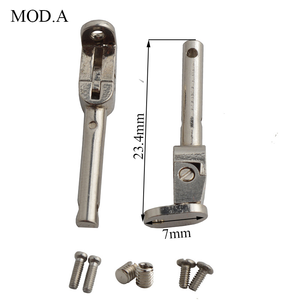
Our industrial facility manufactures premium cellulose acetate reading frames, optical frames, polarized sunglasses, and micro-engineered structural hinges designed to fulfill rigorous Japanese JIS B 7285 specifications.
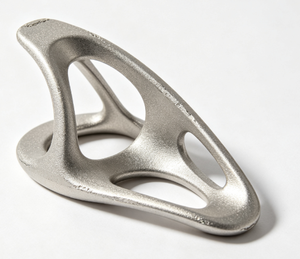
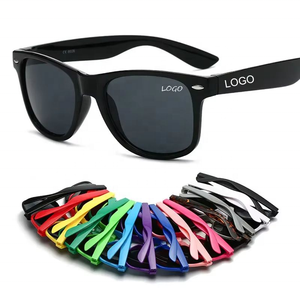
Osaka acts as Western Japan's premier distribution nucleus, balancing traditional commercial optical retail chains, boutique metropolitan flagships in Umeda and Shinsaibashi, and rapidly expanding telework optical demands.
Osaka’s retail corridors demand reading glasses with rapid lens-glazing compatibility. Cellulose acetate provides high mechanical stability, enabling quick in-store dispensing opticians to mount high-diopter reading lenses with precisely calibrated bevel grooves without frame cracking or heat deformation.
The concentration of commercial enterprises across Osaka has triggered high demand for computer-reading hybrid frames. These combine anti-blue-light filtration lenses with lightweight, thermoformed cellulose temples that eliminate mastoid pressure during prolonged 10-hour screen wear.
Kansai's demographic curve exhibits an affluent senior tier requiring ergonomic reading spectacles. Rather than disposable injection-molded plastics, Osaka consumers favor skin-friendly, hypoallergenic plant-derived cotton cellulose acetate with weighted balance and hand-finished bridges.
The Osaka optical trade has historically maintained strict benchmarks regarding tactile quality and dimensional tolerance. While mass-market injected plastics (such as TR-90 or standard polycarbonates) suffer from anisotropic thermal expansion, anisotropic shrinkage, and brittle cold-weather properties, cured cellulose acetate sheets offer thermodynamic equilibrium.
Our facility uses multi-axis subtractive CNC routers with feed rates maintained below 0.05 mm/tooth. This prevents localized thermal degradation along the lens groove perimeter, securing a uniform 110-degree V-bevel geometry. Consequently, when Japanese opticians fit ophthalmic single-vision reading lenses, the frame retains exact vertex distance and pantoscopic tilt without temporal splay.
| Evaluation Parameter | Cured Cellulose Acetate (Sheet Stock) | Injection-Molded Grilamid (TR-90) | Extruded Polycarbonate |
|---|---|---|---|
| Raw Material Foundation | Organic Cotton Cellulose & Wood Pulp Flakes | Petrochemical Polyamide Polymer | Bisphenol-A (BPA) Derivative |
| Fabrication Methodology | 5-Axis Precision CNC Subtractive Milling | High-Pressure Thermal Liquid Injection | Extrusion / Mold Injection |
| Optical Lab Lens Glazing | Exceptional (Softens at 65°C for Perfect Snap) | Rigid (Risk of Rim Flare or Stress Birefringence) | Cold-Snap Only (Prone to Stress Fractures) |
| Surface Refinishing Capability | 100% Buffable / Renewable Deep Mechanical Lustre | Non-Renewable Surface Lacquer / Sprayed Topcoat | Irreversible Scratches; Flakes Over Time |
| Hypoallergenic Performance | Biocompatible, Skin-Neutral, Nickel-Free Core | Medium Biocompatibility | Risk of Dermatological Reaction to Plasticizers |
| Structural Hinge Anchorage | Ultrasonic Embedded / Riveted Multi-Barrel Barrels | Heat-Staked Molded Insert Pin | Glued or Molded Snap-Fit |
Strategic procurement teams must navigate three evolving consumer paradigms currently shifting trade orders across Japan's second-largest metropolitan economy.
Standard European bridge geometries (18–21mm width with 12–14mm splay) cause slipping on Asian facial structures. Osaka buyers now mandate specialized geometric modifications: bridge widths narrowed to 15–17mm, internal nose pads built up to 8.5–10.5mm projection, and pantoscopic tilt adjusted to 7 degrees to maintain optimal optical axes.
Japanese conglomerates and consumer co-ops in Kansai enforce stringent ESG procurement mandates. We supply bio-based cellulose acetate with phthalate-free, non-petroleum plasticizers. These frames offer biodegradability in industrial composters within 115 days without compromising dimensional stability or deep optical transparency.
In cultural epicenters like Amerikamura and Minami-Horie, eyewear is purchased as an architectural fashion accessory. We produce 8mm thick acetate frame fronts, beveled along the brow with three-dimensional multi-axis cutting and hand-buffed for 72 hours in organic walnut and pumice barrels.
Rushabh Trading Company combines 41 years of cellulose acetate manufacturing expertise with streamlined export logistics tailored for the Japanese trade channel.
Every temple and front is cut from raw, stabilized acetate blocks using specialized carbide cutting heads. Tool paths operate within a ±0.03mm threshold, preventing lens popping, uneven grooving, or hinge looseness.
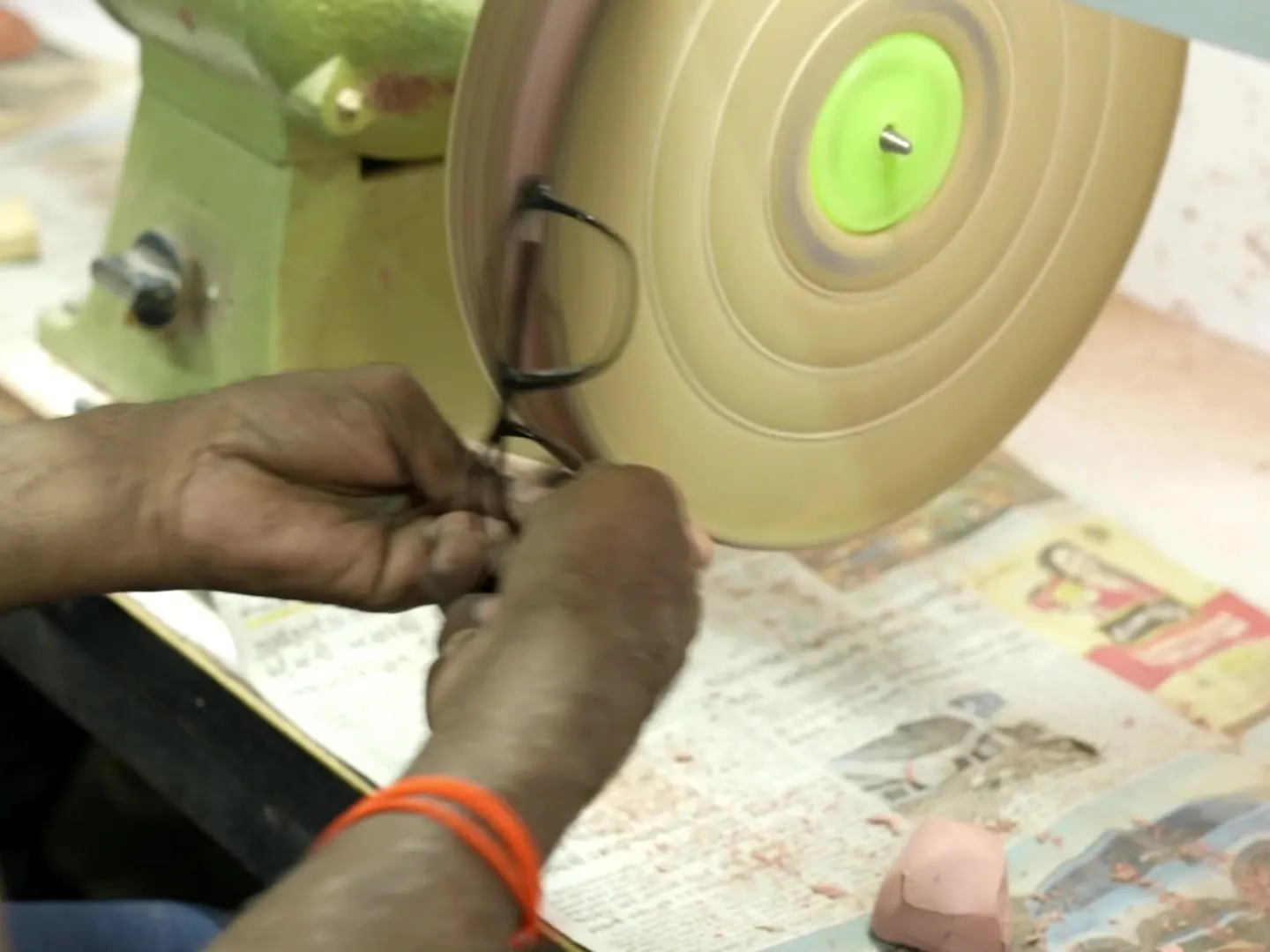
Frames undergo a 4-tier tumbling regimen lasting 96 hours using varied grades of beechwood chips, pumice, and vegetable waxes, followed by hand polishing along all ergonomic bridge curves and temple ends.
We provide full documentation required by the Ministry of Health, Labour and Welfare (MHLW), including JIS B 7285 test compliance reports, material safety data sheets (MSDS), and Certificate of Origin (COO) document sets.
Strict B2B Policy: We do not retail to consumers. We operate purely as an industrial OEM/ODM contract manufacturer and wholesale supply partner for eyewear brands, optical retail networks, medical device importers, and corporate trading entities.
Essential answers for sourcing directors, quality engineers, and international freight managers importing reading eyewear into Osaka and Kobe ports.
All prescription and ready-to-wear reading frames destined for Japan undergo structural mechanical testing modeled on JIS B 7285 (ISO 12870). This includes 500-cycle bridge deformation endurance tests, temple hinge fatigue cycles (20,000 actuations without loss of retention torque), and sweat immersion testing for 24 hours at 37°C to confirm zero discoloration or pitting on acetate surfaces and embedded German-engineered nickel-silver hinges.
Sample fabrication, structural prototypes, and colorway swatches require 15 to 20 business days. Following physical sample approval and deposit release, bulk OEM/ODM manufacturing timelines average 45 to 60 calendar days depending on color complexity and stamping specifics. Shipments departing Mundra or Nhava Sheva to Osaka / Kobe commercial ports generally operate on a 18-to-24-day maritime transit window via direct feeder connections.
Yes. We offer both built-in monolithic built-up acetate nose pads (precision-machined with high-clearance curves to eliminate cheek resting) and multi-axis adjustable beta-titanium / nickel-free wire arms with eco-friendly silicone or ceramic nose pads. Our tooling allows customized placement angles to fit Japanese facial anthropometrics.
For existing catalogue silhouettes within our Clarish™ lineup adapting custom private branding, pad-printed temple marks, and retail boxes, our baseline MOQ begins at 300 pieces per model (divided into 2-3 colorways). For full bespoke OEM projects involving custom tooling, unique temple core-wire roll-forming, and proprietary front geometry, the baseline project volume starts at 1,200 total pieces per bespoke tooling run.
We perform multi-color pad-transfer printing using Japanese Marabu inks resistant to rubbing and skin oils, deep laser engraving filled with cured colored enamels, foil hot-stamping, and diamond-drag micro-engraving inside the temple core. We produce full retail packaging kits including embossed collapsible magnetic hard-cases, micro-fiber cleaning cloths with high-definition digital printing, and FSC-certified retail display boxes.
Initiate technical consultations with our optical engineering team. Submit your CAD designs, reference frames, or explore our Clarish™ platform catalogue for dedicated distribution across Kansai.