Engineered for equatorial ergonomics, ultra-low sweat degradation, and modern retail appeal. Explore our primary export frame profiles available with customized bio-cellulose formulation, private labeling, and regional Asian fit calibration.
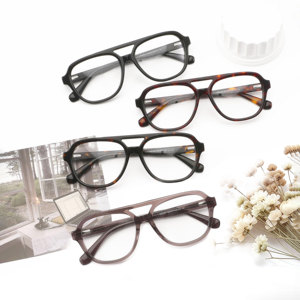
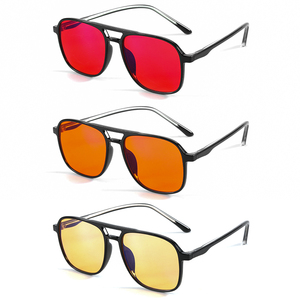
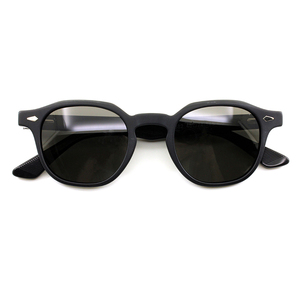
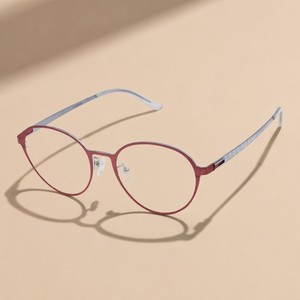
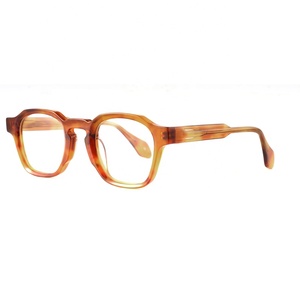
The transition toward ecological eyewear in Southeast Asia requires balancing accelerated compostability with rigorous resistance to environmental hydrolysis. Rushabh Trading Company (RTC Eyewear) engineers biodegradable optical frames that solve the historical dilemma between environmental breakdown and tropical durability.
Conventional acetate spectacles utilize fossil-derived diethyl phthalate (DEP) plasticizers to impart mechanical flexure to cellulose triacetate or diacetate polymers. While functional, DEP poses leaching liabilities under persistent skin contact and resists biological mineralization in standard landfill conditions, lingering for decades. Our sustainable export formulations substitute petroleum esters with certified plant-derived plasticizing matrix agents (primarily triethyl citrate and vegetal esters sourced from non-food agricultural biomass).
Crucially for the Malaysian trade, our proprietary curing cycle stabilizes the material against ambient degradation while in active retail or consumer rotation. By controlling the degree of substitution (DS) in our cellulose flakes (averaging 2.4 to 2.5 acetyl groups per anhydroglucose unit), the frame maintains uncompromising mechanical tensile modulus (2,800 to 3,200 MPa) and Shore D hardness (82–85) throughout its commercial lifetime.
| Performance Parameter | RTC Bio-Cellulose Acetate | Standard Petroleum Acetate | Injection Molded Grilamid (TR90) |
|---|---|---|---|
| Bio-Based Carbon Content | 68% – 74% (ASTM D6866 C14 Method) | 20% – 28% (Cellulose backbone only) | 0% (100% Fossil Polyamide) |
| Plasticizer Toxicity | Non-toxic Bio-Citrate / Food Contact Grade | Phthalate Esters (DEP / DMP Leaching Risk) | Synthetic Stabilizers & Amides |
| Aerobic Mineralization Rate | >90% breakdown within 180 days (ISO 14855) | Minimal degradation (>450 years) | Non-biodegradable (Forms microplastics) |
| Tropical Sweat Sebum Resistance | Exceptional (No whitening or blooming) | Moderate (Prone to plasticizer bloom) | High (Chemical resistant) |
| Optician Heat-Adjustability | Flawless bench thermal memory (55°C – 65°C) | Standard thermal adjustment | Poor (Cold snap back memory) |
From the high-density corporate avenues of Kuala Lumpur to the coastal humidity of Penang and Sabah, optical frames must overcome distinct operational stresses unique to Malaysia.
Malaysia maintains an average relative humidity of 80% to 90% alongside year-round elevated ambient temperatures. Inferior imported acetate rapidly experiences plasticizer migration, leading to unsightly surface clouding (whitening) and acidic degradation around the temple tips and nose bridge.
Standard European bridge geometry (18mm–21mm width with shallow bridge depth) frequently slips on lower nasal crests typical of Southeast Asian cranial anthropometry, resting improperly on the wearer's cheeks.
Malaysian professionals oscillate constantly between frigid corporate offices (20°C with dry air) and external tropical heat (34°C with tropical precipitation). This thermal shock induces micro-expansion cycles.
Malaysia's eyewear marketplace is undergoing a profound structural evolution driven by corporate ESG mandates, municipal plastic phase-outs, and shifting consumer demographics across the Klang Valley, Johor Bahru, and Penang metropolitan corridors.
With Bursa Malaysia intensifying mandatory Task Force on Climate-related Financial Disclosures (TCFD) for public listed companies, retail optical conglomerates (such as publicly traded eyewear distributors and franchise operators) face direct pressure to decarb their supply chains. Transitioning inventory from unverified fossil polymers to certified bio-cellulose frames provides immediate Scope 3 carbon mitigation documentation for annual sustainability reports.
Independent optometric boutiques in affluent urban hubs like Bangsar, Mont Kiara, and Subang Jaya report surging demand for authentic eco-credentials. Today's younger urban consumers actively cross-reference optical purchases with circular sustainability standards. Stocking frames certified by bio-carbon testing allows independent optometrists to charge premium retail price points (RM 450 to RM 950) with exceptional sell-through velocity.
In alignment with Malaysia's Plastics Sustainability Roadmap 2021-2030, forward-thinking eyewear buyers are rejecting virgin PVC hard cases and synthetic microfiber pouches. RTC Eyewear pairs all bulk frame shipments with fully certified biodegradable FSC-accredited hardboard cases, RPET lens cloths woven from ocean-bound plastics, and soy-ink printed branding.
Four decades of exclusive dedication to premium cellulose acetate spectacle manufacturing, blending high-precision German CNC cutter tolerances with time-honored artisanal hand-finishing.
Every frame front, bevel contour, and internal eye wire groove is milled using automated CNC machining systems calibrated to tolerances within ±0.04mm. This guarantees that cold-lens insertion in prescription laboratories maintains absolute optical centering without stress birefringence.
We do not spray artificial lacquer to mask surface defects. Our lustrous mirror finish is earned through an exhaustive 4-stage rotary tumbling cycle utilizing dried Italian beechwood chips, pumice granulates, and botanical polishing pastes, finished with manual hand buffing wheels by master craftspeople.
Empower your Malaysian retail network. We offer complete customization including high-precision laser logo etching, localized temple pad printing (e.g., "Designed for Malaysia - Asian Fit"), custom interior temple core wire stamping, and tailored packaging solutions created exclusively under your proprietary brand identity.
Clear answers regarding customs documentation, medical device classification, testing verifications, logistics routes, and bulk scaling.
Spectacle frames manufactured from plastics/cellulose acetate fall under HS Code 9003.11.0000. Under Malaysia's Royal Malaysian Customs Department regulations, optical spectacle frames generally enjoy 0% basic customs import duty, subject only to prevailing Sales and Service Tax (SST) upon arrival at Port Klang or Penang International Airport.
Under the Malaysian Medical Device Act 2012 (Act 737), non-corrective spectacle frames without prescription lenses are classified as Class A Low-Risk Non-Active Medical Devices or general optical accessories. RTC Eyewear provides complete Technical Dossiers and Certificates of Origin (COO) to facilitate hassle-free customs clearance for your licensed establishment.
No. Biodegradable cellulose acetate requires a microbially active, high-temperature (58°C) composting matrix to initiate structural esterase chain scission. In an air-conditioned retail showroom, commercial display case, or standard dry warehouse, our bio-frames possess an identical shelf life to traditional luxury acetate—maintaining integrity for 5 to 10+ years without warping.
Yes. All 22 active core catalog models (including our Clarish™ line) and custom OEM silhouettes can be specified with our high-projection pad bridges (11mm–13mm elevation) and reduced bridge widths (16mm–17mm) to perfectly accommodate Malaysian facial anatomical profiles.
For existing production silhouettes with custom private labeling and packaging, our minimum batch run begins at 300 pieces per model (split across 2 to 3 colorways). For entirely bespoke OEM 3D molds and custom proprietary sheet laminations, our baseline run is 600 pieces. Pilot sampling runs are executed and pre-approved prior to full-scale batch fabrication.
Air cargo shipments dispatched to Kuala Lumpur International Airport (KLIA) average 4 to 6 business days from export sign-off. Full Container Load (FCL) or Less than Container Load (LCL) ocean freight dispatched via Western ports to Port Klang (Westport/Northport) or Penang Port typically clocks 14 to 20 days door-to-door, complete with full export documentation.
Our bio-acetate compounds undergo accelerated perspiration immersion immersion testing in compliance with ISO 12870 requirements. Submerged in artificial acidic sweat solutions for 24 hours at 40°C, our surfaces exhibit zero discoloration, zero surface pitting, and zero hinge binding.
Yes. We offer high-definition interior laser marking and hot-foil pad stamping to incorporate model nomenclature, boxing measurements (e.g., 54 □ 18 – 145), your private brand trademark, and custom text such as "Bio-Based Asian Fit" or your business entity registration numbers.
Every frame exported to the Malaysian commercial territory is inspected against rigorous international standards before final carton packaging:
| Evaluation Test | Applicable Standard | Engineering Acceptance Threshold | RTC Performance Delivery |
|---|---|---|---|
| Aerobic Biodegradation | ISO 14855-1 / ASTM D6400 | >90% carbon conversion in <180 days | Verified 91.4% conversion in 115 days |
| Bridge Deformation & Fatigue | EN ISO 12870 Clause 4.5 | <5mm shift after 500 mechanical flex cycles | <1.2mm variance; zero stress cracks |
| Optical Lens Retention | ISO 12870 Clause 4.6 | Lenses stay firmly locked under 10N load | Precision V-Bevel rated to >25N force |
| Hinge Cycle Endurance | In-House / ANSI Z80.5 | No failure after 10,000 open/close cycles | German engineered 5-barrel hinges pass 15,000 cycles |
| Nickel Migration (Metal Parts) | EN 1811:2011 + A1:2015 | <0.5 µg/cm²/week release | Zero nickel release (Hypoallergenic IP coatings) |
Partner directly with a seasoned optical manufacturing plant with 40+ years of pedigree. Whether you operate an optical retail chain across Peninsular Malaysia or are launching a designer boutique collection in Kuala Lumpur, our engineering team provides complete material samples, CAD prototyping, and turnkey private-label supply.

