


From heavy geometric silhouettes catering to Riyadh's high-fashion metropolitan demand to heat-stabilized optical frames designed for Jeddah and Dammam's humid coastal climates. Explore our core in-production catalogue.
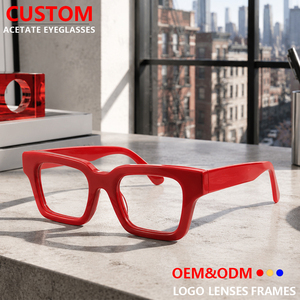
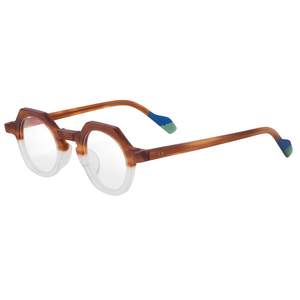
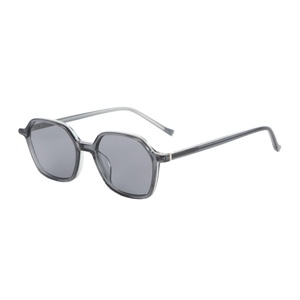
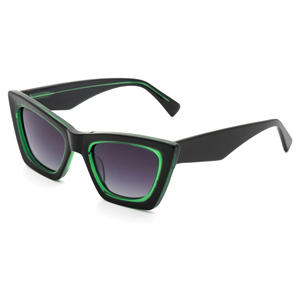
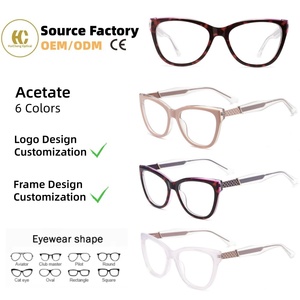
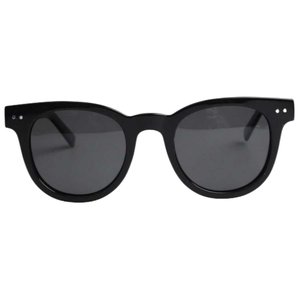
Exporting premium optical frames to the Kingdom of Saudi Arabia requires engineering calibrated against intense solar radiation, hyper-arid desert dust, fluctuating marine humidity, and distinct cultural aesthetics.
Ordinary injection plastics suffer plasticizer migration and dimensional shrinkage when left in vehicles exposed to 55°C Najd summers. Our cellulose acetate undergoes a rigorous 90-day curing cycle to relieve sheet internal stress, ensuring frames maintain pantoscopic tilt and base curvature without softening or warping.
Eyewear worn alongside traditional Saudi attire (Ghutrah, Shemagh, and Agal) demands specialized temple ergonomics. Straight spatulate temples and contoured drop-ends eliminate friction against headwear fabrics while maintaining firm mastoid anchoring during extended wear.
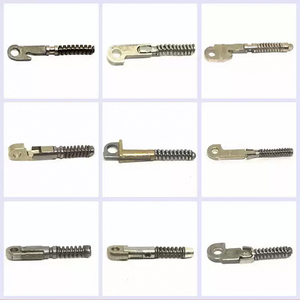
In Jeddah, Yanbu, and the Eastern Province, atmospheric salt spray rapidly degrades low-grade hardware. Our export frames incorporate surgical-grade 304/316L stainless steel barrel hinges with electro-deposited anti-corrosion platings verified via 72-hour neutral salt spray (NSS) testing.
| Performance Characteristic | Industrial Virgin Cellulose Acetate (Our Factory) | Standard Commercial Acetate | Injection Moulded TR-90 / CP |
|---|---|---|---|
| Raw Material Foundation | Purified natural cotton linters & bio-wood pulp flakes | Recycled or low-density plasticized flake | Petroleum polyamide / copolyester resin |
| Curing & Aging Cycle | 60–90 days controlled kiln and ambient aging | 15–20 days rapid oven dehumidification | Instantaneous mould chilling (high residual stress) |
| High Ambient Heat Stability | Exceptional (Heat deflection rating: ISO 75 compliant) | Moderate (Prone to bridge sagging under dash heat) | High initial elasticity, degrades rapidly under intense UV |
| Color Longevity & Polishing | Full material cross-section depth; mechanical buff polish | Superficial polish, fast fading under GCC UV index 11+ | Topical spray lacquer, prone to peeling and chipping |
| In-Store Optical Dispensing | Warm-air frame heater pliable; repeatable adjustments | Brittle upon repeated adjustments | Spring-back memory; difficult for opticians to fit accurately |
Driven by Saudi Vision 2030, surging disposable income, and expanding private healthcare optical sectors, the Saudi eyewear retail landscape is undergoing a structural shift toward premiumized domestic brands.
Saudi optical chains in Riyadh and Al Khobar are actively transitioning away from generic distribution toward private-label lines. Retailers capture higher margins and brand loyalty by commissioning custom OEM collections tailored to regional tastes, featuring rich havana, bold black, and champagne crystal acetates.
With an average of 3,200 annual sunshine hours and intense daytime UV radiation, sunglasses in the GCC are high-frequency accessories rather than seasonal items. The trend points to 8mm+ heavy acetate fronts, architectural beveling, and Category 3 dark tint lenses with multilayer interior anti-reflective coatings.
Uncertified imports face border rejection at King Abdulaziz Port (Dammam) and Jeddah Islamic Port. Today's commercial importers require ISO 12870 certified manufacturing facilities capable of issuing genuine Declarations of Conformity, technical design documentation, and clean laboratory test results.
Modern multi-axis CNC routers carve exact front curves, lens grooves, and hinge pockets; experienced craftsmen manually refine bevels, soften touch points, and hand-buff frame surfaces to mirror finishes.
Cellulose acetate sheets are inspected for pattern consistency, thickness tolerances, and aged stabilization before machining.
High-speed milling cutters route front silhouettes, step-down bevels, and precise V-grooves for flawless optical lens glazing.
Custom pattern engraved stainless steel reinforcement wires are heated and hydraulically shot into temples for rigidity.
Frames undergo 72 consecutive hours of dry birch wood, pumice, and beechwood peg tumbling to soften raw machine lines.
Master polishers apply carnauba wax on high-speed cotton wheels to achieve deep, permanent gloss, followed by 100% QA checks.
Execute proprietary CAD blueprints and technical specs with strict non-disclosure protections for exclusive private collections.
Choose from our 22 proven silhouettes, modifying bridge fits, eye measurements, and sheet color blends to suit local consumer palettes.
Precision hot-foil stamping, permanent fiber laser engraving, and custom Arabic/English branded micro-print cases and cloths.
End-to-end export administration: SASO certificates, commercial invoices, legalized Certificates of Origin, and express air/sea freight.
Clear, technically verified answers addressing MOQs, customs clearance, SASO/SABER compliance, and custom acetate adaptations.
We supply full technical compliance files, factory ISO 9001/13485 test data, non-hazardous material certifications (RoHS/REACH), and laboratory reports certifying compliance with ISO 12870 (Ophthalmic Optics - Spectacle Frames). Our export team coordinates directly with your designated conformity assessment body (such as TÜV, Intertek, or SGS) to issue the Product Certificate of Conformity (PCoC) and Shipment Certificate of Conformity (SCoC) via the SABER platform.
For existing catalogue silhouettes (ODM/Private Label), our minimum run starts at 300 pieces per model, distributed across 2 to 3 acetate colourways (approx. 100 pcs per color). For bespoke OEM models requiring custom CNC tooling, prototype counter-samples, and exclusive acetate sheet laminations, our baseline production run is 500 to 1,000 pieces per frame shape.
Generic acetate frames degrade and warp because manufacturers use high-solvent sheets and skip proper thermal conditioning. Our frames use cured cellulose acetate blocks with low residual plasticizer content. Following rough milling, the components rest in controlled stabilization kilns. This guarantees high thermal memory and dimensional stability, ensuring frames hold their base curve under extreme temperatures.
Yes. Bridge fit is essential for optical comfort. We engineer modified "Asian & Middle Eastern Universal Fit" acetate fronts with built-up nose pad profiles, reduced bridge apertures (16mm to 18mm), and modified pad angles. This prevents the frame from sliding downward or resting directly on the wearer's cheeks during warm weather conditions.
We offer end-to-end turnkey OEM packaging: high-precision laser etching on the outer or inner temple, gold and silver foil hot-stamping, metallic logo temple inlays, anti-counterfeit QR code printing, Arabic/English bilingual user documentation, embossed PU leather clamshell cases, and microfiber cleaning cloths.
Sample production takes 14 to 21 working days. Bulk mass production ranges between 45 and 60 days depending on custom color casting. Shipping via air freight (direct to RUH, JED, or DMM) takes 5 to 8 business days; ocean container freight directly to Jeddah Islamic Port or King Abdulaziz Port in Dammam takes approximately 18 to 25 days door-to-port.
Partner with an established 41-year manufacturing facility. Speak with our technical optical export engineering team regarding design briefs, material sample cards, and custom pricing for the Saudi market.