Precision-milled cellulose acetate and high-grade titanium architectures manufactured according to EU Regulation 2017/745 (MDR) standards. Engineered specifically for Central European craniometric baselines and optical chain durability requirements.
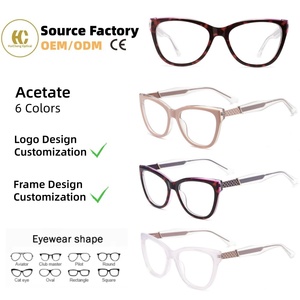
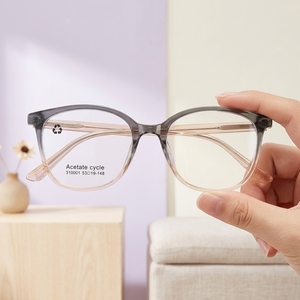
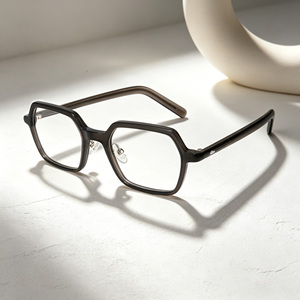
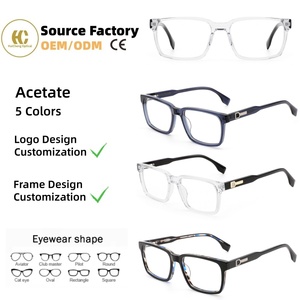
A comprehensive assessment of commercial, clinical, and anatomical criteria determining eyewear supply chain success in Central and Eastern Europe (CEE).
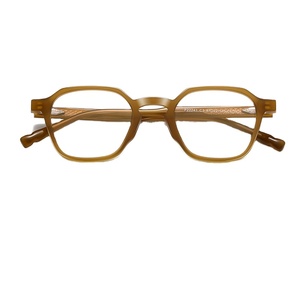
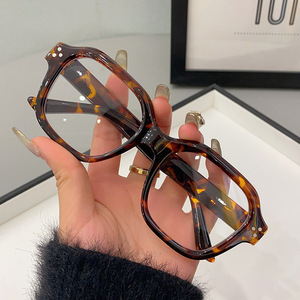
In trendsetting districts like District V (Belváros-Lipótváros), VI (Terézváros), and VII (Erzsébetváros), consumers reject disposable fast-fashion eyewear in favor of tactile heritage aesthetics. Our custom OEM retro frames provide boutique optometrists with heavyweight 6.0mm–8.0mm block acetate architectures, sculpted keyhole bridges, and rich amber-havana laminations that match the discerning tastes of metropolitan urbanites.
Regional retail networks require exceptional structural consistency and broad fitting parameters. Frames must endure hundreds of trial wearings on the retail floor without hinge spread or warping. Our frames integrate dual-barrel riveted wire cores and high-cycle mechanical spring hinges tested beyond 25,000 opening cycles, minimizing retail returns and warranty claims across multisite chains.
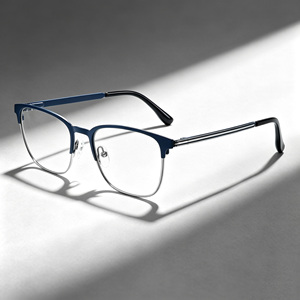
With Hungary's burgeoning tech, IT shared-services, and automotive engineering hubs in Székesfehérvár and Debrecen, optical practitioners report heightened demand for digital eyestrain prevention. Our retro square and pantoscopic silhouettes feature deep 1.45mm bevel depth grooves designed to seamlessly house high-index blue-filtering lenses and free-form progressives without structural edge distortion.
The Hungarian eyewear marketplace is experiencing an structural realignment driven by three distinct macroeconomic and optical forces:
1. Shift to Bio-Cellulose and Eco-Friendly Acetate: Driven by EU green procurement initiatives and consumer mindfulness, independent Hungarian optical chains are actively transitioning toward eco-certified cellulose acetate derived from sustainable wood pulp and cotton lint. Our facility formulates low-phthalate, bio-based sheets offering identical thermo-elastic properties, optical transparency, and depth of finish as standard petroleum-based derivatives.
2. Craniometric Fitting Optimization for Central European Anatomies: Unlike generic Asian-fit eyewear that features shallow bridge cuts and excessive pantoscopic tilt, frames destined for the Hungarian demographic demand deeper bridge apex dimensions (18mm to 21mm boxing standards), a frontal flare angle accommodating prominent nasal profiles, and lengthened temple shafts (145mm to 150mm) that can be easily thermo-formed behind the mastoid bone.
3. Rise of Private Label Optical Branding: Independent opticians across Hungary are facing intense margin compression from corporate multinational megastores. Creating proprietary in-house boutique brands via our private-label OEM manufacturing allows distributors and buying cooperatives to reclaim up to 68% gross margin, fully shielding their business from online gray-market price scraping.
| Engineering Vector | Standard Mass-Produced Import | RTC Eyewear OEM Specification (Hungary) |
|---|---|---|
| Raw Material Matrix | Recycled or low-density plastic injection | Premium multi-cured plant-origin cellulose acetate sheets |
| Hinge Metallurgy | Friction-fit soldered base alloy | German/Italian engineered riveted 5-barrel & 7-barrel hinges |
| Lens Bevel Consistency | Varying depth, high frame-stress distortion | CNC cut 110° optical V-groove; ±0.04mm tolerance |
| Compliance & Traceability | Minimal or self-declared batch logs | Full EU MDR 2017/745, CE, ISO 12870, REACH batch verification |
Continuous dedication to cellulose acetate production since 1985 gives our engineering floor an unrivaled grasp of material dynamics, mechanical tooling, and ergonomic precision.
Since 1985, our manufacturing facility has operated with singular dedication to high-grade cellulose acetate and mixed-material optical structures. Over 41 years, we have mastered every micro-variable—including sheet seasoning, curing cycles, ultrasonic hinge embedding, and progressive tumbling—to ensure that no frame experiences warping, blooming, or stress fractures in the field.
While high-speed 5-axis CNC cutters determine geometric symmetry, rim groove angles, and hinge pocket tolerances to within ±0.04mm, true luxury optical frames require human tactile judgment. Our finishing involves a rigorous 72-hour multi-stage barrel tumbling cycle in walnut shell pellets, followed by master craftsman hand-buffing on cotton wheels to generate a rich, enduring luster.
We operate strictly as a business-to-business manufacturing partner. We never market directly to retail consumers or compete with our clients. We offer high-definition precision laser engraving, pad printing in pantone-matched house hues, custom branded hard cases, microfiber cloths, and European-compliant outer packaging ready for retail placement immediately upon customs clearance.
Direct technical and logistical answers regarding importing, regulatory compliance, custom prototyping, and bulk distribution into Hungary and the European Union.
Yes. Non-corrective and corrective optical frames entering Hungary are classified as Class I Medical Devices under the European Medical Device Regulation (EU) 2017/745 (MDR). Our manufacturing pipelines strictly adhere to EN ISO 12870:2018 (Ophthalmic optics – Spectacle frames). We provide complete CE declarations of conformity, batch testing documentation for REACH (SVHC compliance, nickel release under EN 16128, and azo dyes avoidance), enabling seamless clearance through Nemzeti Adó- és Vámhivatal (NAV) customs.
Because optical collections require tailored batch tooling and specific sheet selections, MOQs typically begin at 300 units per model, split across 2 to 3 curated colorways (e.g., 100 Havana Tortoise, 100 Champagne Crystal, 100 Classic Piano Black). Prototyping and sample validation are usually completed within 14 to 21 working days. Bulk production spans 45 to 60 days following physical golden-sample approval, aligning with scheduled seasonal retail launches.
Our CEE optical line avoids narrow Asian-fit splay angles. We design our retro frames with ergonomic European keyhole and saddle bridges featuring an 18mm to 21mm distance between lenses (DBL). The internal rim curves are precision-beveled to evenly distribute frame weight across the nasal dorsum, preventing focal pressure points during extended wear.
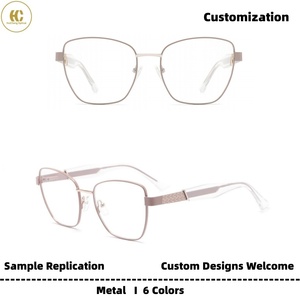
Yes, OEM replication and reverse-engineering of vintage optical silhouettes is one of our primary specialties. Importers can submit 2D CAD files, 3D renderings, sketches, or physical reference frames. Our technical department digitizes the contours, maps the wire-core center-of-gravity, verifies pantoscopic angles, and generates a prototype matching your design intent while optimizing rim groove stability for modern automated optical lab edging machines.
Shipments are handled under standard Incoterms (typically FOB, CIF, or DDP depending on buyer infrastructure). For urgent restocking, consignments are routed via direct air cargo to Budapest Ferenc Liszt International Airport (BUD), reaching your central warehouse within 4 to 6 transit days. Larger sea-rail consolidated shipments are routed smoothly via Koper or Hamburg ports directly to Hungarian inland container terminals with complete packing lists, commercial invoices, and tariff classification codes (HS Code: 9003.11.00 for plastic spectacle frames).
Consult with our engineering team to inspect material swatch catalogs, order pre-production evaluation units, or initiate a dedicated private-label optical manufacturing program for the Hungarian and CEE markets.
Get Catalog
