From architectural cat-eye silhouettes popular in Seongsu-dong flagship stores to high-durability TR90 and photochromic hexagon frames for urban commuters, explore our precision-tooled custom production runs.
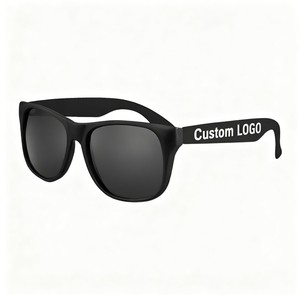
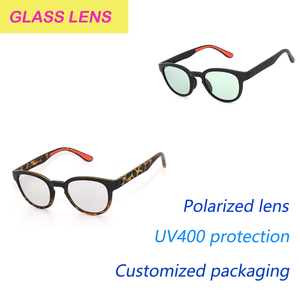
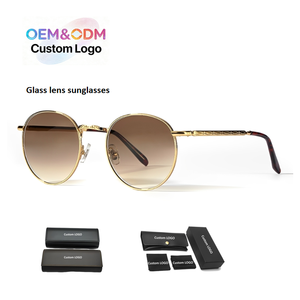
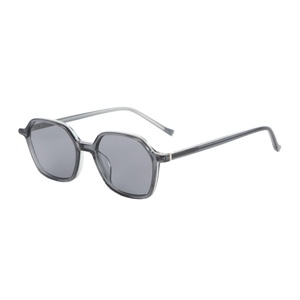

The South Korean sunglasses and optical frames market is characterized by extreme aesthetic sophistication, distinct physical anatomy requirements, and rapid multi-channel retail rotation. Our custom production workflows map directly to Korea's four primary commercial ecosystems.
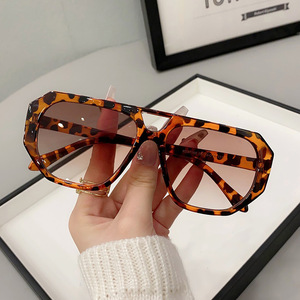
South Korea's youth fashion capitals demand experimental geometric profiles, translucent tea-tinted lenses, and exaggerated thick-acetate chamfers. In neighborhoods like Seongsu-dong and Hannam-dong, sunglass lines function as wearable art.
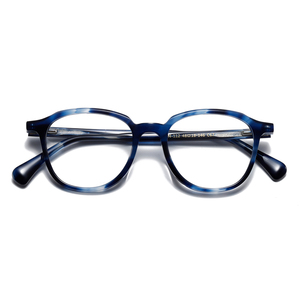
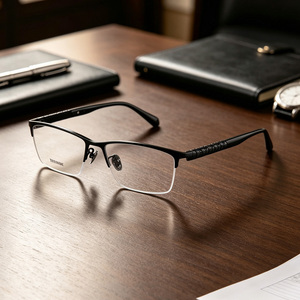
Medicalized and precision optical networks around Gangnam Station and Apgujeong demand flawless optical tolerance and prescription adaptability. Post-refractive surgery patients require maximum UV400 and high-energy visible (HEV) blue-light shielding.
South Korea boasts the world's highest per-capita spending on golf apparel and outdoor activewear. Sourcing managers cater to outdoor leisure in Jeju Island, coastal marine sports in Yangyang, and elite golf country clubs across Gyeonggi-do.
Designing and manufacturing eyewear for South Korea requires unlearning typical Western anatomical specs and retail cadence. Here is how modern B2B collections achieve commercial success in the domestic Korean channel.
| Design Dimension | Standard Western Specification | Korean Domestic Market Requirement | Factory Technical Implementation |
|---|---|---|---|
| Nasal Bridge Geometry | 16mm – 19mm DBL; Low pad clearance; Sits close to face. | 19mm – 23mm DBL; Elevated clearance to clear prominent cheekbones. | Custom built-up acetate saddle pads (+4.5mm projection) or adjustable titanium goose-neck pad arms. |
| Pantoscopic Tilt Angle | 10° – 14° Forward tilt suited for deep orbital sockets. | 5° – 8° Reduced tilt to prevent lower rim touching cheeks when smiling. | Specialized cold-angle hinge seat milling on 5-axis CNC machines; modified temple rake angle. |
| Temple Splay & Curvature | Straight-back pull with high clamping pressure at mastoid. | Wide temple bow with progressive inwards contour wrapping cranial curve. | Multi-stage heated mandrel temple curving with stabilized interior German spring core-wire insertion. |
| Lens Tint Transmission | Category 3 heavy dark tints (8% – 18% VLT) for bright sun. | Category 1 & 2 tints (35% – 65% VLT); Pastel gradients; Eye visible. | Precision dip-tank gradient dyeing in custom PMS shades (Tea Rose, Slate Olive, Hazy Mustard, Ice Blue). |
| Substrate Sustainability | Petroleum-based standard cellulose acetate sheets. | Eco-friendly Bio-Acetate with non-phthalate plasticizers (ISO 14855). | Certified virgin cotton-linter organic cellulose sheets paired with biodegradable shipping sleeves. |
Korean Gen-Z and millennial eyewear consumers rarely take off their sunglasses indoors. Sunglasses in Seoul are lifestyle accessories worn inside cafés, shopping complexes, and nightlife venues. Our factory specializes in customized low-density tinting (Category 1 & 2) that filters harsh blue indoor fluorescent illumination while allowing the wearer's gaze to remain visible.
A primary reason for return rates in Korean e-commerce (such as Musinsa and 29CM) is physical weight discomfort. Even when producing oversized dramatic acetate styles, our engineering team utilizes inner-rim core grooving and high-density acetate (HDCA), shedding up to 30% of total mass while retaining structural rigidity and tensile memory.
Korean consumers expect an unboxing experience equivalent to international luxury houses. As part of our OEM/ODM service, we produce customized packaging matching the exact visual identity of Korean private labels: magnetic-closure textured vegan leather cases, microfiber cloths with high-definition thermal transfer prints, and retail hangtags formatted for Korean KC safety text.
Since 1985, our facility has focused on one material category: premium cellulose acetate eyewear engineering. We unite automated Japanese multi-axis CNC machines with multi-stage hand artisan polishing to satisfy the world's most demanding buyers.
Our factory floor deploys modern 5-axis CNC routers cutting raw cured acetate slabs at tolerances within ±0.04mm. This guarantees that front bevels, bridge contours, and hinge recesses fit with mechanical perfection on every assembly batch.
Inferior acetate warps after cutting. We enforce a strict 90 to 120-day environmental stabilizing and curing protocol for all raw cellulose sheets prior to milling, ensuring all plasticizers are balanced and preventing post-production frame shrinking or distortion.
Mirror-sheen gloss cannot be sprayed on. Every frame front and temple undergoes 72 hours of multi-stage tumbling in natural German beechwood pegs infused with specialized pumice polishing pastes, followed by artisan wheel-buffing for silk-touch finishes.
Our 8-point physical quality inspection tracks front balance, temple tension (tested to 20,000 opening cycles), hinge alignment, lens stress polarization check, drop-ball impact resistance, and nickel-release chemical stability before export sealing.
From CAD file submission to sea freight container arrival at Busan Port or express air shipment to Incheon.
Korean boxing specs (Lens width □ DBL - Temple) confirmed. Rapid 3D SLA prototyping within 72 hours for ergonomic cheekbone clearance checks.
Match brand PMS codes to our 258+ in-stock cellulose acetate libraries. Custom lamination of dual-layer tortoise or horn textures executed in-house.
Complete, hand-finished production-grade counter-samples dispatched via DHL Express to Seoul headquarters for touch, balance, and branding sign-off.
Milling, tumbling, laser logo application, KC label tagging, barcode sticker integration, and palletized dispatch under CIF/FOB Incoterms.
Clear, technically accurate answers covering safety certification, supply chain lead times, customization thresholds, and tariff documentation for South Korean trade partners.
Yes. Every batch of sunglass lenses produced for the South Korean market is manufactured to meet or exceed Korean Standard KS G 5853 (Sunglasses for General Use) and Electrical Appliances and Consumer Products Safety Control Act regulations (KC Certification). Our lenses provide certified UV400 protection (100% block of UVA and UVB up to 400nm), undergo optical distortion gradient testing to guarantee zero prismatic aberration, and pass drop-ball impact testing. We provide complete factory test reports and batch compliance certificates necessary for KATS (Korean Agency for Technology and Standards) filing.
For private-label branding using existing catalog silhouettes (adding laser engraving, temple hot-stamping, and custom branded packaging), our minimum starts as low as 100 to 300 pieces per style across 2 to 3 colorways. For fully bespoke OEM tooling requiring unique CNC CAD tooling, proprietary acetate extrusion, and dedicated temple core-wire dies, our typical production run starts at 600 pieces per mold (divided into 200 pieces per colorway). This flexible tier structure supports both emerging designer labels launching seasonal collections and high-volume optical retail chains.
Asian-fit engineering is one of our primary core competencies. When producing frames for South Korea, we automatically adjust three crucial anatomical dimensions: 1) Increasing the nose-pad projection depth up to 4.5mm – 5.5mm using specialized built-up acetate welds or integrated mold tooling; 2) Narrowing the bridge width (DBL) to 18mm – 20mm to prevent slipping down flatter nasal bridges; and 3) Reducing pantoscopic frame tilt from the Western standard of 12° down to 6° – 8°, ensuring that lower rim eyewires never rest against the cheekbones during facial movement.
We provide end-to-end private-label execution. Our marking capabilities include high-precision CO2 and fiber laser engraving on temples and lens corners, metallic foil hot-stamping, high-adhesion pad printing, and custom metallic core-wire injection detailing. Furthermore, we manufacture bespoke Korean-market retail packaging including collapsible hard cases, genuine and vegan leather pouches with embossed brand marks, micro-fiber lens cleaning cloths, barcode hangtags printed with mandatory Korean domestic consumer protection disclosures, and custom retail gift boxes.
Following technical CAD drawing sign-off, functional physical counter-samples take approximately 14 to 21 working days for hand-finished acetate models. Once samples are approved by your team, mass production typically spans 40 to 55 days, depending on batch complexity and whether custom acetate sheet curing is required. Air freight from our export hub to Incheon International Airport (ICN) requires 3 to 5 business days, while ocean container shipping to Busan Port takes approximately 18 to 24 days door-to-port.
Yes. We supply comprehensive commercial invoices, packing lists, detailed material composition disclosures, and formal Certificates of Origin under bilateral Comprehensive Economic Partnership Agreements (CEPA) and Free Trade Agreements (FTA). This documentation allows qualified South Korean importers to significantly reduce or eliminate basic customs import tariffs, lowering landing costs and maximizing retail gross margins.
Whether you are planning a rapid private-label rollout for the upcoming Korean summer season, engineering a specialized Asian-fit titanium optical line, or seeking an experienced OEM partner capable of rigorous high-tolerance acetate machining, our export engineering team is ready to assist.

