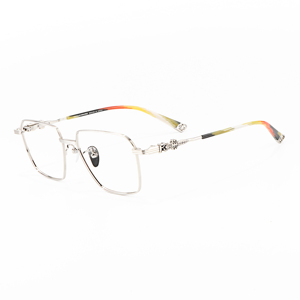
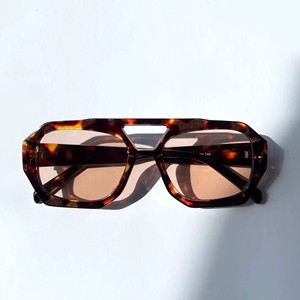
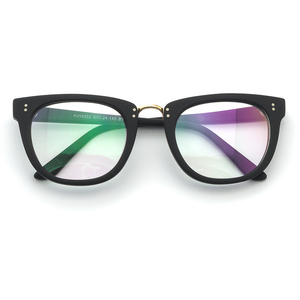
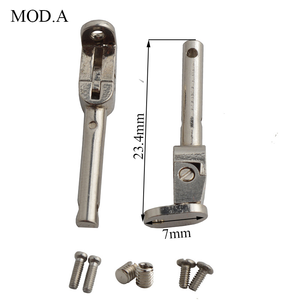
Supplying the Brazilian optical landscape demands an engineering approach that transcends generic global specifications. Positioned within equatorial and tropical latitudes, Brazil experiences some of the most intense ultraviolet solar irradiance on earth, with the UV Index regularly topping 11 to 14+ across the Northeast and Central-West regions. Eyewear manufactured for this territory must unite high optical filtration capacity with raw chemical resilience against high ambient humidity and sweat-induced oxidation.
As seasoned manufacturers operating since 1985, RTC Eyewear pairs 5-axis CNC machining with tailored cellulose acetate compounds to solve specific pain points encountered by Brazilian optical retailers (óticas), distributors, and D2C brands. Below are the five prominent localized application environments dictating custom production protocols:
1. Litoral & Coastal Marine Lifestyles
Spanning over 7,400 km of coastline—from Rio de Janeiro to Recife and Fortaleza—frames must endure hyper-saline ocean air, persistent perspiration, and sunscreen contact. Conventional cheap metal hardware rusts or pits within weeks. Our custom Brazil runs incorporate 316L medical-grade stainless steel barrel hinges, cadmium-free five-barrel pinned joints, and high-purity cellulose acetate fronts that resist tropical surface blooming.
Salt-Spray Tested: 96h ASTM B117
2. Urban Cosmopolitan Hubs (São Paulo & Curitiba)
In South America's financial nerve center, consumers prioritize transition utility. Frames need to move seamlessly from indoor corporate boardrooms with intense blue-light screen exposure to harsh outdoor glare. We engineer hybrid optical-sunglass platforms with deeper lens grooves calibrated for progressive, photochromic, and high-index presbyopia lenses without frame distortion.
Calibrated Rx Bevel: 1.8mm Depth
3. Outdoor Athletics & Eco-Tourism
From beach volleyball on Ipanema and surfing in Florianópolis to trail ultra-marathons in Chapada Diamantina, active Brazilians demand lightweight stability. Injection-molded frames often crack under mechanical torsions. Our custom-milled acetate sport-lifestyle lines feature inner non-slip temple knurling, anatomically curved wirecores, and impact-resistant polarized TAC lenses.
Polarization Efficiency: >99.5%
4. Brazilian Carnival & Creative Fashion Culture
Brazil's fashion-forward youth and streetwear scenes (exemplified during Salvador and São Paulo carnival seasons) favor audacious shapes: oversized retro geometric geometries, butterfly cat-eyes, and two-tone laminated acetates. Our rapid ODM prototyping enables boutique brands to deploy bespoke limited editions in 45 days, locking into transient micro-trends before retail windows close.
258 In-House Acetate Colorways
5. Agro-Industrial & Central Interior Exposure
Brazil’s agricultural belt (Mato Grosso, Goiás, Paraná) operates in expansive sunlight with heightened dust and UV reflection. Sourcing directors catering to this demographic require rugged Class 3 optical lenses with internal anti-reflective coatings and frames featuring reinforced wire-core temples that permit quick field adjustment by local opticians without breakage.
Class 1 Optical Clarity (ISO 12312-1)
The Brazilian eyewear sector, historically dominated by massive international conglomerates and marked by steep domestic import markups ("Custo Brasil"), is undergoing a massive decentralization. Independent retail networks, eyewear incubators, and direct-to-consumer (D2C) brands are aggressively bypassing secondary distributors to partner directly with primary manufacturing facilities.
| Trend Dimension |
Structural Market Shift |
Technical Production Adaptation |
Strategic Advantage for Importers |
| Bio-Based Cellulose Acetate |
Surging demand for sustainable, biodegradable raw materials among Gen Z and millennial buyers. |
Transitioning to eco-acetate produced from cotton linters and wood pulp with non-phthalate plasticizers. |
Higher brand equity, ESG marketing clearance, and alignment with national environmental initiatives. |
| Anatomical Morphological Fit |
Global generic bridge sizes often fail to fit Brazil's genetically diverse cranial dimensions. |
Tooling custom nasal pads with deeper nose-saddle angles and 18mm–21mm calibrated bridge spans. |
Drastic reduction in retail return rates; superior consumer wearability in high-heat conditions. |
| Gradient & Bio-Toned Aesthetics |
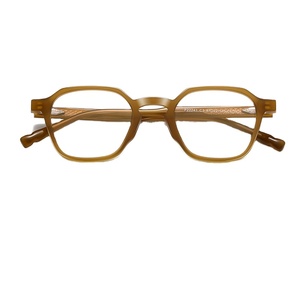
Rising preference for warm earth tones, translucent amber, emerald green, and tortoiseshell palettes. |
Multi-layer sheet laminations fused under controlled thermal hydraulic presses prior to 5-axis CNC routing. |
Product differentiation against monochromatic mass-market injection-molded eyewear. |
| Tariff & Supply Resilience |
Heavy Brazilian import duties (II, IPI, ICMS-ST) necessitate high product gross margin cushions. |
Direct factory OEM/ODM pricing, streamlined bulk packing, and consolidated sea-freight documentation. |
Delivers up to 65% landed gross margin buffers compared to purchasing from domestic middlemen. |
To capture maximum value in this evolving matrix, Brazilian eyewear buyers require manufacturing partners capable of balancing raw craftsmanship with automated robotic reproducibility. By machining cellulose acetate sheets rather than employing fast-cycle plastic injection, we eliminate internal structural stresses, guaranteeing that sunglasses retain their curvature and fit even when left on automobile dashboards under 40°C Brazilian summer sun.
1985
Established Heritage
40+
Years Eyewear Expertise
100%
ABNT & ISO Compliant
Four decades of dedicated focus on a single category—cellulose acetate and precision eyewear manufacturing—has cultivated an elite echelon of technical mastery inside our manufacturing facilities. Where newer factories rely entirely on outsourced semi-finished goods, RTC controls the complete fabrication value chain from raw block conditioning to multi-stage barrel buffing.
5-Axis CNC Milling Precision
Our production line runs custom-programmed CNC milling stations that execute complex three-dimensional beveling, lens groove channeling, and temple pocket routing down to tolerances within ±0.05 mm. This guarantees that replacement optical lenses or polarized sun lenses click into the rims without gaps or tension spots.
72-Hour Organic Tumbling & Hand Finish
True luster cannot be achieved through chemical dipping or spray-lacquers. We tumble our cut frame components in progressive beechwood and birch granules infused with pumice stone paste for 72 consecutive hours. Master artisans then complete the final mirror-finish on high-speed cotton and flannel buffing wheels.
Sample-First Risk Shield
We eliminate purchasing risk for Brazilian sourcing teams. Before any industrial production run is initialized, physical prototype samples are cut, assembled, laser-marked, and air-couriered to your office for real-world tactile appraisal, fit testing, and lab certification.