Eco Acetate Eyewear Manufacturers & Factories for the Norway Market
Precision Cellulose Acetate Craftsmanship, Low-Carbon Biodegradable Materials, and Full Regulatory Compliance with the Norwegian Transparency Act (Åpenhetsloven) & CE ISO 12870 Standards.
Precision Engineered Collections
Curated Optical & Sunglasses Lines for Scandinavian Importers
Explore our export-ready frames spanning bio-cellulose acetate opticals, cold-crack resistant sunglasses, polarized watersport clips, and ergonomic industrial visionwear engineered specifically for Nordic clinical and outdoor conditions.
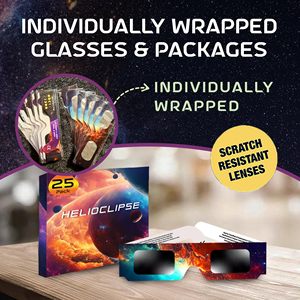
High-density optical-grade solar safety filters meeting strict CE and ISO safety certifications. Ideal for scientific institutions, observatories, and Arctic tourism campaigns.
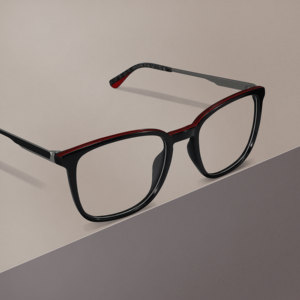
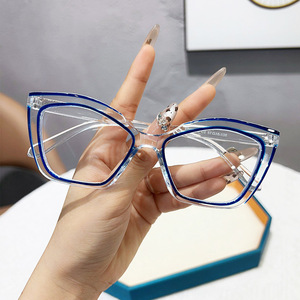
Corrosion-proof lightweight metal alloy temple cores enclosed in hypoallergenic cotton-based acetate rims. Calibrated for comfortable all-day office and urban wearing.
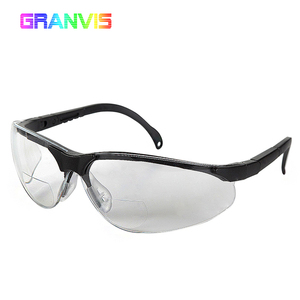
Bifocal Prescription Safety Glasses with Ratchet Temples
Impact-resistant optical frames with angle- and length-adjustable temples. Designed for offshore oil rigs, maritime docks, and sub-zero outdoor engineering facilities.
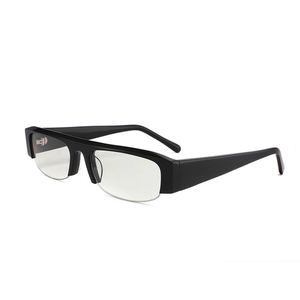
Matte Black Browline Semi-Rimless Acetate Sunglasses
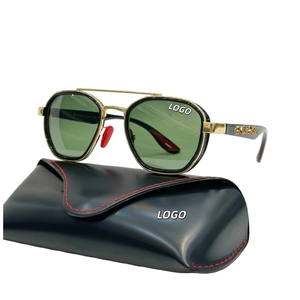
Hand-buffed matte texture treated against low-temperature embrittlement. Features reinforced wire inner cores and anti-reflective polarized sun lenses.
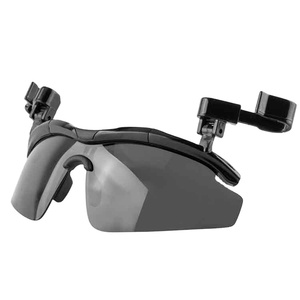
Ultra-light clip system fitted with high-contrast amber/smoke TAC polarized lenses. Ideal for commercial Norwegian fishermen, fjord sailors, and ski crossers.
Engineering Cellulose Acetate for the Norwegian Climate: Structural Ductility & Bio-Plasticizers
When sourcing optical frames for Norway, Sweden, and Finland, eyewear buyers encounter a distinct engineering challenge: sub-zero embrittlement. Conventional petrochemical plastics and cheap injection-molded grilamid or standard cellulose acetate plasticized with synthetic phthalates (such as DEP - diethyl phthalate) undergo glass transition phase shifting when subjected to typical Scandinavian winter environments (-10°C to -30°C in Inland Norway and Troms/Finnmark). Under these sub-zero thermal stresses, inferior frames develop micro-fractures around the bridge and eyewire bevel, resulting in lens drop-out or abrupt hinge fracture when dropped or adjusted.
At Rushabh Trading Company (RTC Eyewear), our manufacturing approach addresses these thermodynamic stresses directly. We use M49 bio-acetate and organic cellulose acetate produced from sustainably harvested wood pulp (coniferous softwood certified under FSC/PEFC) and natural cotton linters. By substituting petrochemical additives with plant-derived, bio-based plasticizers (triethyl citrate and vegetable fatty acid derivatives), our material maintains its elastic modulus and Izod impact resistance even under deep sub-zero exposure.
Molecular Stability & Hand-Finishing Mechanics
A superior acetate frame cannot be created through high-speed automation alone. While our 5-axis computer numerical control (CNC) mills cut front eyewires, hinge mortises, and step-bevels with +/-0.05 mm accuracy, raw machined edges harbor micro-serrations that act as stress concentration risers. In sub-freezing temperatures, these micro-serrations lead to mechanical failure under stress.
RTC mitigates this failure through a 72-hour multi-stage rotary tumbling protocol using graduated beechwood and birch granules infused with micro-crystalline vegetal pumice, followed by skilled manual wet-buffing on high-speed cotton and flannel wheels. This process seals the molecular surface of the acetate, yields a mirror gloss that cannot peel or delaminate, and rounds all edge transitions to eliminate structural notch stress. For Norwegian opticians who frequently reheat and cold-align frames in clinical environments, our frames deliver exceptional shape retention and thermal adjustability without crazing or clouding.
High-Albedo Polarized Glare Protection in Norwegian Topography
From the high-altitude glaciers of Jotunheimen to the reflective sea channels of the Geirangerfjord, Norway presents an extreme optical challenge known as high-albedo horizontal polar glare. Snow and maritime water surfaces reflect up to 85% of ambient UV and actinic visible light. Our sun eyewear collections integrate optical Category 3 and Category 4 polarized TAC (triacetate cellulose) and nylon lenses featuring backside anti-reflective (AR) hydrophobic coatings. These lenses effectively eliminate dangerous blue-haze scatter while preventing back-bounce glare into the wearer's pupillary field.
Market Specific Applications
Localized Application Scenarios Across Norway
How our private label and OEM acetate eyewear programmes integrate into the commercial, active, and lifestyle realities of modern Norwegian consumers.
Oslo & Bergen Optical Boutiques
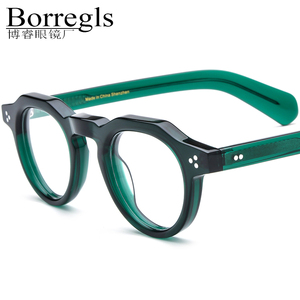
Urban Scandinavian consumers value understated minimalism, architectural lines, and neutral nature-inspired palettes (moss green, fjord crystalline, smoked havana). Our Clarish collection provides lightweight, hand-buffed rectangle and round silhouettes designed for premium high-index prescription glazing.
Urban Optometry & High-End Retail
The Friluftsliv Active Lifestyle
Norwegians spend their weekends outdoors—cross-country skiing, trekking, and trail running. Eyewear engineered for this market demands rugged, non-slip acetate bridge curves, low thermal conductivity (so cold frames don't burn cheekbones), and polarized glare protection for snow and water surfaces.
Outdoor Sports & Polar Recreation
North Sea Maritime & Offshore
Commercial fishing in Lofoten and offshore technical work in Stavanger require eyewear resilient to saltwater spray and high humidity. Our surgical stainless-steel core wires, monoblock hinges, and nickel-free coatings prevent galvanic corrosion and pitting when exposed to harsh maritime environments.
Maritime & Coastal Durability
Nordic Corporate Screen Eyewear
With Norway ranking among Europe's most digitally forward nations, corporate workforces in tech, consulting, and government require high-grade blue-light filtering opticals. Our frames can be specified with plano 420nm blue-blocker lenses mounted in featherweight bio-acetate for effortless 10-hour workdays.
Digital Visual Ergonomics
Macro Economic & Legal Insights
Norway Eyewear Sourcing Trends: The Rise of Ethical Transparency
Understanding the statutory compliance, environmental mandates, and demographic shifts shaping procurement for Norwegian retail conglomerates and independent opticians.
The Norwegian Transparency Act (Åpenhetsloven)
Enacted in July 2022, Norway's Åpenhetsloven mandates that larger enterprises conduct supply chain human rights due diligence and grant public access to supplier verification data. RTC Eyewear provides full factory audit visibility, fair labor verification, and non-hazardous manufacturing declarations, allowing Norwegian importers to pass audit scrutinies smoothly.
Statutory Due Diligence
Strict Phthalate-Free & Biodegradability Demands
Norwegian consumers demand rigorous environmental standards. Retail buyers actively eliminate traditional cellulose acetate containing petro-plasticizers in favor of bio-based formulations certified under ISO 14855 for biodegradability. Our factory produces frames that leave zero harmful chemical residues or eco-toxic plasticizers.
Circular Bio-Economy
Scandinavian Ergonomic Anthropometrics
Standard Asian-fit frames generally do not accommodate the cranial and facial anatomy common in Norway. Nordic wearers typically require deeper bridge fits (17mm–21mm boxing bridge widths), wider front temple spans (138mm–148mm), and longer temple paddles (145mm–150mm). Our ODM program fine-tunes base curves and bridge angles specifically for these anatomical parameters.
Precision Boxing Geometry
Material Comparison Matrix
Technical Benchmark: Standard Acetate vs. RTC Eco Cellulose Acetate
A comparative engineering evaluation showing why our plant-derived acetate formulation outperforms conventional petrochemical polymers under Nordic operational stresses.
Performance Parameter
Conventional Petro-Acetate
Injection Molded TR90 / PC
RTC Eco Cellulose Acetate (Norway Spec)
Base Polymer Source
Synthetic petroleum acetate flake
Petrochemical polyamides / polycarbonate
Certified FSC softwood pulp & cotton linters
Plasticizer Formulation
DEP / DMP (Phthalate esters)
Synthetic chemical stabilizers
100% Bio-based vegetable citrate derivatives
Sub-Zero Impact Ductility (-20°C)
Moderate (Risk of micro-crazing)
High initial, brittle failure risk
Exceptional (Elastic memory retained without brittleness)
Optical Lens Grooving & Glazing
Standard V-bevel
Cold-snap only (Cannot hand-work)
High-precision CNC milled V-groove (+/-0.05mm)
In-Store Thermal Adjustability
Standard heating bench required
Non-adjustable (Spring tension only)
Rapid heat softening (60°C–70°C), permanent set
Surface Refinishing & Longevity
Sprayed lacquer (Wears off)
Non-buffable (Discolors over time)
Through-section hand-buffed mechanical polish
Environmental Certification
Non-biodegradable landfill waste
Fossil-fuel derived non-recyclable
ISO 14855 Biodegradable & REACH Annex XVII Pass
Why Choose RTC Eyewear
Manufacturing Authority Backed by 41 Years of Specialization
Since 1985, Rushabh Trading Company has manufactured exclusively in one category: high-grade cellulose acetate eyewear. We do not dilute our focus with cheap plastics or stamped metals. Every square meter of our plant is optimized for acetate excellence.
Proven Catalogue: 22 Models, 258 Colors
Rather than starting tooling from zero, Norwegian importers can fast-track their collection launch via our proven Clarish™ collection. With 22 core frame silhouettes and over 258 verified colorways, you can select market-validated designs and add custom branding instantly.
Zero Tooling Delay
High-Precision CNC & Wire Insertion
Our workshop combines German-calibrated 5-axis CNC cutters with hydraulic core-wire insertion machines. Temple wires are shot through the core of the acetate at controlled temperatures, securing consistent temple flex and enabling opticians to make custom ear-contour adjustments effortlessly.
Dimensional Precision
Strict "Sample First, Then Scale" Policy
We do not produce bulk runs based on digital renders. Norwegian buyers receive full physical prototypes milled from actual batch sheet acetate, fitted with target hinges and custom pad-printed or laser-engraved branding. Bulk production begins only after your optical team signs off.
Risk-Free Sourcing
Buyer Knowledge Base
Frequently Asked Questions: Sourcing Eyewear into Norway
Direct answers addressing import customs, toll regulations, CE certifications, minimum order quantities, and private labeling.
Q1 What customs duties and import documentation apply when importing eyewear into Norway?
Norway is part of the European Free Trade Association (EFTA) and the EEA, but outside the EU Customs Union. Optical frames (HS Code 9003.11 for plastic/acetate) and sunglasses (HS Code 9004.10) imported into Norway require an accurate Commercial Invoice, Packing List, and Bill of Lading/Air Waybill. Spectacle frames typically enter Norway duty-free, but are subject to Norwegian standard 25% MVA (Merverdiavgift / VAT) upon clearance via Tolletaten (Norwegian Customs). RTC Eyewear provides all necessary export declarations to ensure smooth customs processing at Oslo Gardermoen or Port of Oslo.
Q2 How do you ensure your frames comply with CE and European Standard EN ISO 12870?
All prescription spectacle frames manufactured at RTC intended for the EEA and Norway conform to EN ISO 12870 (Ophthalmic optics — Spectacle frames). This standard verifies dimensional stability, heat resistance, optical lens retention under thermal cycles, non-toxicity, and resistance to perspiration. Our sunglasses comply with EN ISO 12312-1 and carry legitimate CE markings on the inner temple paddle, accompanied by full Declaration of Conformity (DoC) paperwork.
Q3 What are the Minimum Order Quantities (MOQ) for custom private label projects?
For frames selected from our in-production Clarish™ catalog, private label branding (pad-printed temple branding, custom model numbering, and personalized retail boxes/cases) starts at accessible quantities of 300 to 500 units per model across multiple colorways. For fully bespoke OEM designs requiring custom tooling, CAD blueprints, and unique acetates, typical MOQs are 1,000 units per collection. Contact our export sales desk for flexible batch sampling schedules.
Q4 How does RTC support due diligence under the Norwegian Transparency Act (Åpenhetsloven)?
We provide full visibility into our Ahmedabad production lines, material supply chains, raw material provenance (FSC-certified cellulose sources), worker safety gear standards, and fair labor compliance. Norwegian corporate retail groups can integrate our factory audit documentation directly into their public reporting, fulfilling all criteria established by Forbrukertilsynet (The Norwegian Consumer Authority).
Q5 Can we order frames with custom Scandinavian ergonomic sizing?
Yes. Through our ODM service, we routinely adjust standard frame measurements. If your target market requires an extended temple length (e.g., from 140mm to 148mm), a wider bridge (e.g., 19mm–21mm keyhole bridge), or custom temple pitch angles to fit broader cranial dimensions, our CNC milling parameters can be re-programmed without costly structural re-tooling.
Q6 What are standard shipping lead times to Norway?
Physical sample prototypes are dispatched via DHL/FedEx Express and reach Norway within 4 to 6 business days. Upon sample sign-off, bulk production runs require 45 to 60 days depending on whether custom acetate sheet patterns are being formulated. Freight shipments are routed either via air cargo directly into Oslo (OSL) for fast seasonal launches, or via ocean container freight to major Nordic ports.
Partner with a Dedicated Acetate Eyewear Manufacturer
Launch your private label collection or expand your Norwegian retail chain with an established manufacturer trusted since 1985. Share your specifications, reference designs, or target quantities for an itemized quotation and free material swatch samples.