Precision-engineered in 258 colourways and CNC-milled cellulose acetate or ultra-grade titanium, ready for OEM, ODM, and Private Label distribution across Mexico and the Americas.

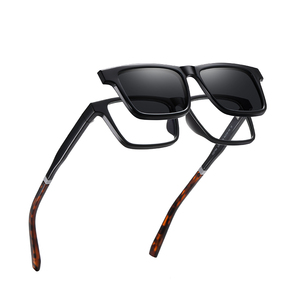
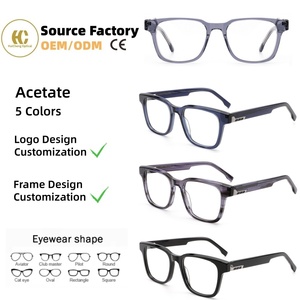
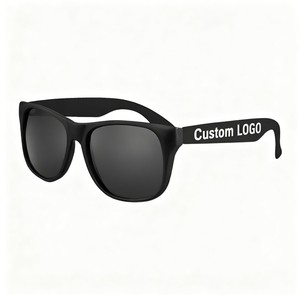
A rigorous examination of polymer engineering, thermodynamic barrel polishing, and nearshoring supply chain integration for Mexico City wholesale distributors and optical retailers.
In high-end optical frame fabrication, optical clarity and specular reflection are fundamentally governed by raw material purity. Unlike low-cost injection-molded plastics (such as polycarbonate or generic copolyamides) that require synthetic topical lacquers to simulate sheen, authentic glossy eyewear frames derive their depth from cured cellulose acetate—a biopolymer synthesized from purified cotton linters and softwood pulp esterified with acetic anhydride.
Topical clear coats inevitably delaminate, crack, and turn cloudy under high UV radiation and facial sebum exposure. In contrast, our cellulose acetate eyewear manufacturing process produces color-through sheet stock where pigment dispersions permeate the entire molecular cross-section. When surfaced by diamond-tipped CNC tooling and mechanically buffed, the exposed polymer chains align to deliver an intrinsic diamond-mirror luster (exceeding 95 Gloss Units at a 60° incident angle) that can be repeatedly re-polished throughout a 10-year product lifecycle.

| Performance Characteristic | High-Gloss Cellulose Acetate (RTC Standard) | Injection-Molded TR90 / Grilamid | Standard Molded Polycarbonate |
|---|---|---|---|
| Specular Reflectance (Gloss Depth) | Deep mechanical polish (>95 GU); permanent cross-sectional luster | Semi-matte inherent finish; requires chemical spray coating | Synthetic sheen; degrades rapidly with abrasive wear |
| Dispensary Adjustability (Thermal Memory) | Softens predictably at 55°C–65°C for bespoke temple and bridge curve adjustment | Zero thermal adjustability; snaps back to original mold form | Very brittle; cannot be adjusted without micro-fracturing rims |
| Chemical & Sebum Resistance | Exceptional resistance to cosmetic perspiration and dermatological acids | Moderate; subject to plasticizer migration over time | Prone to stress cracking around hinge screws under sweat contact |
| Structural Density & Hand-Feel | Substantial haptic balance (1.28–1.32 g/cm³); perceived luxury weight | Ultra-lightweight (1.00–1.14 g/cm³); often perceived as promotional | Average weight (1.20 g/cm³); hollow acoustic resonance |
| Hinge Anchor Reliability | Heat-sunken or rivet-pinned 5-barrel & 7-barrel hinges integrated to wire cores | Ultrasonically embedded friction hinges with low shear resistance | Glued or snap-fit hinges; high field failure rate |
From the bustling wholesale corridors of Centro Histórico to the luxury flagships of Polanco and emerging DTC hubs in Roma Norte, understanding localized consumption drives procurement success.
Mexico City’s Calle Francisco I. Madero and Calle Motolinia represent the densest B2B optical trading hub in Latin America. Over 1,200 optical labs, frame importers, and wholesale stockists serve regional buyers arriving daily from Puebla, Querétaro, Veracruz, and Michoacán.
High-income urban nodes demand bespoke, artisanal, and vintage-inspired glossy frames. Independent boutiques and concept stores reject generic mass molds, preferring rich Mazzucchelli-level tortoiseshells, havana gradients, and piano-black finishes with custom beveling.
Mexico City serves as the operational headquarters for Latin America's largest corporate retail networks. Institutional procurement here hinges on batch-to-batch color repeatability, strict dimensional tolerances, and frictionless omnichannel packaging readiness.
Mexico City sits at an altitude of 2,240 meters (7,350 feet) above sea level, resulting in significantly thinner atmospheric filtering and UV radiation indices routinely reaching 11+. Factories delivering glossy eyewear to CDMX must formulate acetate matrices with reinforced UV-stabilizers (benzotriazole absorbers) to prevent molecular embrittlement, warping, and surface chalking. Furthermore, Mexican cranial-facial anthropometrics frequently feature broader zygomatic structures, shallower nasal bone bridges, and lower pupillary centers compared to European demographics.
Our custom optical engineering implements custom-sculpted ergonomic nose pads (17–19mm bridge separation angles) and calibrated 8-degree pantoscopic tilts, eliminating frame slip and ensuring comfortable, eyelash-clear focal alignment for all-day wear across Mexican populations.
Understanding shifting consumer purchasing patterns, supply-chain re-shoring, and sustainability regulations across Mexico.
With Mexico leveraging the USMCA / T-MEC trade treaty, Mexican optical brands are transitioning from volatile container-load spot buys to stable, recurring contract manufacturing partners who offer flexible MOQ scaling, rapid prototyping, and transparent customs logistics.
Eco-conscious Mexican millennials and Gen-Z consumers are actively rejecting non-recyclable petroleum plastics. Our factories lead this shift with bio-based cellulose acetate using natural triethyl citrate plasticizers, delivering 100% biodegradability under ISO 14855 standards.
Market demand in Guadalajara, Monterrey, and CDMX has pivoted toward hybrid architectures—combining high-gloss acetate rims with aviation-grade beta-titanium bridges and ultra-thin flexible temples, creating executive frames that weigh less than 16 grams complete with demo lenses.
The monumental success of domestic DTC pioneers has triggered dozens of regional boutique brands. These emerging labels require agile private-label partners capable of providing custom temple pad-printing, custom microfiber cloths, rigid folding cases, and unboxing-ready cartons.
Rushabh Trading Company (RTC Eyewear) has perfected the craftsmanship, tooling, and mass-scale production of cellulose acetate optical frames and sunglasses since 1985.
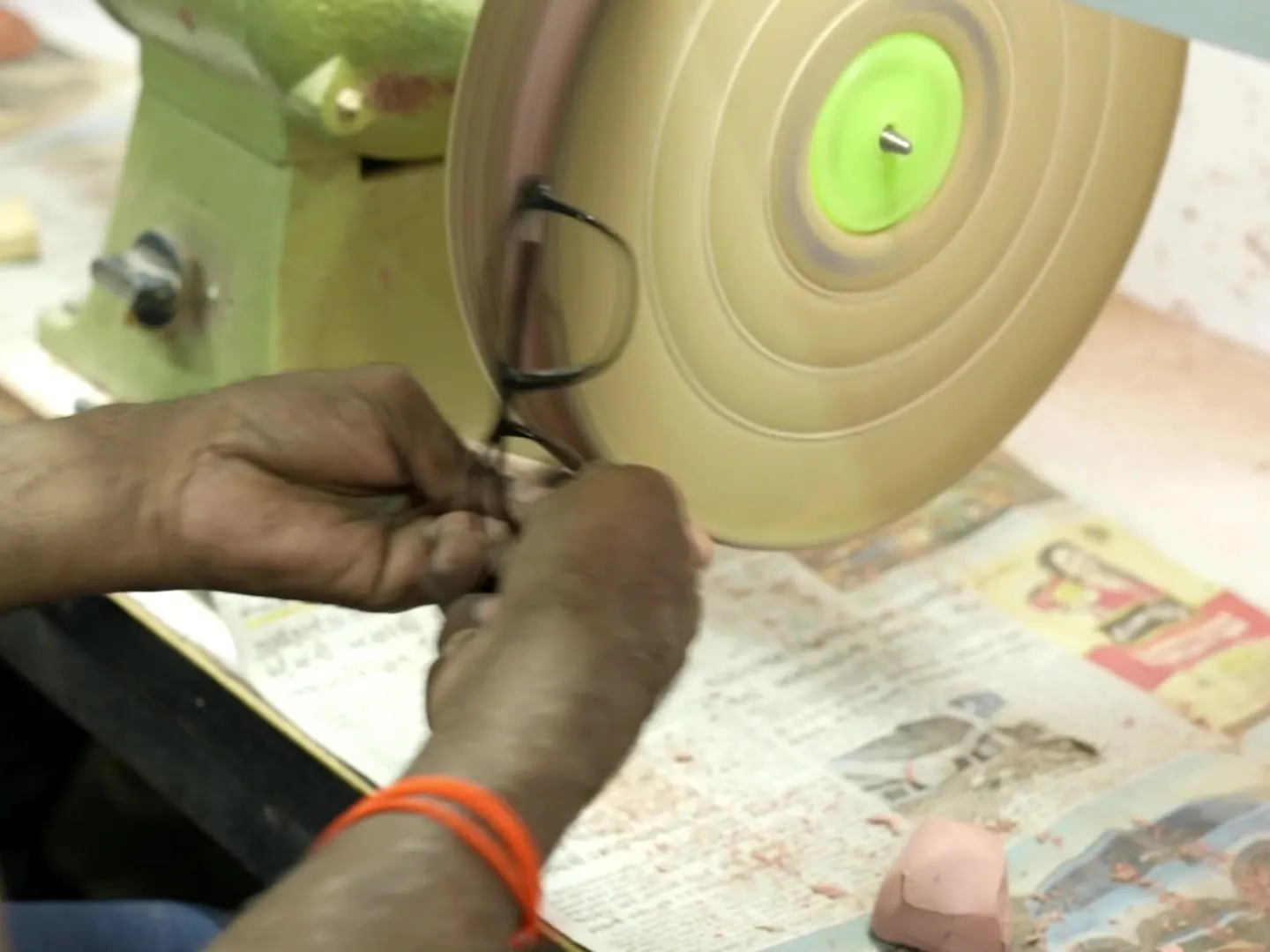
True luxury optical quality cannot be achieved via automation alone. While our computer-controlled 5-axis CNC machining centers route lens retention grooves, pantoscopic angles, and hinge mortises to within 0.02 mm accuracy, the human tactile finish remains irreplaceable.
Every frame undergoes an exhaustive 72-hour four-stage tumbling process. Submerged sequentially in rotary beechwood pegs, micro-pumice stone granules, and natural beeswax pastes, the raw CNC milling ridges are softened to micro-smoothness. Finally, our master polishers hand-buff each bridge and temple against high-speed cotton and flannel wheels charged with Tripoli rouge—imparting an unyielding, liquid-deep mirror gloss that resists fading over years of heavy daily use.
From curated Italian and domestic sheet stock to customs-cleared dispatch in Mexico City.
Cellulose acetate sheets undergo thermal aging and dehumidification in climatic chambers to stabilize hygroscopic content, preventing future frame shrinkage.
Front silhouettes, temple profiles, and precision V-groove lens retention channels are carved using high-speed diamond end-mills at 24,000 RPM.
Stainless steel or nickel-silver reinforcing core wires are thermally shot into temples; premium German OBE or multi-barrel hinges are sunken and pinned.
Hydraulic heated formers shape front rims to exact Base 4 or Base 6 curves, calibrated strictly to ensure zero lens pop-out during optical lab glazing.
Cascading octagonal wooden barrels tumble frames through coarse pumice, walnut husks, and carnauba wax to smooth out micro-scratches evenly.
Master craftsmen hand-finish frame contours, chamfered bridge angles, and temple end-tips against rotating unbleached cotton wheels for intense gloss.
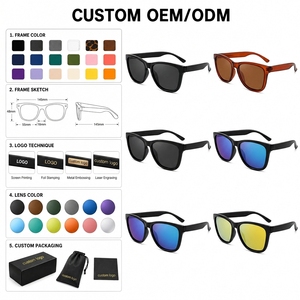
High-precision fiber laser engraving and indelible pad-printing embed custom brand logos, model naming, and boxing sizing into temple interiors.
100% individual optical inspection for bridge symmetry, pantoscopic squareness, and surface purity before sealing into export cartons.
Practical answers addressing tariffs, sanitary compliance, minimum order quantities, and custom packaging logistics for Mexican businesses.
Optical prescription frames entering Mexico are classified under HS Code 9003.11 (plastics) and 9003.19 (other materials). Importers must be registered on Mexico's Padrón de Importadores de Sectores Específicos. Furthermore, retail packaging must satisfy the mandatory Mexican Official Standard NOM-050-SCFI-2004 regarding bilingual commercial information, country of origin labeling, and importer tax ID (RFC) placement. RTC Eyewear provides fully pre-compliant labeling and certified packing lists to guarantee rapid customs despacho aduanero at Manzanillo or Mexico City International Airport (AICM).
In Mexico, plano sunglasses that do not contain ophthalmic prescription lenses are classified as personal accessories rather than Class I medical devices, exempting them from exhaustive COFEPRIS sanitary registration requirements. However, sunglasses must provide authentic UV400 absorption (blocking 99–100% of UVA and UVB radiation) to comply with consumer protection standards enforced by PROFECO. All our high-gloss sunglasses ship with verified UV400 and polarization spectrometer documentation.
For existing models in our active Clarish™ catalog, our flexible Private Label program starts at just 300 pieces per model (split across 2 to 3 colorways), including custom interior temple laser engraving and pad printing. For full custom OEM projects requiring bespoke tooling, 3D mold fabrication, and unique sheet acetate extrusion, MOQs generally start at 600 to 1,200 pieces per frame geometry, supported by pre-production physical prototype approval within 20 working days.
Yes. Many standard European frames feature narrow bridge widths (15–16 mm) and steep temple angles that pinch or slide down Mexican wearer faces. Through our ODM modification service, we can adjust the CAD parameters of any catalog model to incorporate widened nasal seat surfaces (18–20 mm), shallow keyhole bridges, and adjusted pantoscopic tilts, ensuring a non-slip, balanced universal fit optimized for Latin American ergonomics.
Once pre-production physical samples receive written sign-off, standard bulk manufacturing spans 45 to 60 days depending on colorway intricacy and barrel-tumbling volume. Air-freight shipments directly to Mexico City (MEX / AIFA) average 5 to 7 transit days. Consolidated ocean container shipments arriving via the Port of Manzanillo (Colima) require approximately 22 to 28 days on the water, followed by customs release and intermodal road transit to central CDMX warehouses.
Absolutely. We operate as a silent, dedicated B2B manufacturing partner; our corporate identity appears nowhere on the final product. We engineer end-to-end branded packaging ecosystems: high-density foil-stamped hard clamshell cases, microfiber cloths (200+ GSM with embossed branding), structural rigid boxes, and tamper-evident barcoded polybags designed directly to your retail or eCommerce specifications.
Whether you are expanding an established optical chain in Mexico City, creating a designer private-label brand in Polanco, or sourcing high-volume optical frames for national distribution, RTC Eyewear provides the technical precision, engineering depth, and export compliance your business demands.

