

Custom Acetate
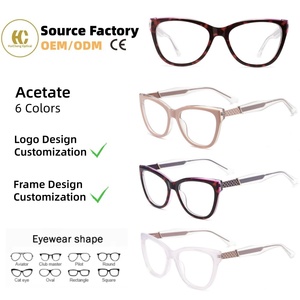
Each frame undergoes 5-axis CNC machining, wire-core temple stabilization, and triple-drum artisan buffing. Designed specifically for prescription glazing adaptability and high comfort standards demanded by Western European buyers.
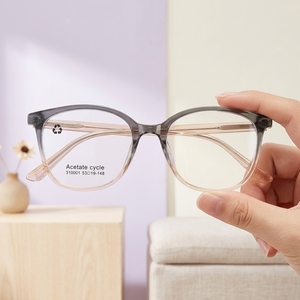
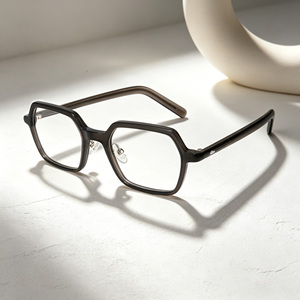
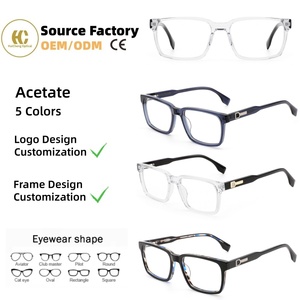
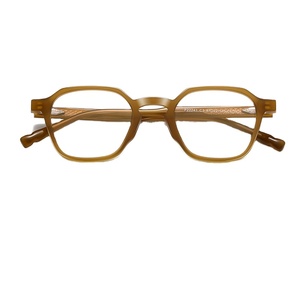
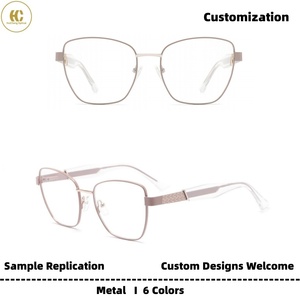
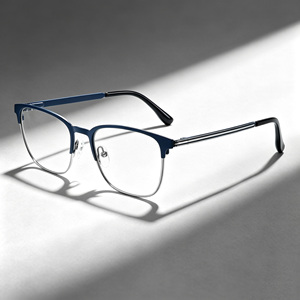
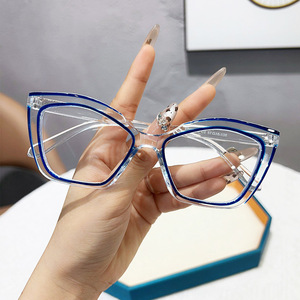
Luxembourg represents one of Europe's most sophisticated and demanding optical consumer bases. Supplying optical stores in Ville Haute, Kirchberg, Esch-sur-Alzette, or Dudelange requires an acute understanding of how frames perform under distinct regional and demographic constraints.
Over 45,000 corporate specialists, legal counsels, and European Union civil servants work under dual-monitor, high-luminance LED conditions in Kirchberg and Cloche d'Or. Retro acetate shapes provide both the stylistic authority required in institutional governance and the rim depth necessary to house intermediate-distance computer lenses.
Independent optometrists lining Grand-Rue and Avenue de la Liberté curate eyewear like horology. Discerning residents seek artisanal "quiet luxury" brands rather than mass-market logo-emblazoned pieces. Our retro frames feature covert internal branding, custom barrel-riveted hinges, and high-luster hand-buffed bevels.
Over 200,000 cross-border workers (Frontaliers) enter Luxembourg daily from France, Belgium, and Germany, alongside an expatriate resident population comprising over 170 nationalities. Optical shops require bridge architectures accommodating widely varied nasal crest heights and pupillary distances (PDs).
In accordance with the Caisse Nationale de Santé (CNS) optical reimbursement guidelines, Luxembourg optometrists frequently glaze high-index 1.67 and 1.74 organic lenses. Our CNC rim grooves are cut to a uniform 1.1mm depth at a 110-degree V-angle, ensuring flush lens mountings and eliminating stress-induced delamination or edge protrusion even on high cylindrical or myopic corrections.
Understanding where Luxembourg's eyewear industry is heading over the 2025–2030 horizon is imperative for procurement managers building scalable brand equity.
Optical frames are Class I Medical Devices within the European Union. Luxembourgish regulatory authorities enforce strict tracing of bio-compatibility, nickel release rates (EN ISO 12870), and raw material origin certificates. Our manufacturing pipeline maintains comprehensive technical documentation ready for EU declaration dossiers.
Luxembourg consumers are among Europe's most environmentally conscious. We produce frames utilizing plasticizer-free bio-cellulose acetate derived from sustainably harvested cotton linters and wood pulp. Certified biodegradable under ISO 14855 conditions without sacrificing structural density or hand polishing gloss.
Market analytics across Benelux indicate an 18% annualized expansion in 1950s Crown Panto, 1960s TV-cut square bevels, and French vintage cat-eye frames. Optical clients embrace nostalgic structural silhouettes updated with hyper-modern lightweight temple engineering and integrated multi-axis flexible hinges.
Because commercial square-footage costs in central Luxembourg City are among the highest in Europe, opticians cannot afford slow-moving inventory. Our OEM/ODM low-MOQ rapid fulfillment model permits retail partners to maintain lean stock holdings and re-order proven bestsellers with guaranteed 30-day production batches.
Since 1985, RTC Eyewear has honed a singularly focused manufacturing ethos: mastering cellulose acetate craftsmanship and industrial-scale precision. We provide turnkey OEM, ODM, and Private Label support for brands scaling their European presence.
Our computer-controlled milling tools execute bridge contours, lens grooves, and rivet recesses within tolerances of ±0.05mm. This guarantees absolute symmetry across production lots, facilitating automated edger lens cutting at your dispensing labs without manual frame reshaping.
A machine achieves exact geometry; hand craftsmanship achieves luxury tactile comfort. Our frames undergo a three-stage 72-hour organic wood-chip and pumice tumbling cycle, followed by master artisan cotton-wheel buffing with water-soluble polishing pastes to produce a rich, deep-luster mirror finish.
We brand your collection exclusively. Services include precision laser etching on the inner temple core, gold/silver foil pad printing, CE / UKCA mark formatting, custom-sized hinge barrel selections, and retail-ready bespoke leatherette cases, microfiber cloths, and branded rigid gift boxes.
Concrete technical, regulatory, and commercial answers addressing customs, minimum quantities, lead times, and quality assurance protocols for trade buyers.
Luxembourg applies the EU Common Customs Tariff (typically around 2.9% to 3.2% for optical frames under HS code 9003.11.00 for plastic/acetate and 9003.19.00 for metal). As an established exporter, RTC Eyewear provides full export documentation including detailed Commercial Invoices, Packing Lists with net/gross weights, and Certificates of Origin. Shipments dispatched via DHL Express, FedEx, or air cargo through Findel Airport (LUX) or via European logistics hubs (Liege/Frankfurt) clear swiftly when paired with your company's EORI number. Furthermore, eyeglasses in Luxembourg benefit from the super-reduced VAT rate of 8% (or applicable statutory healthcare rate) when dispensed with medical prescriptions.
For models drawn directly from our active Clarish™ catalogue (spanning 22 models and 258 curated colourways) with private label temple laser engraving, our introductory MOQ starts at just 100 to 300 pieces per style across mixed color iterations. For fully bespoke OEM developments—where custom technical CAD drawings, proprietary molds, or exclusive acetate laminations are engineered—MOQ typically ranges from 500 to 1,200 pieces depending on sheet procurement minimums and tooling complexity.
Yes. Corrective spectacle frames are classified as Class I Medical Devices under EU Regulation 2017/745 (MDR). Our export collections comply rigorously with harmonized European standards EN ISO 12870:2018 (Ophthalmic optics – Spectacle frames). This encompasses extensive laboratory testing for nickel release compliance (EN 16128), biocompatibility, perspiration resistance (ISO 105-E04), dimensional stability at elevated temperatures, and flame ignition resistance. All shipments carry required CE markings and technical traceability documentation.
We enforce a strict "Sample First, Then Scale" protocol. Once we agree upon the technical blueprint or Clarish™ reference model, we construct physical pre-production prototypes within 10 to 14 business days. These functional prototypes are dispatched via priority air courier directly to your Luxembourg office for hands-on evaluation of bridge fit, material density, flexural spring action, and finish luster. Production tooling and bulk assembly only begin after receiving your signed physical golden sample sign-off.
Standard lead times for private label catalogue orders typically run 30 to 45 business days from sample approval. Complex custom-tooled OEM production batches usually take 50 to 65 business days, accounting for sheet curing, CNC milling, wire-core insertion, 72-hour barrelling, and multi-checkpoint QC. Air freight transit to Luxembourg Airport (LUX) takes approximately 3 to 6 business days, ensuring swift retail catalog seasonal launches.
Whether you are expanding an independent boutique chain across the Grand Duchy, developing a corporate private-label range, or seeking an experienced OEM factory for heritage retro silhouettes, our international export desk is ready to assist with technical specifications, material swatches, and quote models.