

Acetate Blue Cut
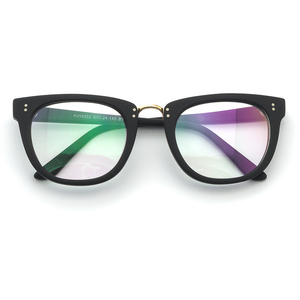
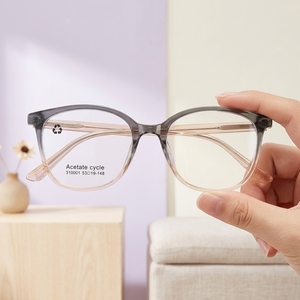
Matte Black Full-Rim Square Acetate Eyewear Frames
- Material: High-Density Cellulose Acetate
- Fit System: Heat Malleable Temples (65°C)
- Target Usage: Corporate Digital Eyewear / Rx
Every chassis featured below is engineered from multi-layered cellulose acetate or composite TR90 memory polymers, featuring 60°C–75°C heat-adjustable thermo-plastic properties and corrosion-resistant wire cores designed for coastal and tropical climates.


Why standard injection-molded eyewear fails across Costa Rica's distinct humidity gradients—from Guanacaste’s dry heat to Limón’s coastal brine—and how thermo-elastic cellulose acetate preserves clinical fit.
For opticians and dispensing optometrists operating within the Greater Metropolitan Area (GAM—San José, Alajuela, Heredia, Cartago) and coastal tourism corridors, ophthalmic frame stability represents a significant clinical liability. Standard injection plastics (such as cheap polyamide or recycled polycarbonate) exhibit rigid polymer crystallization. When subjected to dispensing frame warmers, they either suffer molecular stress cracks or exhibit "elastic memory rebound," reverting to their factory molds within 72 hours under Costa Rica's ambient temperatures and high relative humidity (averaging 75% to 92%).
In contrast, premium cellulose acetate manufactured from pure organic cotton linters and softwood pulp undergoes specialized plasticization with triacetin and diethyl phthalate. This creates an amorphous thermoplastic matrix. When heated using hot air frame warmers or glass bead pans to 65°C – 75°C (149°F – 167°F), the polymer chains unlock smoothly without scorching, bubbling, or releasing toxic fumes. Optometrists can precisely manipulate pantoscopic tilt, temple spread, vertex distance, and temple drop curvature to conform to individual facial ergonomics. Once cooled in water or room temperature air, the re-formed polymer matrix locks securely around an electroplated stainless steel inner core wire, maintaining exact anatomical adjustment permanently.
Controlled glass transition temperature (Tg) between 65°C and 78°C allows chairside modification within 20 seconds. It eliminates frame breakage during high-minus prescription lens cold-snap snapping or warm insertion.
Reinforced with nickel-silver and stainless steel wire cores treated against high saline vapor, preventing internal oxidation and green verdigris staining common in coastal Pacific and Caribbean dispensaries.
Milled directly from cured block sheets rather than spray-coated. Even after extensive beach exposure, sweat contact, or ultrasonic tank cleanings, the surface exhibits zero peeling, flaking, or delamination.
Technical parameters comparing premium block cellulose acetate against common injection alternatives under Central American climatic conditions.
| Performance Characteristic | Cellulose Acetate (Block Cut) | Injection TR90 Polyamide | Standard Molded PC / Acrylic |
|---|---|---|---|
| Heat Adjustment Method | Chairside Warm Air / Beads (65°C) | Cold bend only / Limited heat memory | Cannot adjust; melts or fractures |
| Retention of Optometric Fit | Permanent until reheated | Moderate; relaxes over 30–60 days | Low; rigid spring-back or breaks |
| Sweat & Sebum Resistance | High (Organic non-reactive polymer) | Excellent chemical resistance | Degrades; becomes milky and brittle |
| Surface Polishing Potential | Can be buffed to high luster repeatedly | Cannot buff once scratched | Topical clear coat peels permanently |
| Core Wire Integration | Internal Stainless Steel Wire Core | Rarely cored; relies on polymer rigidity | Uncored brittle solid temple |
| Costa Rica Climatic Durability | Optimal (Humidity & Salt Tolerant) | Good (Lightweight sport segment) | Poor (High warranty return rate) |
An authoritative operational assessment of global manufacturing hubs serving optical buying groups, chain dispensaries, and private brands across Costa Rica and the broader SICA region.
Specialized exclusively in cellulose acetate engineering for over 41 years. RTC combines high-speed 5-axis CNC cutters with 72-hour barrel tumbling and skilled hand wheel buffing. Housing 22 active master tooling profiles across 258 sheet colourways, RTC is a key OEM/ODM manufacturing partner for brands seeking heat-adjustable frames that withstand tropical environments without high-volume barriers.
The global benchmark in raw cellulose acetate flake compounding and sheet extrusion. Mazzucchelli-partnered production facilities offer the highest aesthetic depth and unique block color formulations. Highly favored by luxury optical boutiques in Escazú and Santa Ana, though constrained by longer production lead times and higher raw material investment thresholds.
The high-volume hub of commercial optical manufacturing. Equipped with large-scale automated injection molding and CNC slicing setups, these factories cater to mass institutional tenders and large retail distribution chains across Latin America requiring massive output at aggressive baseline FOB price tiers.
Known for high-end optical frame machining, Henggang factories utilize precision multi-axis Japanese CNC equipment to produce acetate and titanium combination frames. Excellent hinge seat milling and low-tolerance eye-wire grooves ensure straightforward lens dispensing in automated edgers.
Renowned for hand-crafted cellulose acetate and celluloid artistry. Sabae workshops cure their raw materials for extended periods to maximize molecular stability. While their products offer exceptional finish quality, their output is boutique-oriented, commanding premium wholesale costs suitable for selective niche practices.
The historic alpine cradle of European eyewear. Specializes in luxury brand licensing, pantoscopic ergonomics, and premium design development. Cadore factories supply top European fashion conglomerates, supporting private label clients with bespoke styling and sophisticated temple core art engravings.
Deeply rooted in ophthalmic mechanics and ergonomic bridge architecture. French Jura manufacturers excel at keyhole bridge geometries and customized nose-pad distribution, creating acetate frames tailored for narrow bridge profiles and prolonged wear comfort under active daylight.
The optical lens capital of the world, housing integrated assembly factories that pair basic heat-adjustable acetate fronts with entry-level CR-39 and 1.56 index prescription lenses. Well suited for public healthcare programs and high-volume value retail chains looking for pre-assembled bundle supply.
Pioneers in lightweight acetate-steel combination structures and ultra-thin 3.0mm milled acetate profiles. Korean factories provide contemporary, minimalist aesthetics popular among young professional demographics across San José's technology and business centers.
Providing regional distribution and final assembly for Latin America. These facilities import milled front components and execute localized hot-pad branding, final wire core adjustments, and regional fulfillment across Central America, reducing transit transit times down to 7–10 days via air freight.
Operating from Ahmedabad, India since 1985, RTC Eyewear (Rushabh Trading Company) provides an agile alternative to massive conglomerate minimums without sacrificing European-grade acetate tolerances.
For more than four decades, we have engineered one specialized product category: cellulose acetate eyewear. Our cutting speeds, tumbling compounds, and thermal curing protocols are backed by decades of proprietary machine tooling data.
Immediate access to our proprietary Clarish™ collection allows Costa Rican retailers to deploy tested designs rapidly. We offer customized sizing (eye-bridge-temple) tailored specifically to Latin American facial biometric distributions.
Every commercial production run is preceded by fully finished golden samples. Machining tolerances, pad printing clarity, hinge resistance torque, and packaging are client-approved before bulk production begins.
| Manufacturing Stage | Technical Specification at RTC Eyewear | Direct Clinical Advantage to Dispenser |
|---|---|---|
| Raw Sheet Preparation | Controlled kiln baking to stabilize residual moisture <1.8% | Eliminates post-dispensing warping under humid tropical weather |
| CNC Front Milling | Dual-spindle diamond tools cutting at 24,000 RPM (±0.05mm) | Guarantees exact lens groove depth, preventing pop-outs |
| Core Wire Insertion | Hydraulic thermo-insertion at exact temperature thresholds | Temples can be angled repeatedly without core separation |
| Multi-Stage Polishing | 72-hour beechwood & birch pumice tumbling + hand wheel buffing | Deep organic shine that does not require clear-coat lacquering |
| Branding & Markings | High-definition laser engraving & UV-curable metallic pad printing | Resistant to sweat, cosmetic lotions, and ultrasonic solvents |
Navigating the TICA customs system, Ministerio de Salud medical device classifications, and multimodal transit corridors for optical distributors.
Importing ophthalmic goods into Costa Rica requires an understanding of local customs documentation (TICA - Tecnología de Información para el Control Aduanero) and healthcare regulations. Optical frames, classified under HS Code 9003.11 (Plastics / Cellulose Acetate) and 9003.19 (Other Materials), are evaluated by the Dirección de Regulación de Productos de Interés Sanitario under the Ministerio de Salud de Costa Rica.
Ophthalmic frames designed for corrective prescription lenses are categorized under low-risk sanitary standards. RTC Eyewear provides full Certificates of Origin, Material Safety Data Sheets (MSDS), and ISO 12870 test reports to accelerate domestic regulatory filings.
Optical frames are subject to the Derecho Arancelario a la Importación (DAI), typically ranging between 5% and 15%, plus the standard 13% Impuesto sobre el Valor Agregado (IVA). Working with certified customs brokers (Agentes de Aduana) ensures smooth clearance without inventory demurrage.
For urgent replenishment and high-value private label runs, air freight into Juan Santamaría International Airport (SJO) takes 4 to 7 days from dispatch. High-volume container runs utilize direct ocean freight arriving via Puerto Caldera (Pacific) or APM Terminals Moín (Caribbean).
Clear, technical answers to common queries from optometrists, optical boutique chains, and regional wholesale importers.
Costa Rican facial structures represent a diverse range of bridge profiles and temple widths. Off-the-shelf, non-adjustable injection frames slip down the nasal dorsum in warm, humid weather. Heat-adjustable cellulose acetate allows dispensing opticians to soften temples and bridges at 65°C, customizing the pantoscopic angle and vertex distance to eliminate optical aberrations in progressive lenses. Once cooled, the frame maintains its fit indefinitely.
Cheap plastics rely on surface coatings that peel and degrade under equatorial UV indices (often reaching 11–12 in Costa Rica). Our frames are machined from solid, organic cotton-linter cellulose acetate with integrated UV stabilizers. Color is embedded through the entire thickness of the material. Furthermore, our inner core wires are made from electroplated stainless steel or nickel silver, resisting green oxidation from coastal salt mist in regions like Puntarenas and Guanacaste.
Every optical chassis utilizes the international boxing standard in millimeters (Lens Width □ Bridge Width – Temple Length, e.g., 55 □ 18 – 145 mm). For ODM clients, RTC Eyewear regularly modifies temple lengths, broadens bridge dimensions, or deepens the B-measurement (lens height) to accommodate progressive addition lenses (PAL) tailored for your customer base.
Unlike massive conglomerates that demand thousands of units per SKU, RTC Eyewear supports growing regional brands with accessible minimums starting from 300 to 500 units per model, broken down across multiple colorways. Production lead times range from 45 to 60 days following golden sample sign-off, accompanied by complete export documentation.
Yes. We offer complete OEM and private label turnkey manufacturing. This includes high-resolution pad printing on the outer temples, permanent interior laser engraving of your house brand name and sizing format, plus custom-molded hard clamshell cases, embossed microfiber cloths, and retail-ready outer packaging.
Direct factory supply of CNC-machined, heat-adjustable cellulose acetate optical frames. Access our comprehensive export catalog featuring 22 proven chassis models and 258 production acetate colorways.