

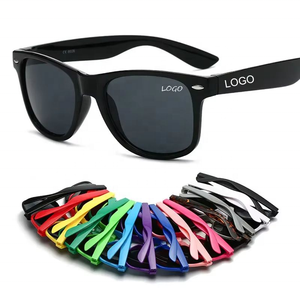
Discover our core export assortment spanning classic silhouettes, bespoke vintage revivals, and high-performance cellulose acetate frames built to ISO 12870 optometric benchmarks.
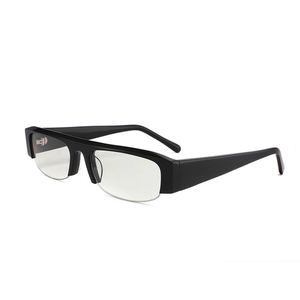
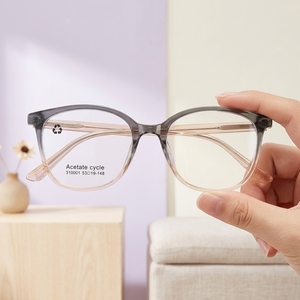
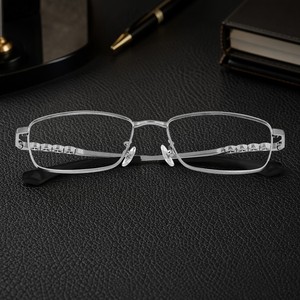
The global luxury optical sector relies fundamentally on two historical paradigms of manufacturing prowess: large-scale, automated precision clusters represented by China's coastal production epicentres (Shenzhen and Wenzhou), and high-heritage, artisanal craftsmanship centralized in France (notably the Jura basin around Oyonnax and Morez). For procurement directors, brand owners, and retail chain distributors, navigating the trade-offs between these manufacturing territories is the primary driver of gross margin, supply chain resilience, and brand equity.
Cat eye frames—historically characterized by upswept outer edges, dramatic brow lines, and complex bridge angles—demand an exceptionally rigorous approach to cellulose acetate sheet curing, multi-axis CNC milling, and hand-mitred hinge stabilization. While a standard rectangular frame allows simplified tool paths, cat eye geometry presents acute shear angles where the temple hinges anchor into the end pieces. Inferior material processing leads directly to frame warping, lens pop-out under thermal cycles, and hinge looseness.
| Technical & Commercial Metric | Top China Production Ecosystem | French Haute Lunetterie Ecosystem | Procurement Strategic Impact |
|---|---|---|---|
| Tooling & Mold Lead Times | 12 to 18 business days (Rapid prototyping via 5-axis CNC) | 45 to 70 business days (Custom handcrafted steel dies) | China delivers 3.5x faster go-to-market speed for seasonal collections. |
| Cellulose Acetate Formulation | Extruded & block-cut plant-based cellulose (4.0mm to 8.0mm) | Cured bio-acetate, heritage colorway batch pours | Both deliver premium tactile density; France specializes in exclusive micro-batches. |
| Tumbling & Polishing Protocol | 72-hour automated wood barrel tumbling + buffing wheels | 96-hour proprietary pumice/beechwood hand barreling | Mechanical luster is identical; French finishing commands higher perceived retail cachet. |
| MOQ Flexibility | 300 – 600 pcs per style / 100 pcs per colourway | 1,200 – 2,500 pcs per style (strict contract minimums) | Chinese manufacturing enables lean inventory and reduced stock obsolescence. |
| Landed Cost Efficiency | High unit margin flexibility; automated assembly cost structure | High labor overheads; luxury provenance premium ("Origine France Garantie") | China enables aggressive retail markups (4x–7x landed cost) in mass-prestige. |
In practice, the modern eyewear enterprise rarely confines itself to a single source. Sophisticated brands implement a dual-track procurement matrix: high-volume core optical collections engineered with tight CNC tolerances in China or specialized Indian industrial corridors (such as our 41-year heritage facilities in Ahmedabad), coupled with limited-edition boutique capsules finished in Europe. This provides an optimized balance between production scalability and luxury market storytelling.
Precision-fitted eyewear must adapt to regional anthropometric characteristics, climate conditions, and consumer lifestyle habits across major geographical markets.
In optical networks across France, Germany, and the UK, cat eye frames serve primarily as high-index prescription optical carriers. Our models incorporate specialized internal bevel grooves (1.2mm depth at a 115° V-profile) that seamlessly house -4.00D to -8.00D lenses without unsightly edge protrusions. The pantoscopic tilt (8° to 10°) is calibrated specifically for progressive and freeform digital lenses.
In sun-intensive zones such as Southern Europe, California, and the GCC region, cat eye acetate sunglasses require maximum face wrap and UV400 absorption. We utilize 6-base and 4-base curved category-3 nylon lenses paired with reinforced 5-barrel and 7-barrel nickel-silver hinges, ensuring dimensional frame stability in ambient temperatures exceeding 42°C.
Standard European nose bridges frequently result in frame slipping and eyelash contact on flatter facial planes. For Far East and Southeast Asian markets, our ODM engineering team introduces extended 12mm built-in acetate nose pads or discreet stainless steel pad arms. This ensures optical vertex distance remains constant at 12mm, maintaining precise optometric alignment.
The global eyewear landscape is currently navigating structural transitions driven by environmental regulation, consumer ergonomics, and automated manufacturing tech. For wholesale procurement professionals, aligning with these movements is imperative:
Traditional cellulose acetate incorporates petroleum-derived DEP (diethyl phthalate) plasticizers. European and North American buyers now demand circular, biodegradable acetate conforming to ISO 14855 standards, where bio-content exceeds 68%. This ensures chemical compliance with REACH Annex XVII and California Proposition 65 without compromising sheet malleability.
Flat 2D cat eye fronts are being replaced by bold 6.0mm to 8.0mm block acetate architectures characterized by steep perimeter bevelling, diamond-cut facets, and faceted interior temple steps. Achieving these aesthetic accents requires multi-axis CNC machines running under controlled cooling fluids to prevent thermal micro-cracking.
In response to rising freight volatility, major eyewear consortiums are implementing dual-hub sourcing. Chinese and Indian facilities supply the structural semi-finished acetate components (front blanks, tumbled temples, core-wire integration), which are subsequently assembled, hand-inspected, and packaged in European freeports for premium branding.
Operating since 1985 in Ahmedabad, India, we bridge the gap between large-scale Asian manufacturing productivity and stringent Western quality standards.
Unlike diversified trading brokers, we have produced one single material category since 1985: cellulose acetate eyewear. Our production team understands curing humidity, sheet shrinkage, and tool rotation tolerances at a microscopic engineering level.
Every frame front, lens eyewire bevel, and hinge mortise is executed via automated CNC machinery. This guarantees that eye sizes (e.g., 54 □ 18 – 145) remain consistent down to ±0.05mm across runs of 500 or 50,000 units.
A CNC machine creates geometrical accuracy; human hands create ergonomic comfort. Every cat eye bridge contour, endpiece taper, and temple ear-curve is finished against rotating cotton and flannel buffing wheels by senior craftsmen.
We eliminate buyer risk through exhaustive prototyping. Pre-production counter-samples are dispatched for mechanical bend-testing, optical lens fitting, and logo verification before raw material sheet cutters are engaged for bulk assembly.
Critical optometric, regulatory, and commercial queries answered by our senior export engineers.