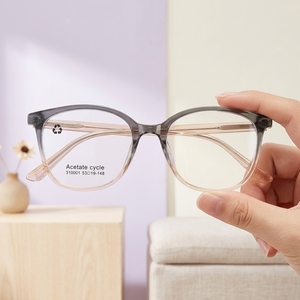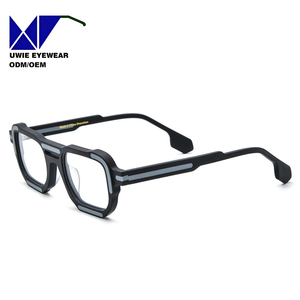
Explore our export-ready wholesale frames engineered from eco-friendly bio-based acetate, high-tensile spring mechanisms, and precision optical components tested for rigorous multi-season durability.
As international sustainability mandates tighten across North America and the European Union, optical manufacturers must move beyond superficial "greenwashing". Modern biodegradable eyewear demands strict chemical traceability, bio-based carbon isotopes, and zero petroleum residue.
Traditional cellulose acetate, despite being partially synthesized from wood pulp or cotton linter, relies heavily on petroleum-based plasticizers—predominantly diethyl phthalate (DEP) or dimethyl phthalate (DMP). These petrochemical additives prevent true biodegradation, leaching synthetic aromatic hydrocarbons that persist indefinitely in soil and aquatic biomes. In contrast, our Chinese manufacturing facilities engineer next-generation Certified Bio-Acetate utilizing 100% bio-based, non-phthalate plasticizers derived from fermented vegetable starches and citric acid esters.
Under international standard ISO 14855-1 (Determination of the ultimate aerobic biodegradability of plastic materials under controlled composting conditions), our biodegradable acetate blocks achieve over 90% organic mineralisation within 115 to 180 days in an industrial composting facility, releasing exclusively carbon dioxide, water, and organic biomass with zero microplastic ecotoxicity. Furthermore, utilizing carbon-14 isotopic analysis under ASTM D6866, our frames consistently demonstrate a renewable bio-based carbon fraction between 68% and 74%.
| Performance & Eco Property | Standard Petroleum Acetate | Bio-Based Recycled Acetate | Certified Biodegradable Bio-Acetate |
|---|---|---|---|
| Base Plasticizer Agent | Phthalate-based (DEP / DMP) | Reprocessed Phthalate Esters | Citric / Triethyl Bio-Plasticizer |
| Aerobic Biodegradation Rate | < 5% after 2 years in soil | < 15% (partial fragmentation) | > 90% within 180 days (ISO 14855) |
| Tensile Strength (MPa) | 48 - 55 MPa | 40 - 46 MPa (weak molecular chains) | 52 - 58 MPa (High-Density CNC Grade) |
| Optical Lab Lens Glazing Fit | Standard Heat Groove | Risk of cold-snap brittleness | Identical thermal rebound & elasticity |
| Microplastic Footprint | Persistent micro-particles | Micro-particles with additives | Zero Synthetic Microplastics |
| Regulatory Compliance | Standard CE / Prop 65 Warnings | CE Optical Device | EN 13432, ASTM D6400, EU 2023/1115 |
Unlike injection-moulded bio-plastics like low-grade PLA (polylactic acid) or castor oil polyamides which lack flexural adjustability, our high-density CNC block-cut biodegradable acetate retains the mechanical density, depth of colour, and warm tactile luxury required by optical boutiques worldwide. Optometrists can effortlessly adjust temple curvature and bridge pantoscopic angles on standard dispensary hot-air blowers without cracking or discolouration.
B2B optical buyers, licensed luxury houses, and volume retail chains must re-align their supplier audits with emerging circular economy mandates and carbon border adjustments.
With the enforcement of the EU Deforestation Regulation (EUDR) and Digital Product Passports (DPP), procurement directors can no longer accept unverified material claims. Eyewear importers require full batch-level certificates of origin detailing non-food crop cellulose sourcing and zero secondary petrochemical blending.
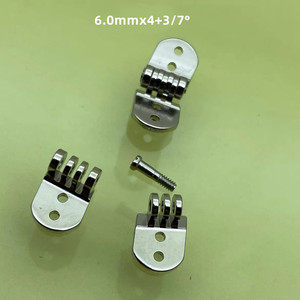
End-of-life recycling demands that metal hinges and core wires separate seamlessly from the organic frame. Future procurement contracts increasingly prioritize friction-locked, glue-free spring hinges and cold-pressed solderless core structures over heat-fused metal pins.
Historical acetate manufacturing relies on acetone tumbling drums and petroleum polishing compounds. Wholesale buyers are pivoting rapidly toward closed-circuit bio-ethanol buffing lines and natural walnut shell tumbling media to eliminate volatile organic compound (VOC) residues.
A truly sustainable frame cannot arrive encased in low-density polyethylene polybags. Global procurement agreements now bundle frames with FSC-certified kraft optical cases, recycled PET microfibre lens cloths, and water-soluble cornstarch master shipping envelopes.
Achieving mechanical perfection with non-petroleum polymers requires specialized cutting feeds, custom thermal curing, and delicate manual craftsmanship.
Bio-acetate sheets undergo 72-hour humidity-controlled thermal stabilization to eliminate internal polymer stresses and prevent future front warpage.
Diamond-tipped cutter heads mill front profiles, precise 4-base to 8-base bevel lens grooves, and interior hinge pockets down to ±0.05mm tolerances.
Custom-patterned metal reinforced core wires are hydraulically shot into heated temples, providing lifelong anatomical adjustability behind the ear.
Frames rotate through coarse beechwood chips, fine walnut granules, and natural carnauba polishing paste to achieve a deep, glass-like hand finish.
Every frame is square-aligned, hinge-friction measured on digital torque gauges, laser-branded, and verified for ISO 12870 bridge stress limits.
Clear, direct answers to technical, commercial, and regulatory questions asked by eyewear buyers, supply chain auditors, and brand founders.
Our bio-acetate frames decompose through aerobic microbial activity. In standard commercial/industrial composting facilities (governed by ISO 14855 / EN 13432), temperatures of 58°C and active enzyme cultures convert the material into water, CO2, and mineralized biomass in under 180 days. Under home compost conditions (20–30°C), mineralization typically completes within 24 to 36 months without generating hazardous leachates or non-degradable microplastics.
Absolutely not. Biodegradation requires specific environmental catalysts: sustained high microbial concentrations, soil moisture, and active thermophilic bacteria. On display shelves, during sea transit, or in daily human contact (sweat, sebum, UV exposure, cosmetic creams), certified bio-acetate exhibits physical stability and tensile longevity equal or superior to traditional petrochemical acetate.
Yes. The thermal softening profile of our bio-acetate mirrors traditional Mazzucchelli-grade acetate sheets. Dispensary lab technicians can warm the frame rims between 50°C and 60°C on standard frame heaters to insert high-index prescription lenses, progressive optics, or tinted sun lenses. The groove memory and cold-retraction grip ensure lenses remain securely seated over years of use.
For every wholesale production run, we supply comprehensive compliance portfolios including: ASTM D6866 bio-based carbon fraction certificates, ISO 14855 biodegradation test reports from independent notified bodies (SGS/TÜV), REACH Annex XVII heavy metal / phthalate-free lab analyses, CE Declarations of Conformity under EU Medical Device Regulation (MDR 2017/745), and US FDA Class I Medical Optical Frame registrations.
For existing catalogue silhouettes (ODM/Private Label), our standard production MOQ begins at 300 pieces per model (divided across up to 3 bespoke colorways). For full bespoke OEM engineering from custom technical drawings or master resin models, MOQ is typically 600 pieces. Physical engineering prototypes are manufactured and dispatched within 7–12 working days; bulk container shipments dispatch in 35–45 days.
Yes. We offer diamond-tip laser engraving, hot-foil metallic pad printing, metal temple logo cast insertion, and clean pad-printing inside the temple. Standard optical boxing measurements (e.g., 54 □ 18 – 145) along with your internal SKU coding, CE markings, and custom country-of-origin labeling are permanently applied according to your brand typography standards.
Partner directly with China's dedicated bio-acetate manufacturing powerhouse. Connect with our senior export optical engineers to discuss material samples, custom colorway matching, technical CAD blueprints, and volume wholesale pricing tiers.