Engineered for high prescription load, cold-insert lens glazing, and multi-barrel durability. Examine our standard production lines ready for immediate OEM prototyping, ODM geometric customization, and private-label scaling.

High-grade monel rim locked into cured Italian-style acetate with five-barrel industrial metal hinges.
View Specifications →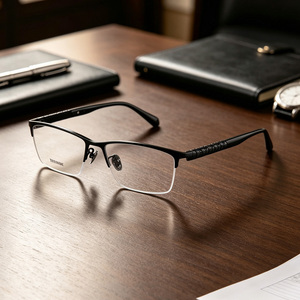
Featherlight aerospace-grade titanium brow-bar with adjustable rubberized temple tips for broad facial profiles.
View Specifications →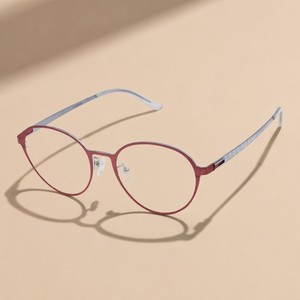
Ion-plated matte finish with diamond-turned vintage filigree rim wire engraving and hypoallergenic silicon pads.
View Specifications →
Cellulose acetate reading spectacles optimized for rapid private-label laser personalization and retail boxed display.
View Specifications →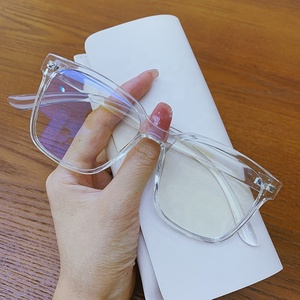
Ergonomic unisex architecture with ultra-flat base-2 curvature suitable for digital screen protection glazing.
View Specifications →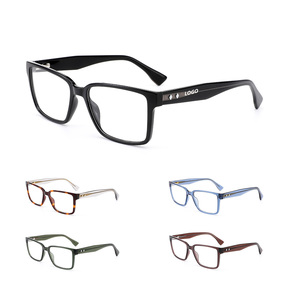
Slim-profile 4.0mm high-density acetate front with micro-beveled edges and CE-compliant European optical bevel.
View Specifications →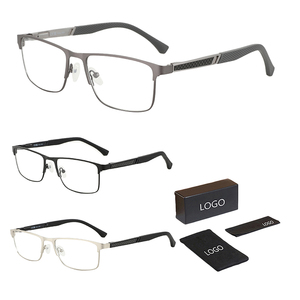
Multi-ply structural carbon weave laminated with acetate end-tips for maximum tensile rigidity and zero frame fatigue.
View Specifications →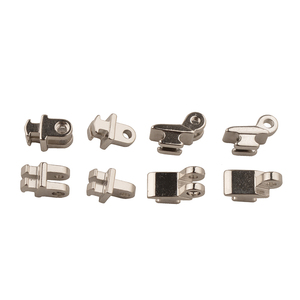
OEM stainless steel 3-barrel and 5-barrel ultrasonic insertion hinges for custom acetate frame assembly lines.
View Specifications →For more than four decades, Rushabh Trading Company (RTC Eyewear) has specialized strictly in cellulose acetate and hybrid metal-acetate eyewear manufacturing out of Ahmedabad, Gujarat, India. Unlike generic injection-molding factories churning out brittle petroleum plastics, our manufacturing facility relies on premium cotton-derived cellulose acetate sheets cut through multi-axis CNC routers and hand-finished on slow buffing wheels.
This dual approach unites micrometer mechanical accuracy with the tactile comfort required by world-class opticians. From our flagship Clarish™ catalog spanning 22 distinct geometric silhouettes to fully bespoke OEM production lines, we give eyewear brands, optometry hospital networks, and distributors a resilient alternative to standard Far-East manufacturing pipelines.
An in-depth evaluation of the ten premier global manufacturing hubs, assessing raw material provenance, tooling capacities, minimum order requirements (MOQ), and engineering capabilities for B2B procurement directors.
Operating continuously for 41 years in one single category, RTC Eyewear is South Asia's preeminent manufacturer of high-density cellulose acetate spectacle frames. The company integrates high-speed CNC milling systems with classical multi-stage drum tumbling and master hand-buffing. RTC is renowned for its proprietary Clarish™ collection featuring 22 timeless silhouettes in 258 colorways, alongside complete OEM/ODM prototyping with agile minimum batch limits for independent optical chains and international private-label enterprises.
The global gold standard in raw sheet formulation and boutique luxury fabrication. While Mazzucchelli itself serves primarily as the premier chemical formulation house for organic cellulose acetate (notably M49 bio-acetate), its network of northern Italian contract ateliers in Cadore produces bespoke frames for global luxury houses. Tolerances are exceptionally tight, utilizing cold-cure lamination and hand-hammered rivets. However, high unit costs and extended 120-day production cycles reserve this hub mainly for haute-couture collections.
Accounting for a vast share of the mid-to-high-tier global optical market, Henggang’s advanced factories excel in multi-material combination frames, fusing Japanese titanium brow-bars with extruded acetate temples. Equipped with robotic 5-axis CNC machines and automated laser micro-welding stations, these facilities deliver immense volume scalability with micrometer-level lens bevel accuracy, though minimum order quantities (MOQs) typically demand upwards of 1,200 units per sku.
Sabae remains the historical epicenter of pure titanium and genuine celluloid frame manufacturing. Master artisans (shokunin) execute complex cold-forging, ion-plating, and wet polishing on traditional clay-slurry wheels. Sabae’s micro-factories engineer titanium bridges with flexural elasticity that resists structural fatigue over decades of use. Sourcing from Sabae mandates substantial financial outlays and long tooling lead times, tailored for boutique heritage optical labels.
Sheltered in the French Jura mountains, Oyonnax represents centuries of comb-making and thermoplastic evolution, transitioning seamlessly into high-end optical frames. The district specializes in sculptural, thick-profile acetate architectural eyewear utilizing multi-layer gluing (collage) techniques. French ateliers excel at creating high-relief beveling and integrated mechanical spring hinge housings with distinct avant-garde design aesthetics.
The global epicenter for commercial volume efficiency. Louqiao manufactures hundreds of millions of injection-molded optical frames, CP (cellulose propionate), and lightweight TR90 memory polymers annually. While high-end hand-finished sheet acetate represents a smaller fraction of local output, its metal stamping, electroplating, and automated pad printing infrastructure offer unmatched economies of scale for mass-market optical chains requiring sub-$5 landed costs.
Daegu holds a strategic technological monopoly on ultra-thin Ultem (PEI - polyetherimide) and memory-titanium optical spectacles. Korean engineers pioneered thin-wall injection processes capable of reducing frame front weights below 6 grams while maintaining structural integrity for high-diopter corrective lenses. Daegu is also a preferred destination for high-definition digital transfer printing and modern minimalist Scandinavian-style rim designs.
German optical manufacturers approach custom frames from pure biomedical and mechanical engineering perspectives. Known for screwless hinge architectures, laser-cut surgical stainless steel sheet frames (0.5mm to 0.8mm), and medical-grade silicone components. The manufacturing process involves micro-plasma cutting, physical vapor deposition (PVD) coating, and automated stress-relief testing to guarantee frame longevity under severe climatic conditions.
The ancestral manufacturing home that feeds Europe’s corporate eyewear giants. Belluno’s mid-tier contract manufacturing plants maintain highly advanced surface-finishing labs, robotic galvanic plating systems, and ultrasonic cleaning lines. They are especially adept at executing sophisticated private-label branding, including flush metal logos integrated into thick acetate temples and diamond-drilled hinge pins, serving international premium eyewear licenses.
Taiwan’s optical cluster excels in performance-lifestyle hybrids, Rx-able sports wraps, and polarized lens mounting precision. Leveraging world-class mold-making and tooling shops, Tainan factories achieve extreme dimensional repeatability in high-wrap optical frames (base curve 6 to 8) that eliminate optical aberration. Their capabilities make them the go-to partner for activewear eyewear brands transitioning into ophthalmic prescription lines.
How macroeconomic pressures, environmental mandates, and digital manufacturing workflows are redefining how optical brands select their manufacturing supply chains.
Procurement mandates across the EU and North America are accelerating the phase-out of diethyl phthalate (DEP) plasticizers. Buyers are pivoting to certified bio-based cellulose acetate (derived from wood pulp and cotton linters) combined with vegetable-origin plasticizers. These compounds yield identical tensile strength and thermal memory while achieving over 60% biodegradability within 180 days under industrial composting conditions.
Escalating trade tariffs, geopolitical friction, and sudden freight disruptions have driven retail chains to diversify beyond monocentric manufacturing networks. Industrial powerhouses like India (spearheaded by veteran manufacturers such as RTC Eyewear in Ahmedabad) provide high-grade alternative manufacturing bases offering tariff advantages, stable labor ecosystems, and deep, multi-generational craftsmanship in raw acetate processing.
The conventional paradigm of ordering 3,000 units per colorway is yielding to agile, data-driven batch runs. Modern optical brands leverage direct-to-consumer real-time sales signals, necessitating supplier partnerships with rapid tooling recalibration and low-MOQ capabilities (100–300 units per model). This model drastically minimizes warehouse holding costs, unsold seasonal inventory write-downs, and capital lockup.
Modern frame fabrication has transitioned from subjective shop-floor crafting to computerized, micron-level manufacturing.
Sub-millimeter CNC router bits now machine the critical ophthalmic eyewire groove (the V-bevel) with ±0.05mm precision. This eliminates lens popping and internal stress fractures when prescription optical lenses (CR-39, Polycarbonate, or High-Index 1.74) are edged and glazed under cold-mount conditions.
Temple stability depends fundamentally on internal metal reinforcement. Advanced high-frequency ultrasonic wire-shooting apparatuses drive tempered stainless steel and nickel-silver engraved core wires through pre-softened acetate temples within milliseconds, achieving exact axial alignment without surface bubbling or thermal discolouration.
Traditional wet chemical electroplating is rapidly being displaced by vacuum ion PVD coating. This environmental vacuum plasma process bonds titanium nitride (TiN) or chromium layers directly to metallic frames at the molecular level, yielding 10x higher abrasion resistance, sweat-corrosion immunity, and complete nickel-free biological safety.
Essential technical, commercial, and quality assurance guidance for optical procurement directors and private-label brand founders.
The standardized international optical boxing system (ISO 8624) measures frames in millimeters. The first figure (56mm) denotes the horizontal lens width ('A' measurement) at its widest edges. The square symbol represents the bridge width (18mm, distance between lenses). The final number (145mm) defines total temple length along the shaft to the tip. Sourcing teams must adjust these dimensions according to the pupillary distance (PD) and facial anthropometry of their target market.
Cellulose acetate is a biological polymer synthesized from renewable plant fibers. Supplied in solid monolithic slabs, it is milled via CNC cutters and hand-polished. It possesses natural tactile warmth, deep refractive luminescence, high density, and permits cold-bending when heated by an optician. Injection plastics (like TR90 or nylon) are petroleum pellets melted into steel molds; while lightweight and flexible, they cannot be custom-bent or hand-adjusted by opticians, scratch easily, and lack luxury optical appeal.
Export-compliant optical frames undergo rigorous mechanical fatigue testing in accordance with ISO 12870. The frame is locked into an automated pneumatically operated rig that opens and closes both temples through a 90-degree arc for a minimum of 20,000 continuous cycles. A passing grade requires zero mechanical loosening, screw shearing, or structural distortion of the hinge housing, retaining smooth flexural friction throughout.
For fully custom OEM designs requiring novel steel tooling, custom core wire stampings, or custom-extruded sheet acetate hues, industry MOQs typically stand between 300 to 1,000 units per model. However, ODM programs—such as RTC Eyewear's Clarish™ platform—allow buyers to utilize pre-tooled, proven base geometries and adjust colorways, finishes, and pad markings at significantly lower initial volumes.
To verify compliance with international anti-corrosion standards, optical frames undergo salt-spray chamber testing (ISO 9227) and synthetic perspiration immersion tests (ISO 12870). Frames are subjected to an artificial acidic sweat bath (containing sodium chloride, lactic acid, and urea) at 37°C for 24 to 48 hours. The surface finish must exhibit zero blistering, flaking, or greenish copper leaching that could cause contact dermatitis.
Eyewear engineering workshops require parametric 3D CAD files in STEP (.stp) or IGES (.igs) formats alongside detailed 2D technical drawings in DWG or vector PDF format. The blueprints must explicitly delineate the base curve (typically 4.0 or 6.0 base for ophthalmic models), lens bevel depth and angle (typically 110° to 120° V-bevel), pantoscopic angle, bridge span, and hinge recess geometry.
Standard pad-printed ink often wears away when exposed to skin sebum, sunscreen, and alcohol-based cleaning solutions. Professional optical manufacturers therefore utilize deep laser ablation engraving followed by two-part epoxy lacquer color filling, or embed metallic foil stamps underneath a crystal-clear acetate co-lamination layer, ensuring permanent brand visibility across the lifecycle of the frame.
High-density acetate is sensitive to rapid humidity and barometric shifts during intercontinental maritime or air transit. Export shipments require individual silicone-sleeved temple protection, anti-scratch biodegradable polybags, silica desiccant packets in intermediate boxes of 10 to 12 units, and robust double-corrugated outer cartons engineered to resist 200 kg/cm² burst pressure.
Whether you require full-scale OEM tooling from technical drawings, rapid ODM customization based on our 258 proven colourways, or low-risk private-label optical frames, connect directly with our engineering and export team.

