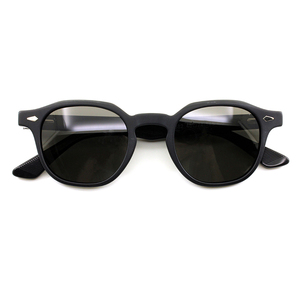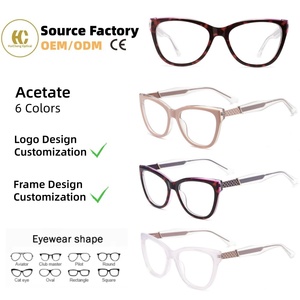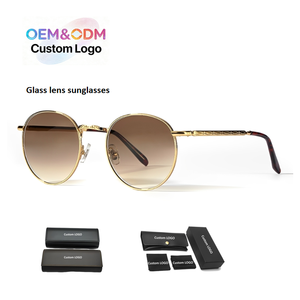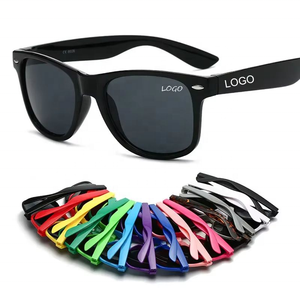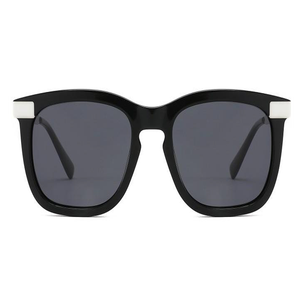
YIGOU Retro Square Frame Optical Reading Glasses
Prescription-ready flat lens profile, hand-carved cellulose acetate with reinforced core-wire. Optimized for progressive reading powers across all American facial contours.
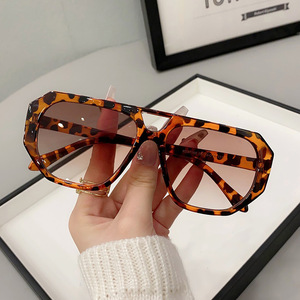
Explore our high-demand private-label silhouettes, engineered specifically to match the anatomical nasal bridge measurements, temple tension specifications, and optical laboratory glazing tolerances of United States retail buyers.
Prescription-ready flat lens profile, hand-carved cellulose acetate with reinforced core-wire. Optimized for progressive reading powers across all American facial contours.
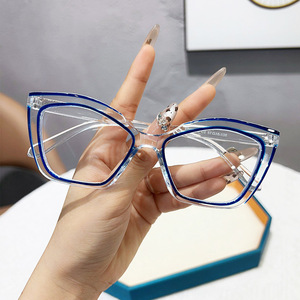
Californian coastal lifestyle profile. Category 3 glare attenuation, high-definition TAC lenses, calibrated barrel curve, and anti-slip temple ergonomics.
Minimalist metropolitan aesthetic tailored for independent optometry networks. Standard 115° V-bevel beveling facilitates automatic lab lens edging.
Ultra-premium frameless structural design. Precision diamond-faceted lens edging, nickel-free titanium temple arms, and impact-resistant shatterproof TAC optics.
Engineered with high-tensile riveted German-style five-barrel hinges. Structural longevity designed for harsh US commercial prescription turnaround environments.
High-clarity organic bio-cellulose transparency. Showcases intricate internal wire-core engraving and micro-slingshot spring hinges for flexible temple adjustment.
Classic round wire-rim architecture with hand-inlaid acetate wind-shields. Meets 100% ANSI Z80.3 UV blocking and drop-ball shatter resistance mandates.
Hand-burnished warm tortoiseshell sheet stock. Ready for corporate private-label pad printing, laser temple branding, and custom US retail gift packaging sets.
Founded in 1985 in Ahmedabad, India, Rushabh Trading Company (RTC Eyewear) operates as a vertically integrated OEM & ODM production facility specializing exclusively in hand-finished cellulose acetate frames, eliminating supply chain intermediaries for American brands.
We execute front cutouts, eye-rim curvature, and lens bevel groves utilizing ultra-tight tolerance CNC milling cutters calibrated within ±0.05mm to guarantee instant lens fitting at American optical labs.
Unlike cheap injected plastics with superficial varnish, our solid acetate parts undergo 3-stage mechanical tumbling with graded beechwood chips, pumice, and plant waxes to create a deep, permanent crystalline polish.
Indian manufacturing provides strategic fiscal defense for US eyewear brands. Goods imported from our facility are exempt from punitive China Section 301 tariffs (List 3/4A up to 25%), protecting healthy gross margins.
Every batch shipped to the United States undergoes strict in-factory destructive and non-destructive evaluations, meeting FDA 21 CFR 801.410, ANSI Z80.3, and California Proposition 65 phthalate standards.
Succeeding in the diverse US retail landscape requires architectural and dimensional adjustments tailored to specific consumer demographics, optical business models, and climate profiles across North America.
High-end private practices from Manhattan to Seattle demand robust, heat-adjustable cellulose acetate with custom wire cores. Opticians prioritize frames that endure repeated warm-air bead pan adjustments for temple splay, pantoscopic tilt (8°–12°), and bridge reshaping without stress crazing.
High UV index regions require broad orbital coverage and thermal stability. Our sun categories incorporate Category 3 polarizing filters with anti-reflective back coatings and oleophobic sealants that resist salt spray, high humidity, and extreme thermal cycling inside automotive glove compartments.
Direct-to-consumer innovators require low initial MOQs per colorway, serialized SKU barcode integration, and universal 'Alternative Fit' geometries (widened pad bridges, lowered apex) to accommodate the melting-pot demographics of major US metropolitan hubs.
Navigating the United States eyewear regulatory framework requires comprehensive technical due diligence across Federal agencies, state-level environmental mandates, and changing consumer expectations.
Under US Federal law, all sunglass and optical spectacle lenses must pass the Impact Resistance Drop-Ball Test: a 5/8-inch steel ball weighing approximately 0.56 ounces dropped freely from a height of 50 inches onto the horizontal upper surface of the lens without fracturing.
Specifies optical quality, refractive power tolerances, prismatic imbalance (≤ 0.25 prism diopters), and strict ultraviolet transmittance limits. For US general-purpose sunglasses, UVA (315–380nm) transmittance must not exceed visual light transmittance, and UVB (290–315nm) must remain below 1%.
Demands total elimination of restricted plasticizers (such as DEP/DOP) and heavy metal colorants. Our factory utilizes certified eco-friendly bio-based cellulose acetate (cotton linter & sustainably harvested wood pulp) formulated with non-toxic bio-plasticizers to grant complete Prop 65 warning exemption.
| Evaluation Parameter | Typical Injected Plastics (PC / TR-90) | RTC Cellulose Acetate (India OEM) | US Market Strategic Advantage |
|---|---|---|---|
| Optical Lab Adjustability | Poor; snaps or shrinks under heat gun | Exceptional; softens smoothly at 55°C–65°C | Crucial for independent optician dispensing and custom fitting. |
| Color Depth & Finish | Surface spray coating; peels and chips | Solid sheet formulation; 3D depth of tone | Positions frames in the lucrative $180–$350 US boutique price tier. |
| Custom Wire Core Reinforcement | Rare or non-functional molding | Custom stamped electroplated German core wire | Allows customized temple bending behind the ear without rebound. |
| Tariff & Duty Liability | Subject to 25% Section 301 China Tariffs | Standard MFN Duty (Exempt from Section 301) | Immediate 20%–25% landed cost savings on US customs declarations. |
| Eco-Conscious Credentials | Fossil-fuel petroleum polymers | Plant-derived renewable cotton & wood pulp | Aligns with US consumer shifts toward certified sustainable luxury. |
From initial 2D vector CAD files to containerized delivery at US logistics hubs, our engineering process protects your design copyright, budget parameters, and seasonal launch calendar.
Technical drawings rendered with boxing system specs (A/B size, DBL, temple length, face pantoscopic angle).
Functional physical samples machined and hand-assembled for tactile fit, balance, and temple tension verification.
Sheet blank baking, 5-axis front & temple carving, wire-core shooting, and hydraulic hinge setting.
72-hour automated wood chip barrel smoothing followed by artisanal rag-wheel edge polishing.
Drop-ball impact validation, laser branding, barcode labeling, and consolidated air/sea freight to the USA.
Essential answers for sourcing directors, brand managers, and optical chain buyers evaluating OEM and private-label manufacturing partnerships with our factory.
Optical prescription frames are classified by the US FDA as Class I medical devices. We maintain active FDA Foreign Medical Device Establishment Registration, assign Device Listing numbers, and supply full impact drop-ball batch certification (21 CFR 801.410) alongside every commercial customs invoice.
For custom bespoke tooling (OEM from your technical drawings), our baseline MOQ starts at 300 pieces per frame silhouette, split across 2 to 3 acetate colorways (approx. 100 pcs/color). For private-label programs utilizing our in-catalog Clarish™ library (22 models, 258 colorways), MOQs can be negotiated down to 100 pieces per SKU.
Yes. All temples and demo lenses are precision laser-engraved or hot-stamped according to standard US optical boxing designations (e.g., [54 □ 18 – 145]), along with your registered brand mark, collection name, and mandatory country of origin declarations ("Made in India") compliant with US CBP rules.
Prototyping and sample validation are finalized within 14 to 21 business days from CAD signoff. Bulk production runs require 45 to 60 days depending on raw sheet stock curing cycles. We coordinate express air dispatch (3–5 days to LAX/JFK) or sea container freight (24–30 days to East/West coast ports).
Yes. We specifically procure virgin cellulose acetate flakes formulated with bio-compatible triacetin and alternative non-phthalate plasticizers. Independent chemical laboratory screening guarantees non-detectable levels of DEP, DINP, lead, and cadmium, avoiding the need for warning labels in California.
Yes. We engineer complete point-of-sale packages including debossed vegan leather hard cases, branded microfiber cleaning cloths (200–250 GSM), rigid magnetic gift boxes, warranty booklets, and optical retail SKU barcode hangtags formatted for easy inventory scanning.
Speak directly with our export engineering team. Submit your CAD vectors, reference physical frames, or select from our 258+ Clarish™ production colorways to receive itemized DDP costing for your upcoming North American retail collection.