

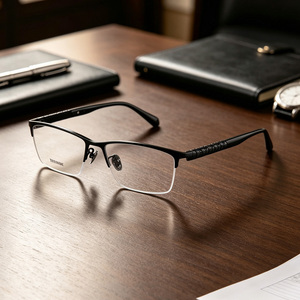
Rectangle Titanium Half-Frame with High-Density Acetate Temples
Hypoallergenic beta-titanium chassis mated with hand-tumbled cured cellulose temple tips.
Engineered to strict dimensional tolerances, multi-axis beveling standards, and calibrated temple tension for high-end optical dispensary chains across the Kanto metropolitan territory.
Hypoallergenic beta-titanium chassis mated with hand-tumbled cured cellulose temple tips.
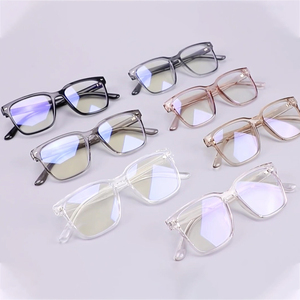
Engineered for digital corporate ergonomics across Marunouchi executive environments.

Featuring five-barrel custom pinned hinges and internal structural rim locks.
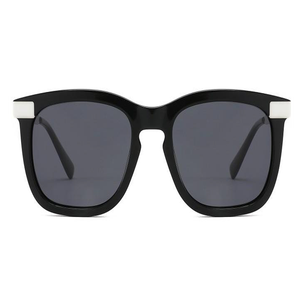
Flat-lens profile with lab-optimized V-grooves for progressive ophthalmic surfacing.

Luxury beveled edged optics paired with integrated micro-machined bridge mountings.
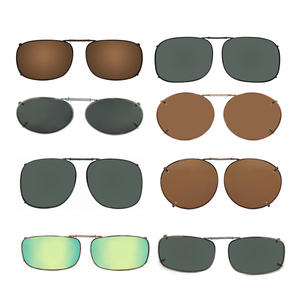
Instant UV400 glare conversion engineered for acetate optical chassis adaptability.
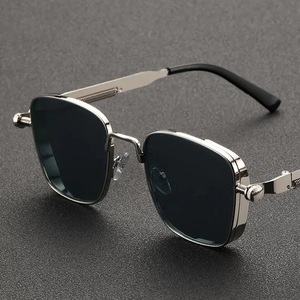
Industrial-inspired rim construction developed for designer Harajuku streetwear drops.
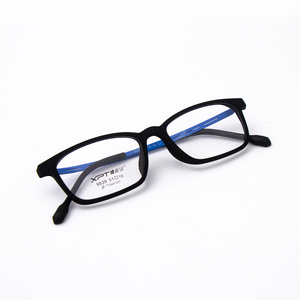
Balanced weight distribution targeting all-day professional wear without slippage.
Decoding anatomical geometry, material curing dynamics, and why Tokyo's discerning optical clientele demands zero-tolerance structural execution.
In the global luxury eyewear arena, supplying the Tokyo optical market—spanning luxury boutique enclaves in Ginza, Omotesando, and Daikanyama—requires transcending conventional mass-manufacturing paradigms. Round acetate eyewear, universally acknowledged as a pillar of intellectual elegance and heritage styling, poses unique industrial challenges. The circular geometry immediately exposes even fractional milling asymmetries to the naked eye. In contrast to angular silhouettes where chamfers hide minor anomalies, round eyewire grooves must demonstrate concentric balance down to ±0.03mm. Without this precision, optical glazing labs encounter lens rotation, stress fracturing under ambient temperature shifts, and cylinder misalignment on high-refraction toric prescriptions.
At our specialized manufacturing centers, the realization of superior round acetate eyewear begins with cured cellulose acetate slabs, derived from natural cotton linters and organic wood pulp plasticized with specialized eco-friendly additives. Unlike cheap injection-molded plastics (such as polycarbonate or common co-polyesters) that suffer from internal structural memory degradation and surface peel, block-milled cellulose acetate delivers uncompromised chromatic saturation and structural integrity. Every acetate sheet undergoes a mandatory 90-day temperature- and humidity-controlled kiln aging cycle. This desiccation and curing process extracts volatile residual solvents, permanently preventing post-manufacturing warpage, shrinkage, and asymmetric curvature shifts when frames are subjected to Japan's humid summers and cold, dry winters.
| Performance Characteristic | Cured Cellulose Acetate (RTC Engineering) | Commercial Injection Plastic (PC / TR90) | Crucial Impact on Tokyo Retailers |
|---|---|---|---|
| Color Layering & Depth | Full material cross-section depth; custom lamination & tortoiseshell marbling. | Surface-level spray paint or dip coating prone to delamination. | Resists wear from skin oils; retains showroom gloss throughout multi-year lifecycles. |
| Thermal Adjustability | Softens predictably at 55°C–65°C via optician bench heaters; retains setting. | Extremely high thermal memory; snaps back or cracks under bending load. | Enables dispensaries to customize temple bends to individual facial contours without frame breakage. |
| Polishing & Refinishing | Can be mechanically re-buffed to showroom gloss repeatedly over decades. | Cannot be buffed; heat or friction melts resin coatings. | Allows Tokyo independent vintage and luxury shops to offer long-term frame restoration services. |
| Tactile Weight & Resonance | Dense, balanced acoustic resonance (1.28–1.32 g/cm³), silky skin touch. | Hollow, lightweight, plasticky feel with static dust accumulation. | Immediately communicates substantial luxury heft during consumer in-hand trial evaluations. |
Bridging classic European aesthetic balance with precise East Asian craniofacial metrics (Low Bridge Fit & Reduced Pantoscopic Tilt).
Within formal banking, legal, and luxury retail boardrooms in Chuo City, round acetate frames in muted Havana, deep espresso, and crystal-core black communicate scholarly sophistication. Paired with custom wire-core engraving and slim 4.0mm rim cross-sections, these silhouettes provide unpretentious dignity for formal corporate attire.
Creative directors, architects, and media innovators gravitate toward bold 6.0mm to 8.0mm hand-beveled circular fronts. Transparent champagne, smoky sage, and multi-laminate horn effects dominate these creative districts. Our multi-axis CNC machines bevel frame edges at 45 degrees, capturing ambient light across art gallery and studio spaces.
Tokyo's metropolitan train networks require frames that resist inertial slipping during high-pace walking and transitions between air-conditioned transit cars and humid open air. Integrated 3D-sculpted nose pads with widened splay angles distribute weight evenly across the nasal bridge, eliminating focal pressure and skin indentation.
Emerging commercial preferences that brand managers, purchasing directors, and private label importers must anticipate.
Tokyo consumers are increasingly prioritizing eco-conscious craftsmanship. We offer 100% bio-degradable cellulose acetate formulations, substituting petrochemical diethyl phthalate plasticizers with bio-derived alternatives, meeting strict Japanese green procurement protocols without sacrificing tensile rigidity.
Monolithic acetate frames are sharing market share with titanium-acetate hybrids. By integrating beta-titanium bridges and filigreed end-pieces into machined round acetate eyewires, our OEM processes reduce overall frame weight down to 14.5 grams while retaining bold retro styling.
Rather than ordering 5,000 units of a single SKU, modern Japanese eyewear brands deploy agile, hyper-curated seasonal capsules (150-300 units per colorway across 4 unique silhouettes). Our flexible multi-axis CNC tooling configuration is structured explicitly to support this rapid-iteration model.
How our integrated factory infrastructure ensures uncompromising repeatable quality for international trade buyers.
Raw sheets are cured and dehydrated in clean chambers to eliminate internal moisture and residual solvents, preventing warpage.
Multi-axis CNC mills cut the eye rims, nose bridges, and lens retention V-grooves to precise ±0.03mm tolerances.
Stainless steel or beta-titanium wire cores are heated and shot precisely down the center of each acetate temple shaft.
Frames undergo 72 hours of three-stage tumbling in beechwood chips and pumice paste to achieve uniform surface leveling.
Master polishers wheel-buff each frame to a mirror gloss, align hinges, and run optical bench calibration tests.
Transparent commercial, operational, and regulatory clarity for trading partners and optical retail chains.
We build our tooling specifically around East Asian cranial anthropometrics. This includes building raised, hand-welded 11mm–13mm acetate nose pads or integrating titanium micro-adjustable pad arms. Additionally, we decrease pantoscopic tilt from the Western standard of 10°–12° down to 6°–8°, ensuring the lower rims do not touch cheekbones when wearers smile or speak.
For custom ODM development utilizing our established base toolings, our typical minimum order is 300 units per model, split across up to 3 distinct acetate colorways (100 units/color). For full bespoke OEM programs requiring custom CNC cut files, custom-extruded acetate blocks, and branded metal wire cores, production runs generally start at 600 units per style.
Yes. Our turnkey private label supply chain handles the design, pad-printing, and foil-stamping of brand logos, CE/JIS technical compliance marking on inner temples, JIS-compliant lens quality hangtags, barcoded outer master cartons, branded microfiber cleaning textiles, and bespoke presentation clamshell cases configured for Japanese retail presentation standards.
Initial physical prototypes are machined and hand-finished within 14 to 21 working days. Upon counter-sample approval, bulk mass production typically requires 45 to 60 days. Air-freight logistics directly into Narita (NRT) or Haneda (HND) airports generally requires an additional 3 to 5 business days, complete with compliant commercial invoices, packing lists, and Certificates of Origin.
Rushabh Trading Company (RTC Eyewear) provides established global brand owners and optical boutiques with deep industrial mastery, transparent accountability, and trade-only dedication.
Since 1985, our manufacturing floors have concentrated exclusively on cellulose acetate and precision optical mechanics. We do not dilute our tooling expertise or labor force with unrelated lifestyle merchandise.
Zero bulk raw materials are loaded into production until physical, touch-verified pre-production approval samples have received unconditional written sign-off from your Tokyo merchandising directors.
We do not operate consumer direct-to-consumer websites or market competing private brands. Every ounce of our engineering resources is dedicated solely to elevating the commercial equity of our B2B partners.
Full support for Japanese customs clearing, including bilingual technical documentation, Harmonized Tariff System (HTS) verification, and tailored palletized air-cargo shipping frameworks directly into Tokyo distribution hubs.
Whether you require physical prototype verification for an upcoming seasonal collection, customized low-bridge round acetate samples, or private label manufacturing support, our engineering team is ready to evaluate your specifications.