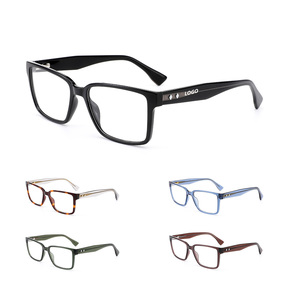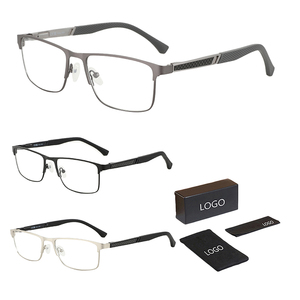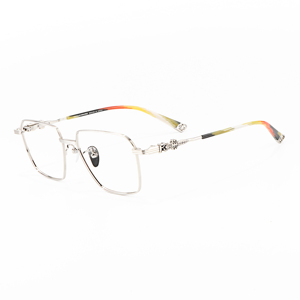
Strategic B2B procurement whitepaper, comparative production audits, sub-zero engineering standards, and complete private label supply chains for Russian optics chains.
Precision CNC-milled cellulose acetate, pure aerospace titanium, memory carbon fiber, and multi-barrel reinforced hinges crafted for cold resistance and extreme optical stability.
Evaluating manufacturing hubs across India, China, Italy, and Eastern Europe based on EAC certification speed, minimum order quantity flexibility, thermal resilience, and logistics efficiency.
| Manufacturer / Ecosystem Hub | Origin Core | Specialty Materials | Direct EAC & Ruble Settlement | MOQ & Sampling Cycle | Resilience Rating (-30°C to +40°C) |
|---|---|---|---|---|---|
| 1. Rushabh Trading Company (RTC Eyewear) | Ahmedabad, India | Cellulose Acetate, Beta-Titanium, Bio-Acetate | Direct Rupee-Ruble / Full EAC Certification | Flexible 300-500 pcs / 14-day Rapid Prototype | Exceptional (High Plasticizer Retaining Core) |
| 2. Wenzhou Ouhai Optical Group | Zhejiang, China | Injected TR90, Monel, Basic Acetate | Cross-Border RMB Channel | High MOQ (1,200 pcs per sku) / 30-45 days | Moderate (Standard Plasticizers Prone to Cold Snaps) |
| 3. Danyang Grand Optical Co. | Jiangsu, China | Stainless Steel, Memory Metal, CR-39 Lenses | VTB Shanghai Clearing | 800 pcs / 25-35 days | Good (Metal Hinges Require Specialized Lubricants) |
| 4. Shenzhen Premium Eyewear Precision | Shenzhen, China | CNC High-End Acetate, Titanium Plate | Third-party Agency Clearance | 500 pcs / 30 days | High (High Precision, Higher Price Point) |
| 5. Safilo Group Contract Division | Padua, Italy | High-Fashion Acetate, Metal Alloys | Constrained Logistics / Currency Delays | 1,500 pcs / 60-90 days | Very High (Luxury Fit, Limited Direct Access) |
| 6. Marcolin Manufacturing Outposts | Longarone, Italy | Eco-Acetate, Designer Silhouettes | Third-country Re-export Logistics | 2,000 pcs / 90 days | High (Premium Ergonomics, Extreme Lead Times) |
| 7. Xiamen Sunrise Eyewear Industrial | Fujian, China | Sports Wrap Optics, Polarized Sun Frames | Direct Bank-to-Bank RMB | 1,000 pcs / 40 days | Moderate (High Sun Focus, Lower Prescription Breadth) |
| 8. Indian Optic Craft Guild (RTC Allied) | Gujarat, India | Hand-Finished Castings, Vintage Engraved Metals | Bilateral INSTC / Direct Settlement | 300 pcs / 20 days | Very High (Hand-buffed Mechanical Polish) |
| 9. Belluno Optical Artisan Consortium | Veneto, Italy | Handmade Horn, Premium Titanium Sheet | Indirect Transit Channels | 200 pcs (Ultra Luxury) / 75 days | High (Niche Boutique Market Only) |
| 10. Taizhou Optical Manufacturing Cluster | Zhejiang, China | Budget Reading Glasses, PC Computer Specs | Standard Freight Forwarding | 2,400 pcs / 20 days | Low to Moderate (Prone to Hinge Brittleness) |
A comprehensive breakdown of supply chain realignments, macroeconomic shifts, and consumer anatomical adaptations from Moscow to Vladivostok.
Due to banking sanctions and logistical bottlenecks through traditional Western European transit points, major Russian federal retail chains (such as Ochkarik, Linzy Darom, and Smotri) have shifted their strategic optical procurement toward the International North-South Transport Corridor (INSTC). Manufacturing hubs in India—particularly Ahmedabad—provide a tariff-efficient maritime and rail conduit entering Russia via Bandar Abbas and the Caspian Sea, reducing delivery lead times to 22-26 days.
Optical frames deployed in the Russian climate encounter temperature variances exceeding 70°C—from -35°C during Siberian winter outdoor exposure to +22°C heated indoor environments. Standard cellulose acetate with volatile diethyl phthalate (DEP) plasticizers experiences embrittlement, stress cracking, and snap failures at the temple elbow. Russian optical directors now specify high-molecular-weight triacetate cellulose with cold-stable eco-plasticizers and triple-pinned barrel hinges that maintain structural resilience under sub-zero thermal cycling.
Optical frames are categorized as medical-grade vision devices under Russian Federal Service for Surveillance in Healthcare (Roszdravnadzor). Compliance requires strict conformance to TR CU 007/2011 and GOST R 51932-2002 standards. This mandates nickel-release testing below 0.5 μg/cm²/week to prevent contact dermatitis during indoor winter sweat cycles, biocompatible temple tips, and indelible laser-etched boxing markings conforming to international EN ISO 8624 requirements.
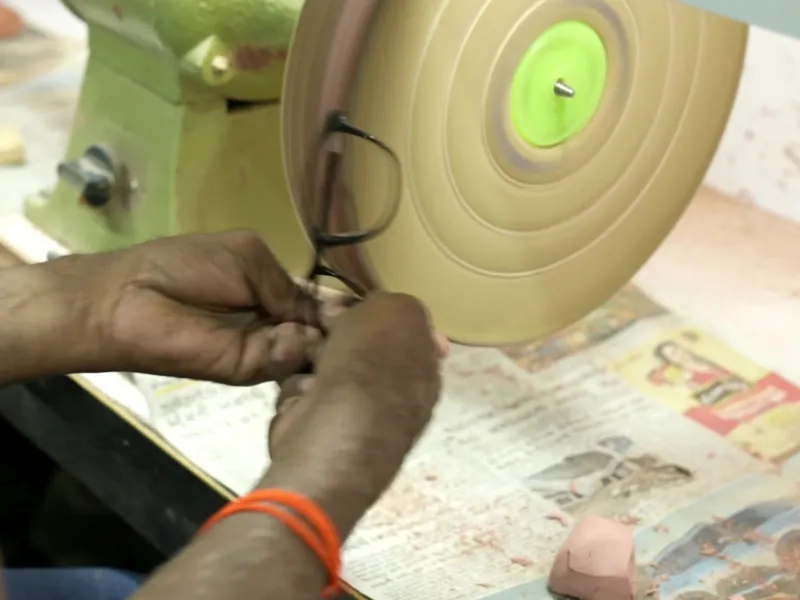
Founded in 1985 in Ahmedabad, India, Rushabh Trading Company (RTC Eyewear) has spent more than four decades specializing in a singular, exacting discipline: precision cellulose acetate and premium optical frame engineering. Operating across our proprietary CNC milling line and artisanal buffing facilities, we produce 22 baseline models across 258 curated colorways designed for international luxury and commercial optical brands.
How specific optical frame materials perform under localized workplace, climatic, and consumer demographic conditions across Russian territories.
In high-density commercial centers, visual ergonomics are dominated by prolonged multi-monitor exposure in artificial office environments. The demand is heavily tilted toward ultra-thin acetate profiles paired with anti-blue-light filtration and multi-focal progressive channels. Frame aesthetics require architectural, minimalist lines—deep rectangles and soft-contour squares—with low facial weight distribution to eliminate temple fatigue during 10-hour working days.
Demographics in heavy industrial, logistics, and resource extraction zones mandate mechanical endurance. Optical frames are frequently donned and removed with gloved hands, requiring sturdy 5-barrel or 7-barrel forged hinges rather than brittle spring mechanisms. Frames crafted from pure titanium or carbon-fiber composites prevent frostbite burns when the metal contacts epidermal facial tissue in external temperatures dropping to -40°C.
Russia's southern regions feature high solar UV indices coupled with humid maritime air. Custom prescription frames in this market are predominantly sourced with magnetic polarized clip-ons or manufactured with high-density bio-acetate fronts suited for high-diopter photochromic lenses. Saline air resistance requires dual-layer electroplating on all temple hinges and bridge hardware to prevent galvanic oxidation over multiple seasons.
Standard Asian-fit or southern Mediterranean frame geometries consistently underperform in Russian optical chains due to specific cranial and nasal bone anatomy.
Slavic cranial structures frequently present high, prominent nasal bridges combined with wider pupillary distances (PD 62-68mm). RTC engineers adjust the bridge apex width to 18-21mm with a modified splay angle of 28 degrees. This prevents nasal pinch points and guarantees that the optical centers of prescription lenses align perfectly with the visual axis.
High-index corrective lenses (1.67 and 1.74 index) are standard in the Russian market due to prevalent myopic demographics. To eliminate peripheral chromatic aberration and distortion, RTC frames are engineered with a fixed 8-to-10 degree pantoscopic tilt, maintaining perpendicular ocular positioning during downward reading and desk interaction.
Off-the-shelf 135mm or 140mm temples cause severe retro-auricular discomfort for the average Russian male wearer. We engineer standardized temple lengths of 145mm to 150mm with annealed nickel-silver core wires, allowing in-store opticians to achieve effortless ergonomic wrap without requiring high heat that would blister acetate surfaces.
Addressing customs clearance, financial settlement pathways, material guarantees, and OEM customization procedures.
We accommodate bilateral trade settlement protocols using direct Indian Rupee (INR) - Russian Ruble (RUB) mechanisms authorized by RBI and Russian partner banks (such as Sberbank, VTB, or Gazprombank Nostro accounts). Additionally, settlement via third-country hubs in UAE dirhams (AED) or direct international export factoring is seamlessly integrated into our invoicing workflow.
Every commercial production batch is accompanied by comprehensive Technical Dossiers: ISO 12870 mechanical performance compliance certificates, EN 1811:2011 nickel-release laboratory verification reports, biocompatibility declarations for raw cellulose acetate, and Russian-language packaging labeling templates compliant with Roszdravnadzor labeling guidelines.
Our cellulose acetate blanks undergo a proprietary 72-hour controlled oven curing process prior to CNC cutting. This eliminates internal manufacturing stresses within the polymer matrix. We use high-grade plasticizers that retain flexibility at low temperatures, ensuring that frames transported via rail across Siberia or unheated airfreight cargo holds maintain exact lens groove dimensions without warping or cracking.
For existing models selected from our 22 proven silhouettes, the private label MOQ is 300 pieces per model, distributed across 2 to 3 colorways, including your custom temple laser engraving, logo tampo printing, and bespoke packaging. For full bespoke OEM development with custom tooling and proprietary drawings, initial program runs start at 500 pieces per frame geometry.
Yes. Our engineering philosophy is firmly built around "Sample First, Then Scale." We deliver functional 1:1 physical production prototypes crafted from final acetate sheets with production-standard metal hinges within 14 working days. Bulk manufacturing commences exclusively after your medical directors and retail buyers provide formal written sign-off.
Consult directly with RTC Eyewear’s international export engineering division. Receive full material swatches, EAC-compliant technical dossiers, and direct FOB/CIF container shipping quotations tailored to your optical chain.